
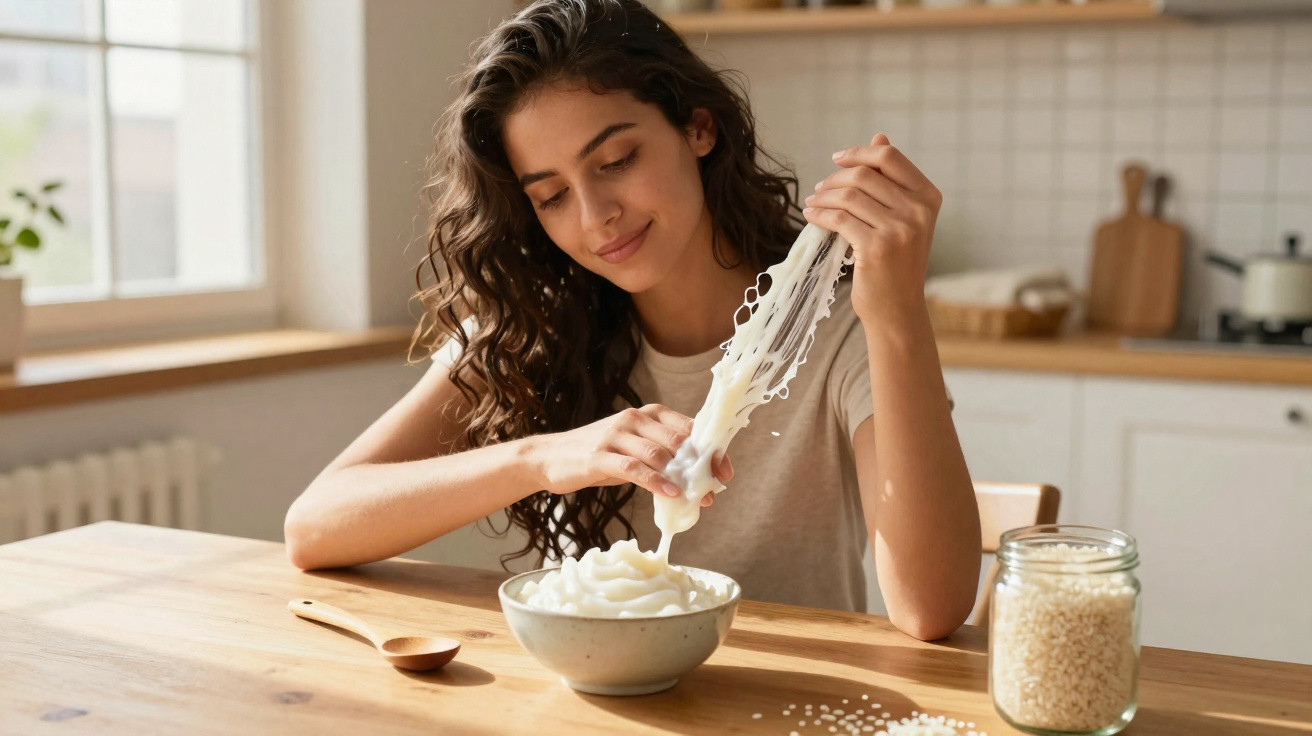
A kitchen staple can bring dull hair back to a surprising shine - and for very little money.
When hair looks lacklustre, many people reach straight for pricey treatments from the perfume counter. Glossy promises, premium packaging, premium price. Yet the fix is often already sitting in the cupboard: rice. Prepared the right way, this humble grain can become an impressively effective hair treatment - with a visible difference after the first use, and without blowing the monthly budget.
Why our hair looks so tired in late winter
Months of dry central heating, cold winds and thick wool scarves take their toll. The hair’s outer cuticle layer becomes rough, moisture escapes, lengths start to feel straw-like and ends begin to fray. Even hair that’s usually well cared for can look flat and lifeless.
If you lean heavily on products packed with silicones at this point, you often only disguise the issue for a short time. The silicone layer sits on the hair like a film, making it feel smooth at first, but over time it can weigh the structure down. Far more helpful is strengthening the fibre instead of merely coating it - and that’s exactly where rice comes in.
"Rice doesn’t just give hair a visible smoothing effect; it also supplies the fibre with substances that remain active after rinsing."
Rice as a beauty classic: rediscovering time-tested know-how
In parts of Asia, rice water has been used in hair care for centuries. When rice is cooked or soaked, starch and valuable accompanying compounds move into the water. This mixture coats the hair, smooths the cuticle and helps light reflect more evenly - creating that proverbial mirror-like shine.
One ingredient in rice is especially interesting: inositol. This substance is part of the B-vitamin group and has a particular affinity for hair’s keratin structure.
- It penetrates the hair fibre rather than only working on the surface
- Some remains even after rinsing and forms a kind of protective shield
- It improves elasticity, lowering the risk of breakage
- It reduces split ends because the tips are less likely to tear open
Instead of relying on high-tech labs, this approach uses a simple grain that has been eaten - and used for care - for thousands of years. That’s the appeal: less chemistry, less marketing, and an effect you can clearly observe.
How to mix a rice hair treatment in your own kitchen
For the basic version you only need a handful of ingredients that most households already have. No specialist gadgets, no exotic oils.
Basic ingredients for the rice treatment
- 100 g white cooked rice (cooled, slightly sticky is fine)
- 2 tablespoons almond oil or olive oil
- about half a glass of rice cooking water, or lukewarm water if needed
Cook the rice until it’s properly soft so you can blend it into a fine cream. Wholegrain rice can work in principle too, but it often produces a slightly coarser texture.
Step by step to a creamy mask mixture
- Put the cooked rice into a blender or a tall container.
- Add the oil - almond oil is particularly gentle, while olive oil is more intensely nourishing.
- Blend or purée thoroughly until you have a smooth, white cream.
- If required, mix in the cooking water or lukewarm water a spoonful at a time until the mixture is soft and spreadable.
Aim for the most even consistency possible, with no grains left behind. The finer the cream, the easier it is to rinse out later, and the more evenly the rice coating will distribute through the hair.
"The ideal rice mask looks and feels like a shop-bought hair treatment - just much cheaper, with clear, manageable ingredients."
Applying it properly: how to get maximum shine
The result depends heavily on how carefully you apply the treatment. A few extra minutes of attention really do pay off.
Preparing your hair
- Dampen the hair, ideally with lukewarm water.
- Gently squeeze out excess water so it isn’t dripping.
- Use a wide-tooth comb to loosen tangles.
On slightly damp hair, the cuticle opens a little. That allows the active components to adhere better and penetrate the fibre more effectively.
Using the rice cream
Section your hair and work methodically:
- Work a generous amount of cream through the mid-lengths down to the ends.
- If your hair is very dry, you can lightly coat the roots as well; otherwise, it’s better to leave the scalp area out.
- Smooth each section between your fingers so the coating spreads evenly.
Then pin the hair up and cover it with a shower cap or cling film. Wrap a towel over the top - the warmth created acts like a mini sauna.
Ideally, leave it on for 20 to 30 minutes. Longer usually doesn’t add much benefit, but it can weigh down fine hair.
Rinse thoroughly - otherwise the shine won’t last
After the processing time, rinse well with lukewarm water until you can’t feel any creamy residue. While rinsing, gently massage the scalp so any remaining rice traces loosen.
Follow with a mild shampoo, ideally without harsh surfactants. One shampoo is normally enough, because rice doesn’t leave a greasy layer the way heavy oil mixtures can.
"Many people report noticeably smoother lengths, less frizz and a shine that really shows when blow-drying - even after the first use."
How often to use rice on your hair
For most hair types, one treatment every two to three weeks is enough. Very dry, heavily stressed lengths - for example from frequent colouring or intense styling - can also tolerate the rice treatment weekly.
If your hair is fine or gets oily quickly, it’s better to start with a longer gap and slowly test how your hair feels. The goal is nourishment and smoothness, not heaviness.
More than a mask: what makes hair strong from the inside
No care product can save a head of hair long-term if the body is running on empty. Shiny hair needs building blocks - and those come from food.
| Nutrient | Role for hair | Good sources |
|---|---|---|
| Protein | Building material for keratin | Eggs, fish, pulses, yoghurt |
| Iron | Supplies the hair root with oxygen | Red meat, lentils, millet |
| Zinc | Involved in hair growth | Nuts, seeds, oats |
| B vitamins | Regulate hair-root metabolism | Wholegrains, eggs, green vegetables |
Just as important: drinking enough. If you consistently take in too little fluid, you’ll eventually notice it not only in dry skin, but also in brittle hair that breaks more easily.
Sleep, stress and styling: often underestimated hair killers
Chronic stress raises levels of the hormone cortisol. That can disrupt the hair cycle, increase shedding and visibly reduce shine. Regular relaxation, small breaks in the day and consciously winding down in the evening therefore support not only the nervous system, but indirectly the look of your hair too.
Lack of sleep is similarly unhelpful. Overnight, the body regenerates, scalp circulation improves and repair processes run at full speed. If you habitually sleep too little, you deny your hair a key window for renewal.
Your styling routine is also worth a hard look: consistently using maximum blow-dry heat, daily straightener sessions and styling products high in alcohol draw moisture out of the fibre. Alongside a rice treatment, it’s often enough to lower the temperature a little and occasionally schedule a "heat free" day.
Variations and small extras for different hair types
The basic mask is easy to tweak. For very dry curls, a teaspoon of honey or a splash of coconut oil can be helpful. Oily roots? Then treat only the lengths and reduce the oil slightly.
Sensitive scalps often do well with a mixture of rice and oat milk instead of heavy oil. If you’re prone to allergies, test the new treatment on a small patch on your inner forearm first.
Rice remains the constant: it smooths the hair surface and provides inositol. Combined with mindful eating, less stress and moderate heat styling, this gradually creates what many people want - hair that looks healthy, thick and full of life even without an expensive salon treatment.


Comments
No comments yet. Be the first to comment!
Leave a Comment