
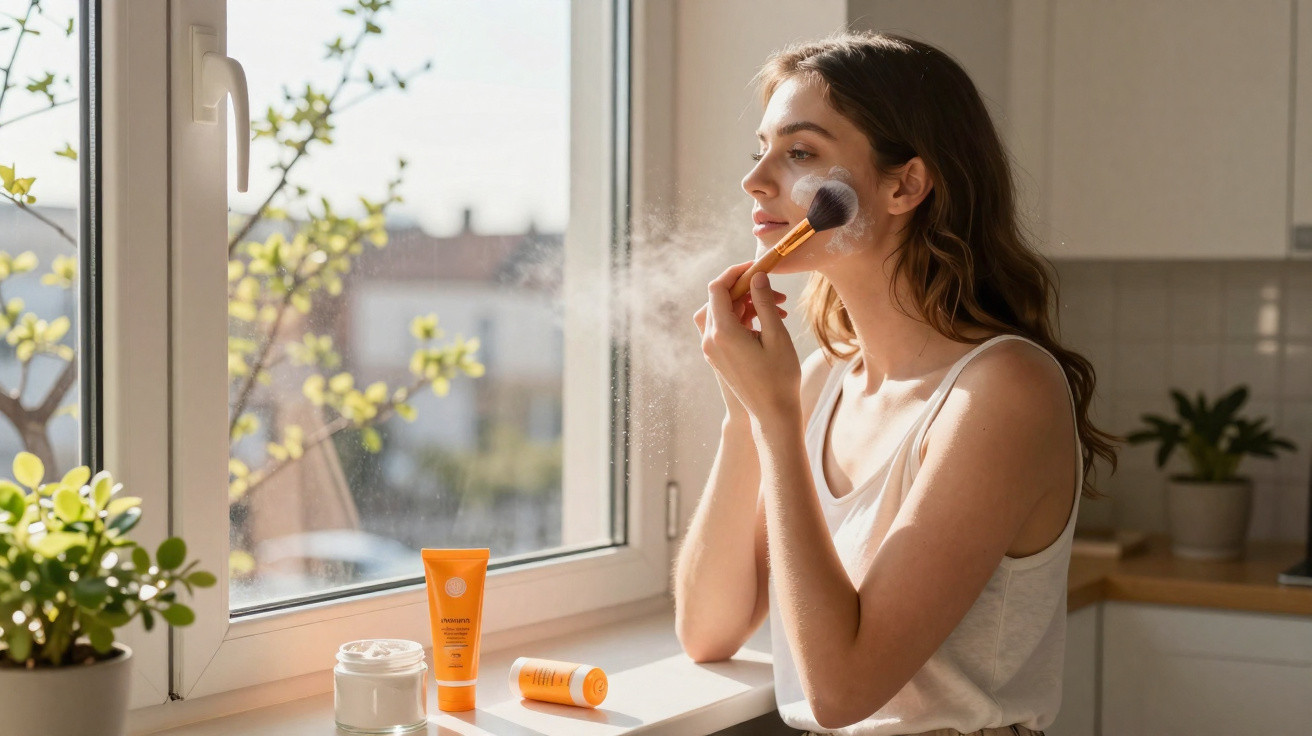
As the first bright days of the year arrive, the same debate flares up again: should you put on sunscreen, or just leave it? Between sticky textures, environmental worries and white streaks across the face, plenty of people look for alternatives to the usual sun lotion from a tube. One understated white powder formula is getting far more attention: mineral-based, backed by research, and potentially helpful for those first rays - provided you use it correctly.
Why more and more people are fed up with classic sunscreen
People who are really into skincare often describe the same frustrations: greasy creams, clogged pores, stinging eyes and ingredients they’d rather avoid. At the same time, dermatologists repeatedly stress how risky unprotected sun exposure can be. That leaves many stuck between wanting protection and feeling irritated by the products.
- Chemical filters that can wash off into water and the wider environment
- Shiny or tacky skin, especially on the face
- Sensitivities in reactive skin or skin prone to acne
- The struggle of pairing heavy sunscreen with make-up
This is exactly where a product steps in that, for a long time, sounded more like stage make-up than everyday skincare: a finely milled white mineral powder based on zinc oxide and/or titanium dioxide.
“Mineral powder sunscreens create a kind of invisible mini-mirror on the skin, reflecting UV rays rather than converting them chemically.”
What’s really behind the “white protective powder” idea
The concept is straightforward and well researched: so-called physical UV filters. Instead of soaking into the skin, they largely sit on the surface and bounce back part of the UV radiation. That’s the same principle used in mineral sunscreens for years - and in powder form it can feel lighter and, for many, more comfortable to wear.
Two ingredients that keep showing up in studies
Most powders rely on a mix of:
- Zinc oxide: helps against UVB and parts of UVA radiation
- Titanium dioxide: protects from UVB and some short-wave UVA rays
Both are long-established, well-studied UV filters. For sensitive or rosacea-prone skin, many dermatology recommendations intentionally favour mineral filters over chemical ones.
Why powder is appealing for the first spring sunshine
When the sun starts feeling warm again in March or April, it’s not the same as lying on a beach in midsummer. After winter, skin is often paler and more reactive, while time outdoors tends to be shorter and changeable. This is where mineral powder can make sense:
- a light, barely-there finish
- a mattifying effect, ideal for combination skin and shine
- easy to top up over make-up
- often a shorter, simpler ingredient list that suits sensitive skin
“For short periods in the spring sun, a well-formulated powder with a high SPF can be a practical option - as an addition, not a cure-all.”
How mineral powder protects the skin - and where its limits are
Studies indicate that mineral filters do work when they’re applied evenly and in a sufficient amount. That’s also the main challenge with powder products. Many people apply far too little because they’re trying to avoid a ‘flour face’ effect.
The right way to use it day to day
To make the protection more realistic, a few basics matter:
- Don’t just dust it on: Use a dense brush or sponge and work the powder in generously, but evenly.
- Build it in layers: Two to three thin layers are better than one quick sweep, aiming for a consistent film.
- Top up regularly: The forehead, nose and cheeks usually need attention again as the day goes on.
- Check coverage visually: In daylight, make sure everything is covered - especially around the ears, hairline and jaw.
Dermatologists regularly point out that the advertised protection level (such as SPF 30 or 50) often isn’t achieved in real life because too little product is used. With powders, that issue can be even more pronounced.
Ideal for the office, a city stroll and the first hours on a terrace
Mineral powder is best suited to situations where no one is planning to bake in the midday sun for hours. Typical examples include:
- the walk to work or university
- lunch at a pavement café
- short walks during a break
- shopping in town
In moments like these, many people don’t want a heavy cream layer on their face, but they also don’t want to be completely unprotected. Used this way, powder acts like a ‘safety net’: better than no protection, comfortable to wear, and easy to reapply without ruining make-up.
“For long stretches in strong sun, a classic, water-resistant sunscreen with a reliably high level of tested protection remains the more dependable base - powder can supplement it, not replace it.”
The part environmental concerns play
Debate around certain chemical UV filters - including worries that they may harm corals or build up in waterways - has noticeably increased interest in mineral alternatives. Many consumers now pay closer attention to ingredients, packaging and whether products can be reused.
Mineral powder products fit this shift particularly well when they are:
- sold in refillable tins or cardboard packaging
- free from fragrance and microplastics
- clearly labelled with short, pared-back ingredient lists
The environmental footprint can drop further if you use the powder specifically on the face, neck and décolletage, while protecting other areas more through clothing, shade and limiting time in the sun.
What dermatologists say about powder as a sunscreen replacement
Expert opinions can be broadly grouped into three points:
| Statement | What it means in everyday life |
|---|---|
| Mineral filters are well researched | Often a first choice for sensitive, reactive skin |
| Powder alone isn’t enough at the beach | For intense sun exposure, it’s only suitable as an add-on |
| How you apply it determines the protection | Too little product = significantly reduced SPF |
For that reason, many skin specialists suggest a practical combination: in midsummer at the lake or sea, rely on classic sunscreen; in day-to-day life, a well-formulated mineral powder can be used to refresh the protective layer - especially over make-up, where reapplying cream constantly isn’t realistic.
Practical tips for the first sunny days
If you want to try a white protective powder this spring, you can start with a simple routine:
- in the morning, use a light moisturiser that doesn’t leave a heavy greasy layer
- then apply the mineral powder generously with a brush
- during the day, touch up the T-zone and cheeks as needed
- add physical protection such as sunglasses and, where appropriate, a hat
If your skin is very fair or especially sun-sensitive, it can be sensible to use at least a thin layer of classic sunscreen underneath the powder. In that set-up, the powder is mainly for topping up and keeping shine down.
Putting “scientifically proven” into context
When brands or influencers talk about “powder proven by studies”, they’re usually referring to research on zinc oxide and titanium dioxide as UV filters - not necessarily studies on that exact product. The ingredients themselves are indeed well documented, but real-world protection depends on several variables:
- particle size and how evenly it’s distributed in the formula
- application method (brush, sponge, and the amount used)
- how it sits with other skincare or make-up
- sweat, friction from clothing and touching your face
If you set expectations accordingly, a powder like this can be genuinely useful - particularly when it’s treated as one practical element within a broader sun strategy that also includes shade, clothing and limiting time in direct sun.
The overall trend is clearly moving towards lightweight, ‘smarter’ products that fit into daily routines with minimal effort. A white protective powder may look unremarkable, but in the first weeks of spring sunshine it can be the difference that counts: skin stays calmer, the complexion looks fresher rather than greasy - and it becomes easier to avoid skipping sun protection altogether.



Comments
No comments yet. Be the first to comment!
Leave a Comment