
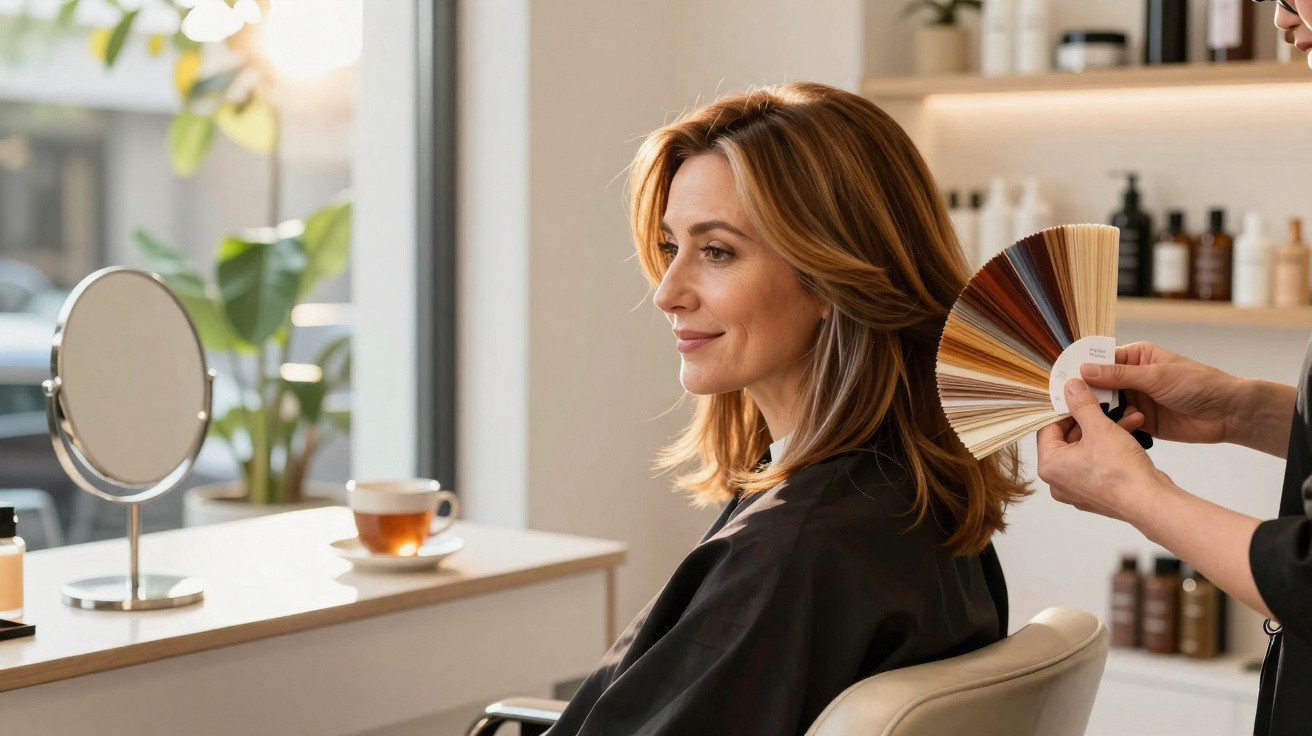
Edviga Bobocea, hairdresser and colour specialist, advises steering clear of very intense shades after the age of 50, such as jet black and very deep, closed-off dark brown. Her reasoning comes down to contrast: dense, solid colours can emphasise shadows, draw attention to fine lines, and dull the face’s natural brightness.
Why can intense black look heavy?
Very deep black creates a harsh frame around the face. As skin naturally loses some glow and evenness over time, that strong contrast can make under-eye darkness, creases and small marks stand out more.
Edviga Bobocea’s guidance is not a blanket rule against dark hair. The issue is the intensity and the absence of dimension: a flat, reflection-free shade tends to absorb light and can make facial features appear more severe.
Which shades often suit you better after 50?
Rather than jet black or a brown that reads almost black, colouring can move towards a softer direction, with warm reflects, medium browns and brighter pieces around the face. These choices add movement and reduce the “single block” effect.
- Chocolate brown: keeps richness without feeling as heavy as black.
- Illuminated brown: lifts strategic areas close to the face.
- Honey and caramel: add warmth to the expression when they suit your skin tone.
- Dark golden blonde: softens contrast for those with noticeable grey strands.
How do highlights help soften expression lines?
Well-placed highlights act like points of light. When positioned near the forehead, temples and the sides of the face, they break up the rigidity of a dark base and make the transition into grey hair look less stark.
Techniques such as hair contouring, fine highlights and subtle tone-on-tone reflects can brighten without completely changing the overall shade. The finish often looks more natural than lightening everything in one go.
What should you consider before changing your hair colour?
The best choice depends on your complexion, eyebrows, how much grey you have, how much upkeep you can manage, and your hair’s chemical history. A colour that looks great in a photo may need touch-ups far too often or may not suit your real skin tone.
- Notice whether your current colour emphasises under-eye darkness or makes your face look more tired.
- Avoid very dramatic changes if your hair has had recent chemical processing.
- Ask for gentle reflects before giving up a dark shade entirely.
- Use conditioning treatments and heat protection to keep shine after colouring.
The right colour brightens without erasing your identity
Edviga Bobocea’s point is about being more strategic: you don’t need to avoid dark shades, but it helps to skip versions that are rigid, matte and lacking depth. A well-worked brown can still look elegant, cover greys and soften the overall expression at the same time.
After 50, colouring tends to look best when it follows the skin’s texture, the hair’s sheen and the maintenance rhythm you can realistically keep. The aim is not to look like someone else, but to fine-tune contrast, light and movement so your hair frames the face without hardening its lines.






Comments
No comments yet. Be the first to comment!
Leave a Comment