
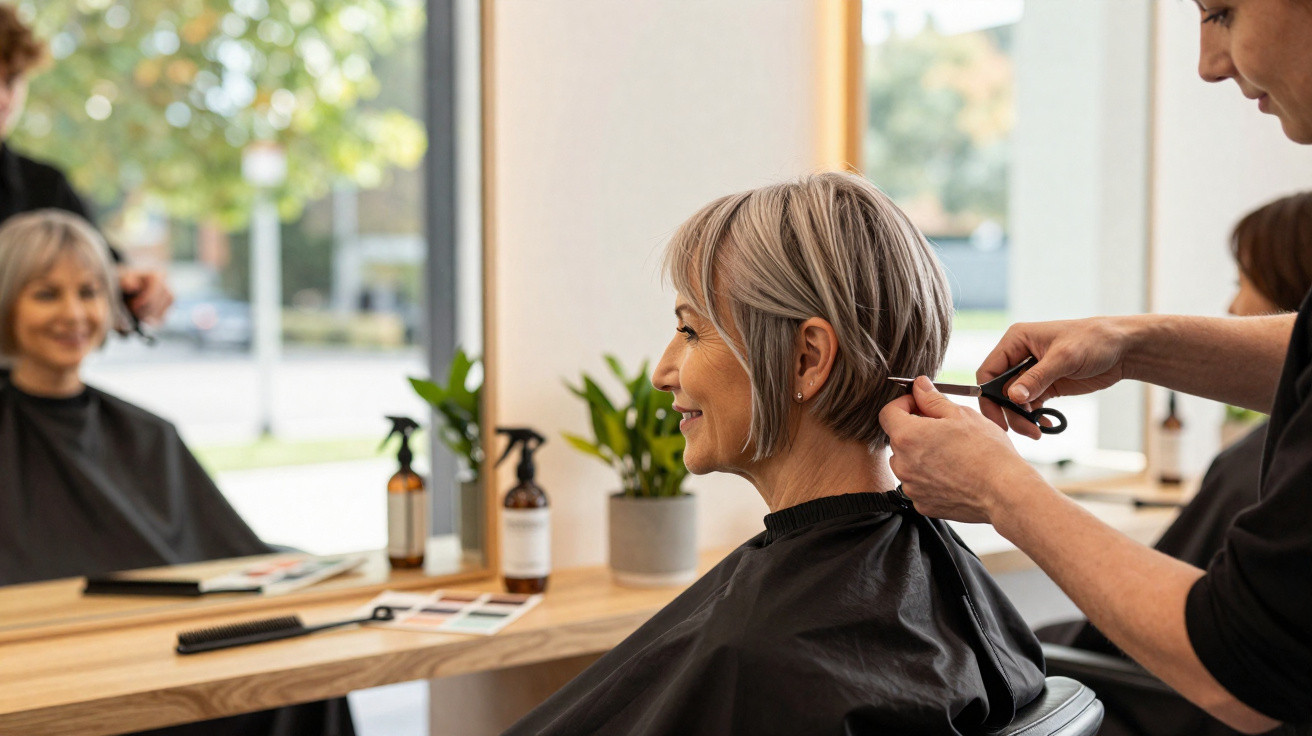
Smart, precise and gently face-sculpting, a fresh short haircut is quietly appearing across salon mood boards for spring 2026.
With brighter days arriving and knitwear finally becoming less essential, hairdressers are guiding clients towards a cropped style that does more than simply frame the face: it helps define it. The “contour pixie” combines the revitalising feel of a short cut with the exactness of skilfully applied make-up, and stylists expect it to feature heavily in spring and summer salon bookings.
What is a contour pixie?
A contour pixie reworks the traditional pixie cut through tailored contrast. The back and sides are kept close, tidy and short, while extra length and movement remain through the top. That may sound familiar, but the distinguishing detail is in the word contour.
The contour pixie is designed to sculpt facial features, not just shorten hair.
Instead of using one standard cutting formula, the style is shaped around the cheekbones, jawline and forehead. Its perimeter is gently “cinched” at important points of the face, creating the hair equivalent of contouring powder. Expect light graduation at the temples, carefully retained length beside the cheekbones, and a fringe selected with intention rather than cut by default.
Why salons are embracing it for spring 2026
Short-hair fashions tend to run in cycles: a season of precise bobs may be followed by shaggy lobs, before the classic pixie makes another return. The contour pixie fits naturally within that pattern, yet feels more contemporary because it avoids the copy-and-paste result in which every short style appears identical, from Instagram to the high street.
Cos Sakkas, the global stylist and long-standing creative presence at Toni & Guy, has been promoting the cut both in the UK and abroad. His message is straightforward: short hair should bring out the qualities that make a face individual, rather than conceal them beneath a one-size-fits-all design.
Instead of making every pixie identical, the contour version accentuates what your face already has going for it.
The idea also reflects beauty’s current preference for personalisation. In the same way that skin tints are blended to suit undertones and foundations are offered in wide shade selections, haircuts are increasingly adapted to bone structure, hair density and everyday routine.
How the contour pixie suits different face shapes
The appeal of this cut is the level of precision available: it can be modified millimetre by millimetre. Stylists are tailoring it to flatter common face shapes in the following ways:
- Round face: Added height through the top, combined with cleaner and squarer fringe lines, can lengthen the face and introduce definition.
- Square face: Smoother, more rounded edges and a softly curved fringe can balance a pronounced jawline and reduce harshness.
- Oval face: As this shape accommodates almost every version, texture and lifestyle become more important than strict visual correction.
- Angular face: A little additional length around the temples and cheekbones softens sharper lines without obscuring them.
The aim is not to pursue “perfect proportions”. Instead, weight, volume and length are adjusted so that features appear purposeful rather than accidental.
Texture matters: fine, thick, straight or curly hair
Its adaptability across hair types is another reason the contour pixie is attracting attention.
Fine or thinning hair
A heavily layered conventional pixie can leave fine hair looking flat. In a contour pixie, however, layers are placed more deliberately. The nape and sides are clipped close for a clear outline, while slightly denser pieces are retained on top to create gentle, airy lift.
The cut can create the illusion of thicker hair by removing bulk where it drags and preserving density where lift is needed.
Light texturising around the crown prevents the shape from appearing limp, while a defined perimeter ensures the finished style looks intentional rather than overly fluffy.
Thick or wavy hair
Thicker hair can be challenging in shorter styles because it often expands at the sides. For a contour pixie, internal layering removes excess weight without roughly cutting up the outer surface. The top may stay a touch longer and retain its wave for an easy, tousled effect, while the sides sit closer against the face.
Curls can suit this silhouette too, provided they are cut to make a halo of movement across the top and towards the forehead, rather than forced into a stiff outline that works against their natural pattern.
The fringe rules that change everything
The fringe is the point at which a contour pixie becomes especially individual. Sakkas emphasises that the most suitable fringe should provide slight contrast to the face shape, rather than simply echoing it.
| Face shape | Recommended fringe |
|---|---|
| Round | More square, structured fringe to add definition |
| Square | Softer, rounded fringe to balance angles |
| Wide face | Narrow, controlled fringe that does not widen the face |
| Narrow face | Fuller, wider fringe to create horizontal balance |
One particularly flexible choice is the curtain fringe. Lightly divided through the centre and blended into the sides, it complements most contours and grows out elegantly, which can feel reassuring for anyone hesitant about a blunt fringe cut straight across the forehead.
Why women over 50 are considering the contour pixie
Short hair has long appealed to women over 50 seeking a style that is modern, practical and sharp. The contour pixie extends that appeal by introducing a subtle age-defying quality without making exaggerated claims.
By keeping the nape and sides neat, the cut lifts the eyeline and brings definition to the neck. Movement through the top stops the overall result from becoming rigid. Its most effective details, though, sit around the temples and fringe.
A well‑placed contour fringe can soften forehead lines and fine crow’s feet without hiding the face behind a heavy curtain of hair.
Where forehead lines are more pronounced, a fuller fringe that brushes the brows can create a soft-filter effect. If crow’s feet are the greater concern, a stylist might shape the sides so they rest lightly over the outer eye corners without concealing them fully. The effect is a more open, brighter expression, achieved without severe layers or strong colour.
What to request at the salon
Arriving at a salon and asking only for a “contour pixie” may not provide enough direction, as the term can be interpreted differently. Reference photographs are useful, but a brief consultation is equally valuable. Discuss the following with your stylist:
- The features you particularly like and would like to emphasise, such as your cheekbones, eyes, jawline or neck.
- Areas you would prefer to soften slightly, including deep lines, a high forehead or a strong jaw.
- The amount of daily styling you can realistically commit to.
- Your natural texture and the way it responds when left to air-dry.
Your hairdresser can then tailor the top length, how closely the sides are cut and the precise fringe line. A positive sign is when they assess the style from multiple angles and make fine final snips around the temples and cheekbones. This detailed adjustment is where the “contour” aspect takes shape.
Styling and upkeep in everyday life
Although it has a tailored appearance, the contour pixie is not particularly demanding to maintain. Most variations require trimming every 4 to 7 weeks to preserve a crisp outline. As the top grows, it softens gradually, meaning the shape will generally continue to flatter as it relaxes.
For daily styling, you may only need to:
- Apply a small amount of lightweight mousse or volumising spray to damp hair, then rough-dry it with your fingers.
- Work a pea-sized amount of texture cream through the top to create separation and movement.
- Use a small round brush to smooth the fringe if you prefer a neater result.
For an evening look, wax or pomade can define the direction of the fringe or deliver a lightly wet, sculpted finish. A dry texturising spray, meanwhile, creates a more relaxed, undone weekend effect.
Useful terms to know before booking
Hair consultations can seem to involve their own vocabulary. Two terms are especially relevant when discussing a contour pixie:
- Internal layering: Shorter sections cut beneath the upper layer to remove weight without making the outside line look choppy. This is particularly important for thick or wavy hair.
- Graduation: Hair that is cut progressively longer from the nape upwards, forming a soft slope. It shapes the head and prevents the back from appearing blocky.
Knowing these terms can make it easier to explain what you do or do not like in inspiration images, and can help prevent a style that feels either too severe or too fluffy for your preferences.
Thinking ahead: colour, grow-out and subtle changes
Colour also works effectively with a contour pixie. Gentle highlights through the top and around the fringe can provide an additional contouring effect, reflecting light on the areas you want to draw attention to. Deeper lowlights at the nape add dimension and can make the neck appear more defined.
If committing to a very short cut feels uncertain, many stylists recommend a “trial run” with a slightly longer crop or short bob shaped according to contouring principles: cinched sides, attention around the cheekbones and a considered fringe. Wearing that style for a few weeks can reveal how your features respond before you choose a closer pixie.
For those who feel trapped in a hairstyle rut, the contour pixie presents a straightforward option: a current-looking cut that works well in everyday life and considers the architecture of the face, rather than focusing only on hair length.



Comments
No comments yet. Be the first to comment!
Leave a Comment