
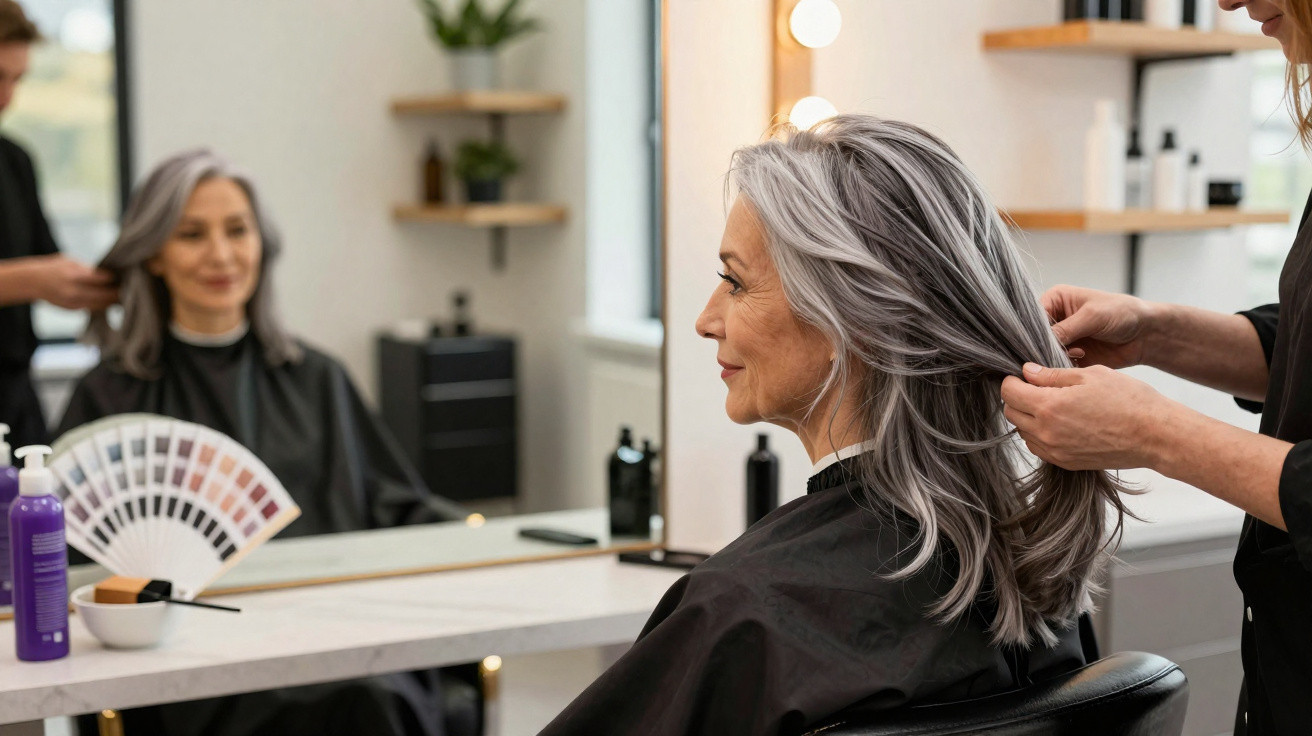
Stylish grey hair is enjoying its time in the spotlight, yet the divide between naturally cool and instantly ageing can be remarkably narrow.
As salt and pepper hair takes centre stage, colourists are increasingly using an ingenious method known as reverse colouring. It delivers shine, dimension and a gentler grow-out for those who do not want to feel “granny-like” simply because their greys have appeared.
What reverse colouring really means
Also known as reverse balayage, reverse colouring turns conventional hair colouring on its head. Rather than lifting the hair colour, a colourist carefully deepens chosen sections to introduce contrast and depth.
Where traditional balayage brightens the mid-lengths and ends, reverse colouring relies on lowlights - darker shades - to give naturally grey or white hair shape and definition.
Reverse colouring works with your grey, not against it, by deepening certain areas so the silver looks intentional and modern.
The treatment commonly starts with a clarifying shampoo, which removes styling-product build-up and mineral deposits that may leave grey hair looking dull. The key stage follows: a toner or gloss is placed strategically through the lengths.
How reverse colouring works on salt and pepper hair
For naturally grey or salt and pepper hair, the colourist chooses delicate sections - “veils” instead of thick slices - then applies a shade a few tones darker than your existing colour.
This approach can:
- soften stark white areas around the face
- introduce root shadow for the appearance of thicker hair
- add contrast, allowing silver sections to stand out rather than appear flat
- counter unwanted yellow or muted beige hues
A gloss or toner generally deepens the colour by only a couple of levels. If you arrive with silver hair, you will not leave as a brunette; instead, the greys appear brighter and more multi-dimensional, as though that precise mix were your natural colour.
Why reverse colouring avoids the “granny” look
The “granny” effect that concerns many people is seldom caused by grey hair itself. More often, it results from flat, even colour and severe root lines. Reverse colouring addresses both at the same time.
Because the toner fades evenly in 8–9 weeks, new growth appears blended rather than as a hard, obvious root line.
With this gradual fading, there is no familiar strip of white forcing its way through dark dye. Hair instead lightens softly between salon visits, maintaining a relaxed, lived-in finish.
Extra depth around the face may also enhance the features. Carefully positioned lowlights work rather like hair contouring, making strands seem fuller and healthier instead of fine and washed out.
Who gains most from reverse colouring?
Reverse colouring is particularly suitable for people who:
- are 40+ and growing out their grey but feel too “washed out”
- have an irregular combination of white, grey and natural hair colour
- are weary of all-over coverage but are not prepared for a stark, fully white appearance
- prefer a low-commitment treatment that fades gently
When hair is very dark and has only a small number of scattered greys, a stylist may recommend another route, such as subtle highlights with a gloss, rather than genuine reverse colouring.
The reverse colouring salon routine: what to expect
A standard reverse colouring appointment is relatively straightforward, although accurate placement is essential.
| Step | What happens | Why it matters |
|---|---|---|
| 1. Clarifying wash | Hair is cleansed with a deep-cleansing shampoo. | It removes residue, allowing the toner to develop evenly. |
| 2. Toner / gloss | A demi-permanent colour is placed in fine sections. | It neutralises yellow tones and builds depth in selected areas. |
| 3. Processing | The product develops for a specified period before being rinsed away. | This determines how deeply the hair darkens. |
| 4. Cut & styling | Hair is cut into shape and styled to highlight the fresh tones. | It brings out the movement and texture created by the colour. |
The overall appointment is usually quicker than a full application of permanent colour or conventional highlights, as it involves less sectioning and no intensive lightening.
How long it lasts and when to return
Demi-permanent toners and glosses used in reverse colouring offer a useful middle ground between freedom and commitment. Most disappear after approximately 8–9 weeks.
Consequently, many people book a salon visit roughly every two months. Missing an appointment will not create a dramatic two-tone line; the hair simply returns gradually to its natural blend of grey and white.
Reverse colouring demands regular salon visits, but each session is about refinement, not starting over from scratch.
Keeping white and grey hair luminous at home
Beyond colour technique, white and grey hair behaves differently from hair with pigment. It is often drier and more porous, and can yellow more easily because of pollution, heated styling tools and even tap water.
Products that maintain silver shine
Colourists commonly advise creating a routine specifically for white or grey strands:
- Violet or blue shampoos and masks: used once or twice weekly, these offset yellow and brassy tones.
- Rich hydrating masks: treatments containing argan oil, shea butter or keratin can help restore and soften coarse grey hair.
- Serums with UV and pollution protection: these protect the cuticle, helping hair retain its cool tone for longer.
- Weekly oil baths: smoothing a lightweight oil from the mid-lengths to the ends before shampooing can bring back softness and flexibility.
When used regularly, these measures complement your colourist’s salon work, extending the crispness of silver hair and the richness of the lowlights.
Temporary colour ideas for playful grey hair
On days when you fancy a bolder look, temporary colour is an uncomplicated complement to reverse colouring, not a substitute for it.
Coloured masks and sprays can give grey hair a wash of metallic silver, pearl or even gentle pastel colour. They normally disappear after a few washes, so there is no lasting commitment.
Think of temporary tints as make-up for your hair: changeable, low risk and perfect for testing a new vibe.
Clear glosses or those with a light tint provide another choice. They do not transform the colour dramatically, but increase smoothness and shine so that grey hair looks refined rather than dull.
Terms colourists use
The language surrounding grey hair can feel confusing. Knowing several helpful definitions can make conversations with your stylist easier.
- Lowlights: darker sections painted throughout the hair to create contrast and depth. Reverse colouring makes extensive use of them.
- Toner: a low-ammonia or ammonia-free colour that modifies tone instead of significantly changing the level; it is used to remove yellow or create coolness.
- Gloss: similar to toner, but generally more conditioning and designed to boost shine while refining the colour.
- Patina: a French expression often used for a toner or gloss layer that perfects the finished shade.
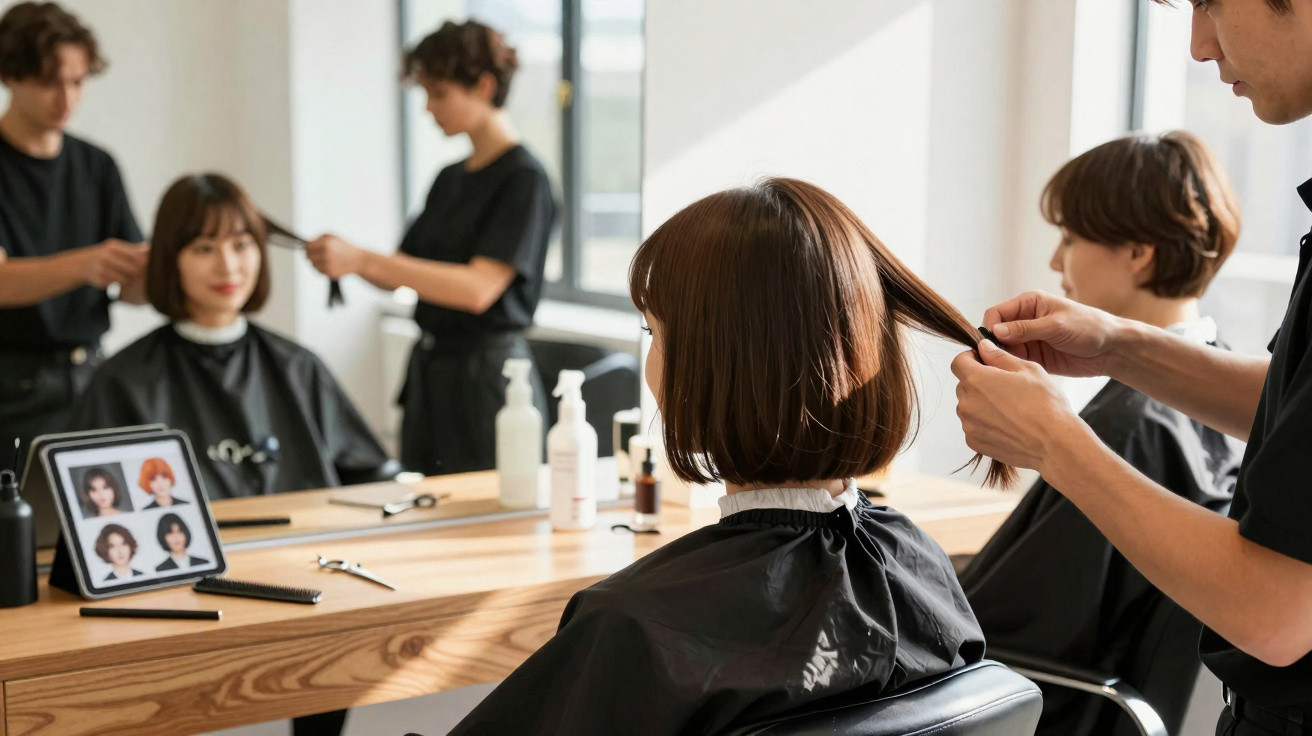
Bringing a few reference images to the salon, alongside a basic knowledge of these terms, can help direct the discussion towards the soft, contemporary effect you want instead of a solid, ageing block of colour.
Practical examples: could reverse colouring suit you?
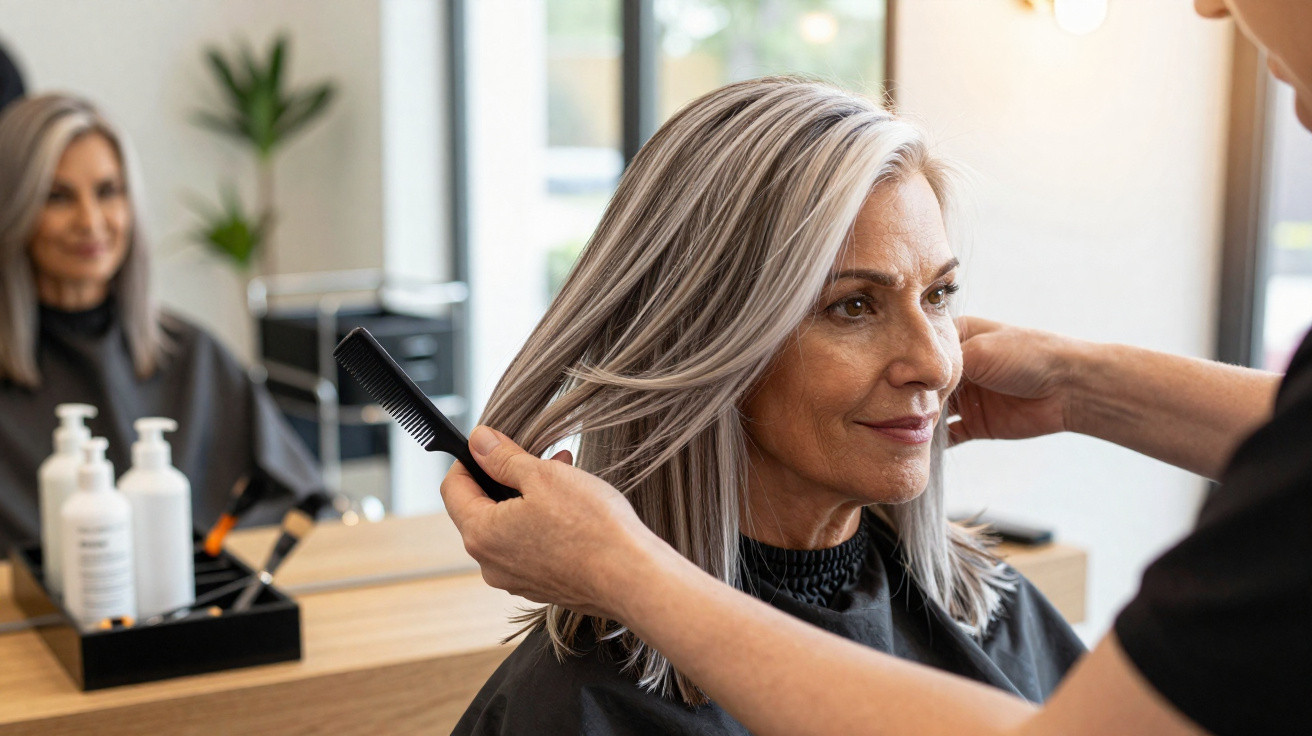
Picture two people in their mid-50s. The first has naturally fair skin and crisp white streaks around the face, which leave her feeling washed out. Cool, smoky lowlights placed along the parting and beneath the upper layer soften the contrast and immediately add warmth to her features.
The second has 70% grey hair, with sections of dull, yellow-toned white. A clarifying wash followed by a silver-toned gloss brightens these parts, while several deeper strands through the crown create the impression of denser hair. Both retain a naturally grey appearance - only fresher, more defined and far from “granny-like”.
Reverse colouring cannot turn back time, nor is it a replacement for a well-cut style or proper maintenance. However, for many people embracing salt and pepper hair, it provides a smart balance: appreciation of natural colour, the benefit of clever salon techniques, and a result that looks current rather than conservative.

Comments
No comments yet. Be the first to comment!
Leave a Comment