
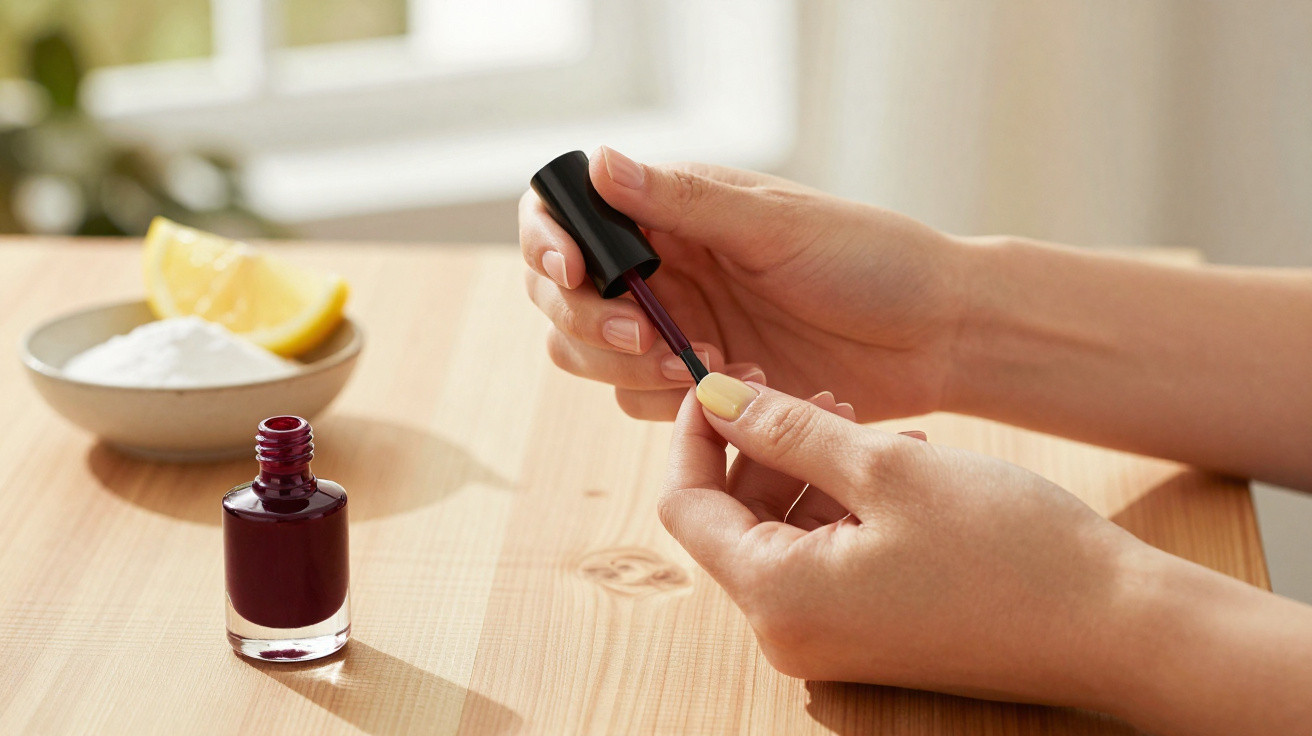
Removing the polish may leave behind a yellowish tint, making nails look dirty or weakened. This change often follows repeated use of dark shades, particularly reds, burgundies and blacks applied without protection. Although it is usually only a surface stain, a few habits can help prevent it from happening again.
Why does dark nail polish make nails yellow?
Pigments in some polishes can seep into the upper layers of the nail plate, especially if the product is left on for several days. Skipping a clear base coat makes this direct contact more likely. According to DermNet, some stains caused by coloured nail polish gradually fade after the product has been removed.
This yellowing generally affects all nails painted with the same polish in a similar way, without pain, swelling or major changes in texture. The colour may take days or weeks to fade as the nail grows out. Vigorous buffing or scraping will not speed this up and can instead leave nails thin and brittle.
A clear base coat is the best prevention
Applying an even layer of base coat before dark polish forms a barrier between the pigment and the nail. This straightforward step limits colour transfer and makes polish easier to remove too. Let the base coat dry before continuing your manicure, ensuring the whole nail plate is covered, including the sides near the cuticles.
Small adjustments to your routine can help maintain both the appearance and strength of your nails. There is no need to give up your favourite colours, but it is worth pairing intense polishes with care that reduces staining and dryness:
- Use a clear base coat before every dark manicure
- Avoid leaving chipped polish on for extended periods
- Remove polish without scraping the nail surface
- Take breaks when nails are fragile
- Moisturise nails and cuticles after removal
The bicarbonate of soda trick needs great caution
A mixture of bicarbonate of soda and 10-volume hydrogen peroxide is often included in recipes intended to lighten stains. However, it is not essential, and this combination may dry out, irritate or sensitise the skin. As with facial skin, bicarbonate of soda should not be considered harmless simply because it is readily available at home.
Anyone who still chooses to try it should apply only a small amount of the paste directly to the nail, never to the cuticles or surrounding skin, and leave it on for just a few minutes. It must then be rinsed away thoroughly, followed by moisturising the area. Stinging, redness or discomfort are signs to remove the mixture at once and not repeat the treatment.
Watch the video shared by the YouTube channel Cristina Lopes Podologia, which offers tips on what to do and how to care for nails that have turned yellow.
Not every yellow nail is caused by nail polish
Discolouration needs closer attention when it appears without a clear connection to nail polish or does not improve as the nail grows. Thickening, flaking, distortion, an unpleasant smell, pain or lifting may occur with fungal infections and other nail conditions. In such cases, persisting with homemade whitening treatments may conceal important warning signs.
It is also advisable to see a dermatologist if only one nail changes colour, dark streaks appear, or the surrounding skin becomes inflamed. A diagnosis should not be based on appearance alone, as different conditions can create similar shades. Nail polish does not treat infection and may make it harder to monitor its progress.
Restoring natural colour is mainly about protection
For most stains caused by nail polish, the safest approach is to allow the nail to grow out, keep it moisturised and use a base coat for future applications. Instant whitening may seem appealing, but repeated abrasive treatments weaken the very structure you are trying to restore. A gentler approach delivers more reliable results.
At your next manicure, do not skip the protective layer. That extra minute can prevent weeks of frustration over a yellowed appearance. If the colour comes with changes in texture or does not fade, set homemade recipes aside and investigate the cause promptly. Acting early is the best way to protect your nails.



Comments
No comments yet. Be the first to comment!
Leave a Comment