
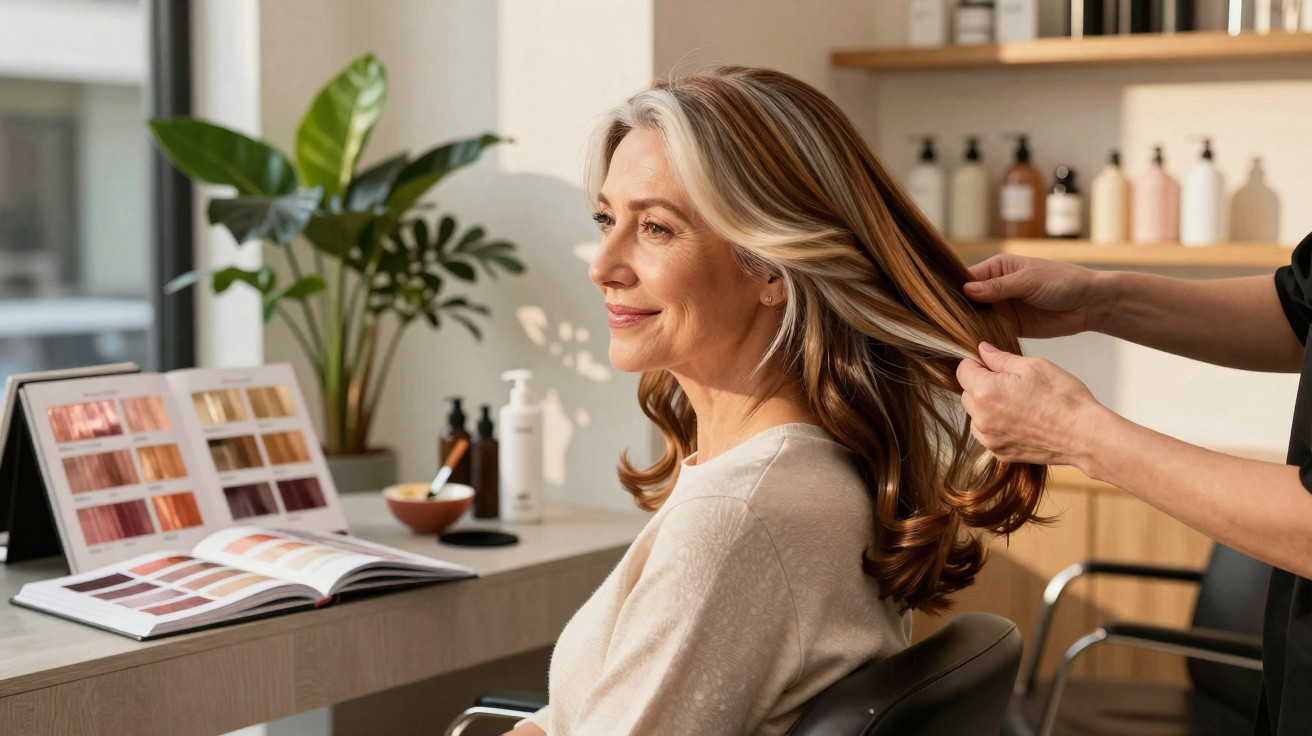
Not loud. Not brassy. Simply fresh, understated and self-assured.
After 60, hair texture evolves, more grey appears and skin tone can alter slightly. The most flattering shades illuminate the face instead of drawing attention to the colour itself. Aim for dimension, soft warmth and healthy-looking shine that appears entirely natural.
Why undertone matters more than hair level after 60
Many people choose a colour box according to its number. However, the face notices undertone before anything else. Your skin may appear cooler or warmer than it did at 40, influenced by medication, sun exposure and hormones. A shade that works with this change will benefit you more than one chosen simply for “covering grey.”
| Skin undertone | Flattering hair directions | Shades to approach carefully |
|---|---|---|
| Cool (pink or rosy) | Neutral-warm beige, soft taupe, champagne blonde, cool chestnut with caramel ribbons | Blue-black, icy platinum, flat ash browns that drain |
| Warm (golden or peachy) | Honey blonde, golden beige, warm brown, copper lights, rose-gold glaze | Over-ash toned blondes, greenish beiges, extreme violet toners |
| Neutral (balanced) | Mushroom brunette, soft chocolate, sandy blonde, beige highlights | Single-process solid tones without dimension |
After 60, most faces glow more with one to two levels lighter than your natural and a hint of warmth around the face.
Shades that brighten rather than age
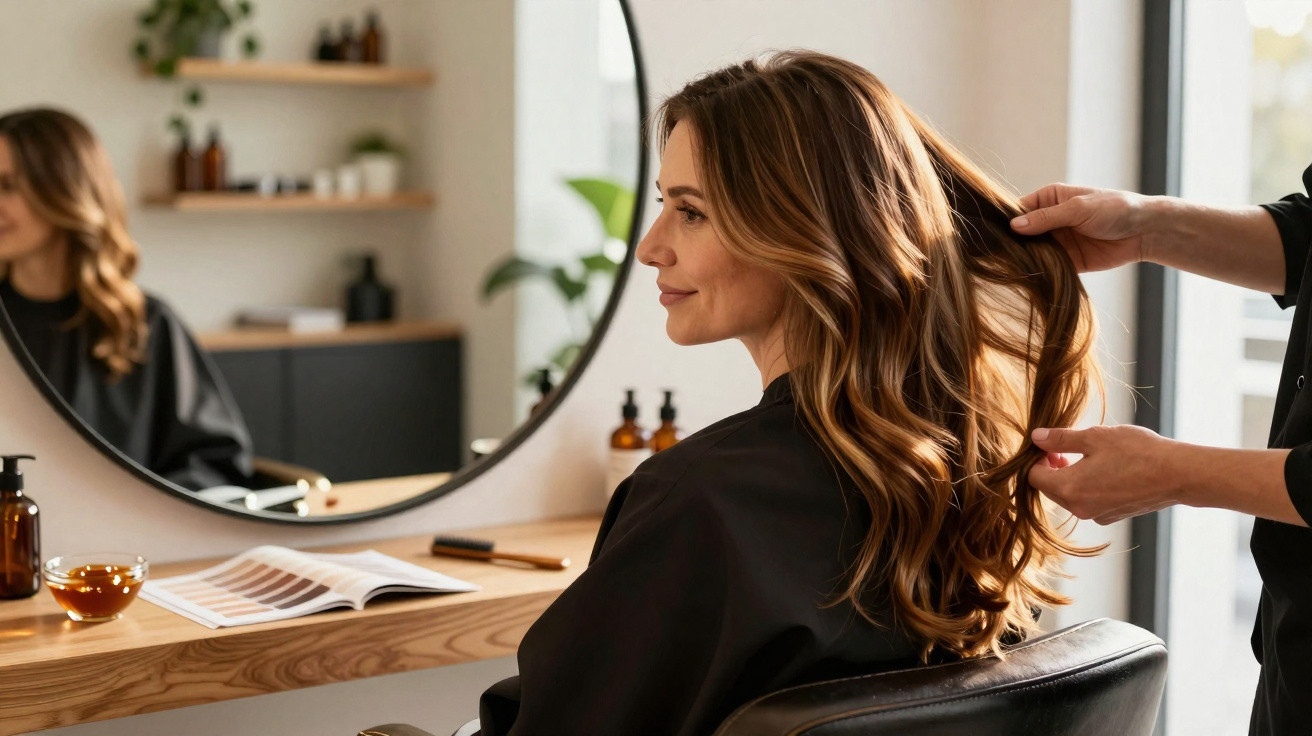
Soft chocolate with caramel veils
This brunette shade retains richness at the roots while weaving soft caramel through the mid-lengths. Its dimension can help finer hair appear fuller. Keep the caramel within two to three levels of the base colour.
Mushroom brunette
Neutral taupe shades can counter redness in the complexion without making the hair look grey. A discreet gloss will maintain a smooth, silky finish. Request a root shadow so regrowth does not create a severe line as grey returns.
Champagne or sandy blonde
Blondes sitting between beige and gold can make the eyes brighter and soften the appearance of lines. Compared with icy tones, they are better at balancing sallowness. Choose micro-highlights over extensive bleaching for a naturally lifted effect.
Strawberry or rose-gold whisper
A delicate blush-toned glaze on blonde or light brown hair brings warmth and luminosity. It is most effective as a semi-permanent colour, allowing it to fade softly without turning orange.
Modern copper, not penny orange
Sophisticated copper paired with cinnamon lowlights gives a polished result. Keep the finish sheer, as overly dense pigment can appear flat and harsh. A gloss every six weeks helps the tone remain balanced.
Techniques that suit grey hair and fine texture
Grey hair reflects light in its own way and may seem matte or wiry. The application technique is just as important as the chosen colour.
- Face-framing lights: Delicate highlights through the fringe and temples add brightness where the skin is most on show.
- Root smudge: Applying a demi-permanent colour at the roots reduces contrast, making the grow-out softer and more natural.
- Babylights and lowlights: Fine ribbons create the impression of greater density. Lowlights “put back” depth where grey hair appears flat.
- Glossing: A clear or tinted acidic gloss closes the cuticle, enhances shine and reduces frizz.
- Balayage on a diagonal: Diagonally placed strokes lengthen the face visually and soften lines around the jaw.
Dimension equals youth. One tone across the head reads like a helmet. Two or three tones read like hair.
What to avoid for a fresher appearance
Some colour choices are more likely to add years than take them away. Avoiding them keeps your hair colour polished and effortless.
- Going too dark: Almost-black colour increases scalp contrast and can emphasise thinning.
- Over-ash correction: Too much ash may turn khaki against warm skin and leave the complexion looking flat.
- High-lift on fragile ends: Bleaching porous lengths can cause snapping and frizz, which immediately signals “damage.”
- Full-time permanent colour: Reserve permanent colour for areas needing coverage, then use demi-permanent colour to blend the remainder.
- Harsh lines: Defined root lines can age the eye area, so soften them with a smudge or shadow.
Grey coverage strategies
Grey can appear as scattered strands, clear streaks or concentrated patches at the temples. Tailor the approach to the pattern for a gentler-looking finish.
Scattered grey (salt in pepper)
Choose a demi-permanent colour close to your natural level. It softens silver strands and adds shine without creating obvious regrowth. Top it up every 4–6 weeks.
Distinct streaks
Make them part of the look. Introduce lowlights around the streak to create balance, then glaze the silver in pearl or champagne. The resulting contrast appears deliberate rather than accidental.
High-percentage grey
You could embrace 50–70% of the silver while blending the rest. A cool-beige gloss changes white hair to a pearly tone and counteracts yellowing. Add warm lights around the face for radiance.
Salon language without the jargon
If you prefer salon colour, using the right terms can help. Ask for “soft, neutral-warm dimension,” “a root shadow one level deeper,” or “micro-highlights, two shades lighter, focused around the face.” If bleaching is involved, request a bond builder. If your scalp is sensitive, confirm that the formula remains ammonia-free.
At-home habits that keep colour youthful
Upkeep influences the final result just as much as the first salon visit. A few small routines can prolong both shine and tone.
- Select a sulphate-free, low-pH shampoo to help keep the cuticle sealed.
- Use violet or blue shampoo once weekly, alternating as needed to manage brassiness according to your base tone.
- Apply heat protectant whenever you blow-dry to reduce porosity.
- Use a beige, honey or taupe tinted mask every fortnight to refresh the tone.
- Wear a hat in intense sunshine, as UV light fades red and blonde shades fastest.
Safety, sensitivity and patch testing
Skin responses can change later in life. Carry out a patch test 48 hours before trying a new formula. If you have previously reacted to PPD or fragrance, seek out PPD-free, low-fragrance or henna-free formulas. If your scalp tingles or feels tight while colouring, switch to demi-permanent colour around the hairline.
How colour works with cut and brows
Colour has greater impact when the haircut supports it. Gentle layers give fine hair more movement, helping its dimension show through. A soft fringe can blur forehead lines while framing highlights. If you go blonde, keep your brows one to two shades deeper than your hair; if you go darker, make them one shade softer. Use a neutral pencil instead of a warm-toned one.
Try this straightforward plan for a quick refresh
Week 1: Arrange babylights around the face with a root shadow, and ask for a beige or honey gloss. Week 3: Apply a tinted mask at home to bring back a little warmth. Week 6: Have another gloss and avoid further bleaching. This schedule keeps the colour vibrant without over-processing it.
Small, regular adjustments beat big, occasional overhauls. Consistency reads as natural youthfulness.
Extra points worth knowing
Grey hair often becomes more porous. Using a light argan or squalane oil as a weekly pre-shampoo treatment helps fill rough areas and limit colour fading. Rinse with cool water to leave the cuticle smoother. Where the water supply is hard, use a chelating treatment once a month to remove mineral build-up that can make blonde hair look brassy and brunette hair appear muddy.
For a low-commitment experiment, use a virtual shade test with a good camera in daylight. Next, test a semi-permanent gloss from the same colour family at home. It lasts 10–12 washes, letting you change direction if the tone does not feel right. Keep a before-and-after photo diary in natural light. You will see which undertones brighten your face, and can bring those images to the salon for more precise adjustments.



Comments
No comments yet. Be the first to comment!
Leave a Comment