
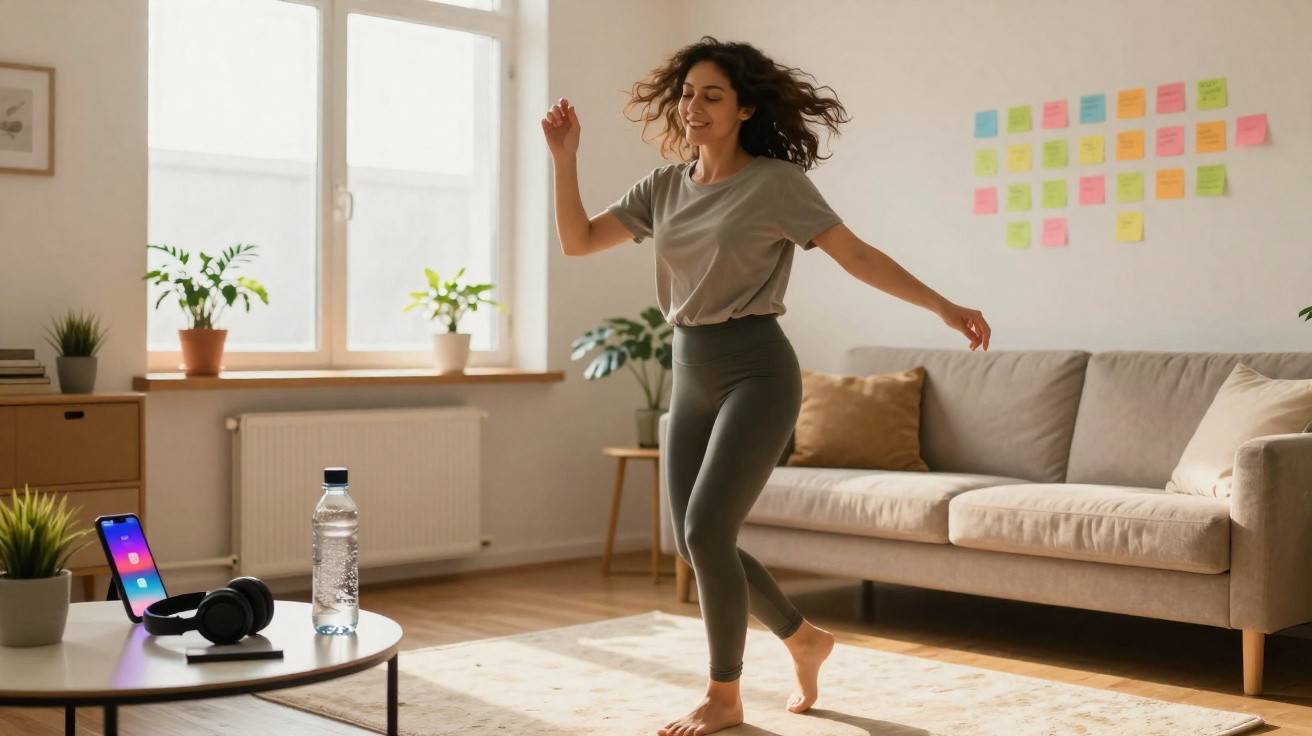
Dancers and dance instructors have been reinforcing a simple message: you do not need technique or choreography to gain the benefits of dance. Dancing for 20 minutes a day, five days a week, at home and without any pressure to perform, is enough to get the whole body moving and lift your mood over the months.
Why can dancing without choreography still deliver results?
Free movement, with no set steps, engages joints and muscle groups that often remain inactive in everyday life. Arms stretch out, hips rotate and knees bend at different angles, all without the concern of getting a particular move right. This freedom lowers the entry barrier that puts many people off conventional exercise, as there is no possible mistake when the aim is simply to move to music.
What happens in the brain during dance?
Moving your body in time with music stimulates the release of endorphins and dopamine, substances linked to feelings of pleasure and wellbeing. Unlike a workout based on repetition targets and weights, dancing at home shifts attention away from performance and towards the music and the feeling of your body in motion, helping to lower cortisol levels built up during the day.
When the practice is repeated, the effect stops being occasional. Instructors report that pupils who keep up the routine for several months begin to connect the end of the day with time to dance, creating a mental break that helps them release tension accumulated through work or household tasks.
Which body parts move the most?
Even without a choreographed structure, free dance works the body broadly when done regularly. Knowing which areas are most involved helps explain why physical tiredness can arise even during an informal session:
- The core and lower back, engaged to maintain balance during turns and changes of direction
- The hips, among the joints that move most in styles such as funk, pagode or axé
- Arms and shoulders, relaxed to follow the body’s sway without stiffness
- Legs, used in side steps, gentle jumps and shifts in weight
This broad range of movement is what sets dance apart from isolated exercises, as few activities can involve so many muscle groups at once without requiring equipment.
Why is the lack of pressure central to the habit?
Dancing without an audience, a mirror or the need to get each step right removes the performance pressure that often discourages beginners in other activities. This freedom is what supports consistency over the months, because the person does not view the practice as a test of ability but as an opportunity to let their body loosen up.
How can you stay consistent for five days a week?
Choosing a regular time, such as when you return from work or straight after a shower, helps make dance an automatic part of your routine. Putting together a 20-minute playlist with varied songs prevents monotony and keeps each session feeling fresh, without relying on motivation to get started.
Twenty minutes a day, five times a week, adds up to just over an hour and a half of spontaneous movement each week. It is a modest amount that, maintained month after month, translates into greater physical energy and a steadier mood throughout everyday life.


Comments
No comments yet. Be the first to comment!
Leave a Comment