
On the low coffee table, shiny brochures shouted about “new peptide technology” and “next‑gen serums”. Nearby, a young woman flicked through her phone, stopping on an advert for a US$120 “smart moisturiser” that claimed it could reset her skin in seven days. She pinched to zoom on the airbrushed face, exhaled, then locked the screen when she heard her name.
In the consultation room, the dermatologist glanced at her notes and then at the irritation across her cheeks. He didn’t reach for a prestige bottle or the latest launch. Instead, he opened a drawer, took out a plain white tube with an old‑fashioned logo, and nudged it over the desk.
“This,” he said, “twice a day. That’s it.”
The woman pulled a face. “This? I’ve seen this on the bottom shelf at the pharmacy.”
He smiled. “Exactly.”
A quiet shift is happening down there on the bottom shelf.
The old-school cream experts won’t stop recommending
If you ask a handful of dermatologists-quietly-what moisturiser they genuinely rate, the answer is often surprisingly similar. It isn’t the label that bankrolls fashion week. It isn’t the pot wrapped in rose‑gold branding. It’s a straightforward, almost unremarkable cream your grandmother would recognise.
They’ll call it “old-school”, and it usually sounds like praise. It’s thick enough to feel purposeful. It’s fragrance‑free. No sparkle, no perfume, no made‑up story about glacier water. Just a dependable formula built around humectants, emollients and occlusives. It softens on contact, and it leaves a faint, healthy glow-rather than that slick silicone slip.
Online, it rarely photographs like a hero product. In dermatology clinics, it often is.
A dermatologist in New York described a trend she couldn’t ignore: people arriving with sensitised skin after bouncing between fashionable gel creams and “cloud” moisturisers packed with actives. They showed up with red patches, tightness, and flaky areas that sat badly under make‑up. The shared issue wasn’t mysterious-too much experimenting, too little barrier support.
So she ran an informal test of her own. She would pare routines back to a gentle cleanser plus that same understated moisturiser, morning and night, for four weeks. No acids. No retinol. No brightening blends. Just the one old‑school cream.
The before‑and‑after photos told the story. Redness eased. Fine dehydration lines looked softer. People said their skin had “calmed down”. Even more unexpectedly, several patients stopped buying three other products because they felt they didn’t “need them anymore”. Low‑tech, high return.
Dermatology professionals like it for an unglamorous reason: the ingredients are sensible. Most versions rely on glycerin to draw water into the skin, fatty alcohols and lipids to smooth and soften, and heavier occlusives to lock everything in. No essential oils quietly stirring up irritation. No trend ingredients sprinkled in at 0.01% purely to justify a marketing claim.
Scientifically, it backs up the skin barrier rather than battling it-and that matters. A strong barrier doesn’t only feel more comfortable; it holds onto water better, copes with actives more reliably, and is less likely to react to pollen, pollution, or the wrong foundation. That’s why this anonymous‑looking cream keeps creeping up the “most recommended” lists in surveys and expert panels.
How to actually use a no-frills moisturiser like the pros
Dermatologists tend to apply these classic creams with a small technique that makes a real difference: they treat them as a practical tool, not a finishing accessory. They don’t dab on a pin‑prick and rub until it vanishes. They use enough to leave a soft veil-especially in the evening.
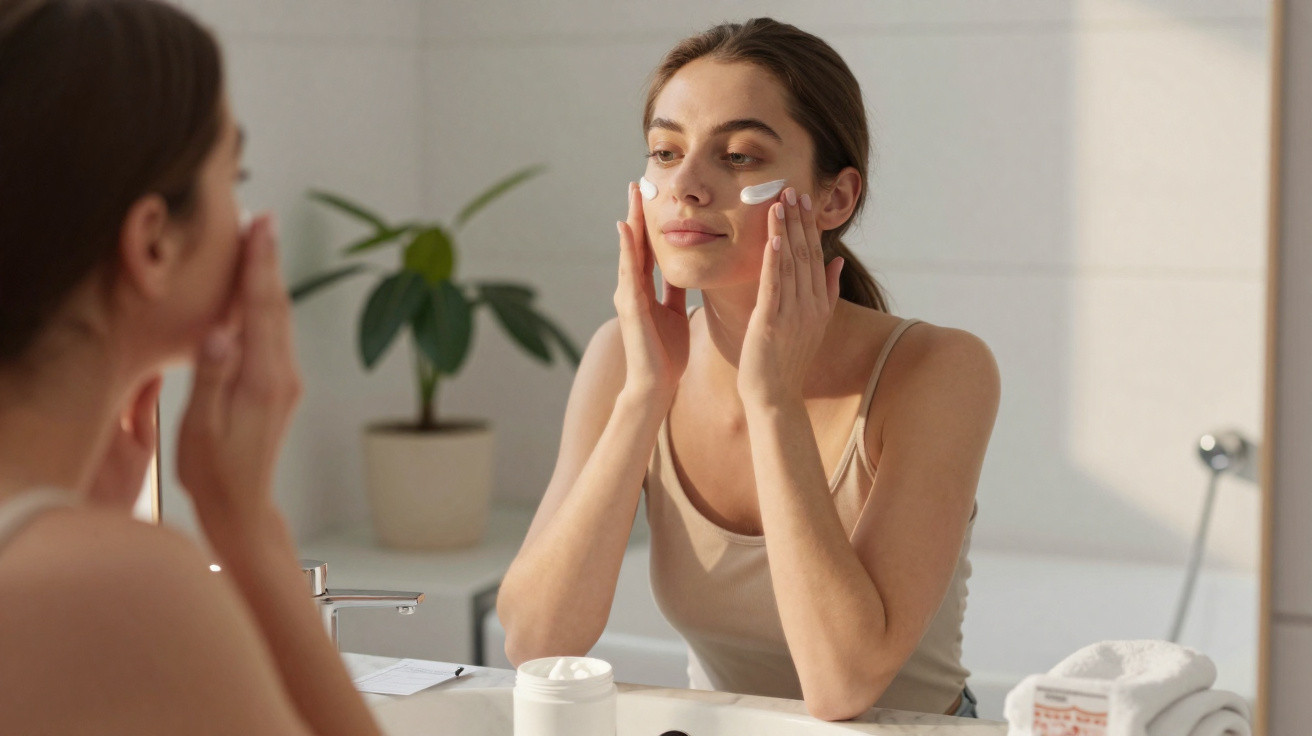
The method is straightforward. While your skin is still slightly damp, take a pea‑ to almond‑sized amount, warm it between your fingers, then press it in instead of scrubbing it around. If you’ve got drier or compromised patches, add a second light layer there-almost like a targeted mask. This is where the “old-school” texture earns its keep: it stays on the surface just long enough to trap moisture, then gradually melts in over twenty to thirty minutes.
Applied like that, the budget tube starts behaving suspiciously like an overnight mask from a luxury jar.
This is also where reality kicks in. Lots of people like the concept of a minimalist routine… right up until it means turning down the sixth serum lined up in the bathroom. Many dermatologists will privately admit they spend as much time battling product FOMO as they do treating skin.
They also keep seeing the same missteps. People pile acids and retinoids on top of each other without adding a serious barrier cream. They switch moisturisers every fortnight, before their skin has any chance to settle. Or they use a gorgeous, heavily perfumed cream on already reactive cheeks, then blame “dry skin” when it’s actually irritation.
Let’s be honest: almost nobody follows that flawless, perfectly layered TikTok routine every day. We rush, we forget, and sometimes we fall asleep with our make‑up still on. That’s precisely why a steady, forgiving moisturiser isn’t a “nice extra” so much as a safety net.
One dermatologist I spoke with put it in blunt terms:
“If your moisturizer needs an Instagram filter to seem effective, it’s probably not doing the job your skin actually needs. The best ones look almost boring on the shelf and quietly brilliant on your face.”
There’s a quieter emotional angle here too. On a difficult day, spreading on a thick, no‑nonsense cream can feel oddly stabilising. No grand promises, no “28‑day transformation”-just a small, comforting ritual. Practically speaking, that comfort comes with a set of guidelines most experts agree on:
- Pick fragrance‑free if your skin ever stings, itches or flushes.
- Patch test on a small area if your barrier is already inflamed.
- Go richer at night and lighter in the daytime, rather than buying five separate “day creams”.
- Don’t mix strong actives into the cream unless a professional has advised it.
- Stick with it consistently for at least three to four weeks before you judge it.
Why this “boring” cream might quietly change your routine
There’s something unexpectedly freeing about realising the number‑one moisturiser on many expert lists doesn’t come from a prestige counter. It gently forces a slightly uncomfortable question: how much of your routine is for your skin-and how much is for the story you tell yourself in the mirror each morning?
On a cluttered bathroom shelf, a plain tube will never steal attention from a frosted glass jar. But skin doesn’t read labels; it responds to molecules. It “registers” when there’s enough glycerin to hold onto water. It “settles” when it gets a cushion of lipids instead of a cocktail of potential allergens. That’s the understated strength of these old‑school formulas.
Once you’ve touched your face at 7 a.m. after a night with a simple, heavy cream-compared with a light, perfumed gel-it’s hard to forget the difference. People explain it in straightforward words: softer, bouncier, less tight after a hot shower. They stop treating moisturiser as “luxury” and start treating it as infrastructure, like a supportive mattress or reliable shoes.
| Key point | Detail | Why it matters to you |
|---|---|---|
| Old-school formula | Focus on humectants, lipids and occlusives, with little to no perfume | Lowers the risk of irritation while deeply hydrating the skin barrier |
| Dermatologist-approved | Frequently ranked as a top choice in expert surveys and clinics | A dependable option without chasing every new launch |
| Low-cost, high impact | Commonly sold in pharmacies rather than luxury beauty counters | Saves money and streamlines routines without sacrificing results |
FAQs:
- Is an old-school moisturiser enough on its own? For many people with non-problematic skin, a gentle cleanser, this type of cream and daily sunscreen can absolutely cover the basics.
- Can I use it with retinol and acids? Yes, that’s where it shines: apply your active first, let it sink in, then layer the moisturiser to buffer potential irritation.
- What if my skin is oily? You may prefer a lighter version or use the richer cream only at night or on drier areas like cheeks, skipping the T‑zone.
- Does a higher price mean better hydration? Not really; hydration depends on the formula, not the marketing budget or the packaging.
- How long until I see a difference? Comfort can improve in a few days, while barrier and texture changes usually become clearer after three to four consistent weeks.




Comments
No comments yet. Be the first to comment!
Leave a Comment