
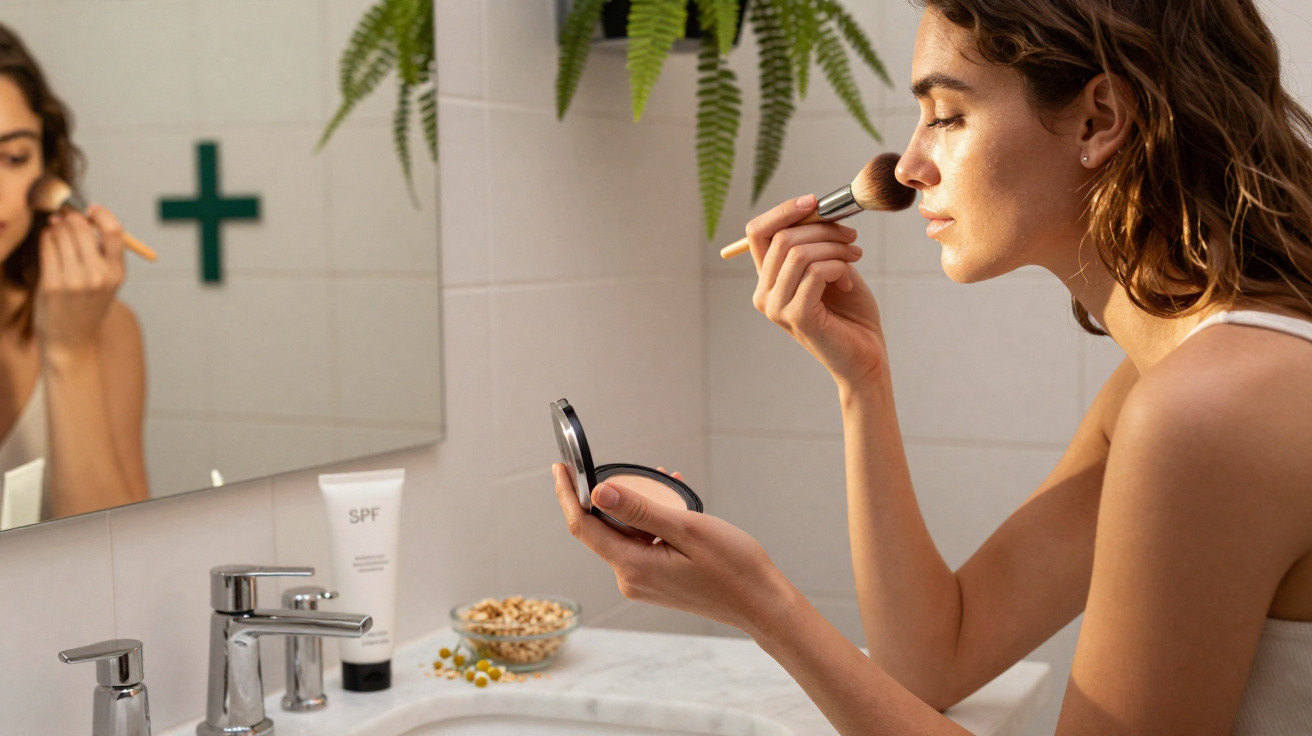
Behind this buzz is La Rosée, a skincare name that has expanded into make-up with a hybrid “care-makeup” range. One item stands out: a natural-origin compact powder that is now leading pharmacy sales and changing the way many people approach an everyday base.
A powder that’s taking over from foundation
In France, the beauty aisles in pharmacies are widely seen as a litmus test for products people genuinely trust. La Rosée says its compact has reached the number one position among tinted powders, with one unit sold every 20 seconds. For a make-up line only launched in 2025, that traction suggests a clear shift: people still want coverage, but not the weight or feel of a traditional foundation.
“She replaced my foundation”: many users say this powder delivers enough coverage and comfort to skip liquid base entirely on most days.
The idea is straightforward yet well judged: a compact that performs like make-up, while being loaded with skincare-style ingredients. It’s designed to even out, mattify and gently blur the look of the skin, while keeping the complexion comfortable for hours rather than feeling tight or chalky.
What’s inside this 100% natural-origin powder?
La Rosée describes this compact as a “treatment powder”, based on pigments that are 100% of natural origin. That point matters to a growing group of shoppers who read ingredient lists closely and prefer formulas that are less reliant on synthetics.
A few ingredients are highlighted in particular:
- Mica – gives a soft glow without looking heavy or sparkly.
- Zinc PCA – recognised for its anti-sebum action, especially useful for shiny or combination skin.
- Upcycled rice starch – helps soak up excess oil and limit shine.
- Hyaluronic acid – supports hydration so the powder doesn’t feel drying.
- Organic plant oils – help support the skin’s natural moisture barrier.
The brand also states the formula is non-comedogenic, meaning it is intended not to block pores. For anyone who is prone to spots, that can be a deciding factor for a product worn all day.
Clinical tests reported a 47% reduction in shine after a single application, with testers noticing a smoother skin texture and more even tone.
La Rosée says the finish lasts for around eight hours-enough to get through a working day without constant top-ups-so long as the skin is properly prepped.
How to apply it for an even, natural finish
Although it’s designed to be quick and straightforward, application method noticeably affects the result. The brand’s guidance starts with clean skin that’s well moisturised, which helps prevent the powder catching on dry areas or settling into fine lines.
Step-by-step routine suggestion
- Step 1 – Prep: Cleanse your face, then apply your usual moisturiser and allow it to sink in fully.
- Step 2 – Pick up the product: Lightly swirl a brush over the compact. Tap off any excess so the finish stays even.
- Step 3 – Apply: Buff in circular motions from the centre of the face outwards, concentrating where you want more coverage.
- Step 4 – Target zones: Build a little extra over the T‑zone or blemishes, pressing the brush on gently.
- Step 5 – Sun-kissed option: Select a warmer shade and sweep it over the high points of the face, as you would with a bronzing powder.
Because the powder is very finely milled, it generally remains natural-looking even when you layer it. For a “your skin but better” effect, a single light layer can be enough; if you want more coverage, it’s better to build gradually rather than applying a thick coat all at once.
Why pharmacy powders are having a moment
The popularity of this La Rosée compact reflects wider changes in make-up habits. Many people are reserving full-coverage foundation for specific occasions, and leaning day-to-day towards products that feel breathable and look like skin rather than a filter.
Pharmacies in France have long been associated with reliable skincare. When make-up with skincare-style positioning sits alongside those products, it borrows some of that credibility. For shoppers, a powder that promises visible results with a gentle-feeling formula can seem like a safer choice than an impulse compact from a supermarket shelf.
This type of hybrid product blurs the line between skincare and makeup, making the first step of makeup feel more like a continuation of a care routine.
Cost plays into the appeal too. Priced at about €18.90 for a refillable compact, it lands in an accessible “affordable luxury” space: not the lowest-priced option, but well below designer make-up.
Refillable format: a new normal in everyday makeup
Refillable packaging is another key selling point. Rather than disposing of the entire compact once it’s empty, you can buy a refill instead-cutting down plastic waste and often reducing the cost of repeat purchases.
Refills used to be largely the territory of premium brands, but they’re increasingly appearing in mainstream pharmacy ranges. With a daily staple like face powder, the environmental impact quickly becomes significant when large volumes are sold each month.
Who this kind of powder suits best
Most skin types can wear it, but certain needs may be particularly well matched:
| Skin type | Potential benefit |
|---|---|
| Combination to oily | Better shine control and a smoother look to pores thanks to zinc PCA and rice starch. |
| Normal | A fast, easy step to even out the complexion with a light, comfortable feel. |
| Dehydrated | Often more comfortable than classic mattifying powders due to hyaluronic acid and oils. |
| Acne-prone | A non-comedogenic formula helps limit pore-blocking compared with heavier foundations. |
Very dry or mature skin can still use a compact like this, but may need a richer moisturiser underneath to avoid a powdery finish, or pair it with a hydrating primer.
Foundation vs. powder: how to choose your base
If you’re wondering whether you could also “replace your foundation”, a few practical questions can help clarify what you need:
- Do you require full coverage every day for noticeable redness or pigmentation?
- Do traditional liquid foundations make your skin feel suffocated?
- Do you prefer a base that looks almost undetectable at close range?
Where maximum coverage is non-negotiable, foundation may still be the better fit, with powder used lightly over the top. If comfort, speed and a natural finish matter more than full coverage, a care-led compact like this can become the main base-sometimes alongside concealer only where it’s needed.
Tips to get a smoother result
A few small tweaks can help powders sit better and look more skin-like:
- Exfoliate gently once or twice a week to remove dry flakes that can catch pigment.
- Use a hydrating mist before and after application to help the powder melt into the skin.
- Press the powder in with a puff around the sides of the nose and on the chin, where pores often show more.
- During the day, blot with tissue rather than stacking too many extra layers.
These habits help avoid the “dusty” look some people worry about and keep the finish closer to bare skin.
Key terms and what they really mean
Compact labels can be unclear, so it helps to translate a few common claims:
- Non-comedogenic: designed so ingredients are less likely to block pores. It’s not a promise you’ll never break out, but it’s typically a better option for blemish-prone skin.
- Natural-origin pigments: pigments sourced from minerals or plant-derived materials rather than being entirely synthetic. This describes composition, not automatically how well it performs.
- Mattifying: reduces surface shine, mainly by absorbing sebum. If taken too far, mattifying formulas can feel drying on already parched skin.
- Upcycled ingredient: a component taken from another industry’s by-products (such as rice) that might otherwise be thrown away.
Knowing what these phrases mean can set expectations more accurately. A “natural” powder can still deliver respectable coverage, and a “mattifying” formula can remain comfortable when it’s balanced with hydrating ingredients like hyaluronic acid or oils.
For anyone thinking about changing their routine, one realistic approach is to wear this sort of powder alone on workdays for a soft-focus, second-skin finish, and keep a more covering foundation for evenings or events. Over time, plenty of users find that lighter everyday base make-up feels less congesting and helps them feel more at ease with their natural skin, imperfections included.

Comments
No comments yet. Be the first to comment!
Leave a Comment