
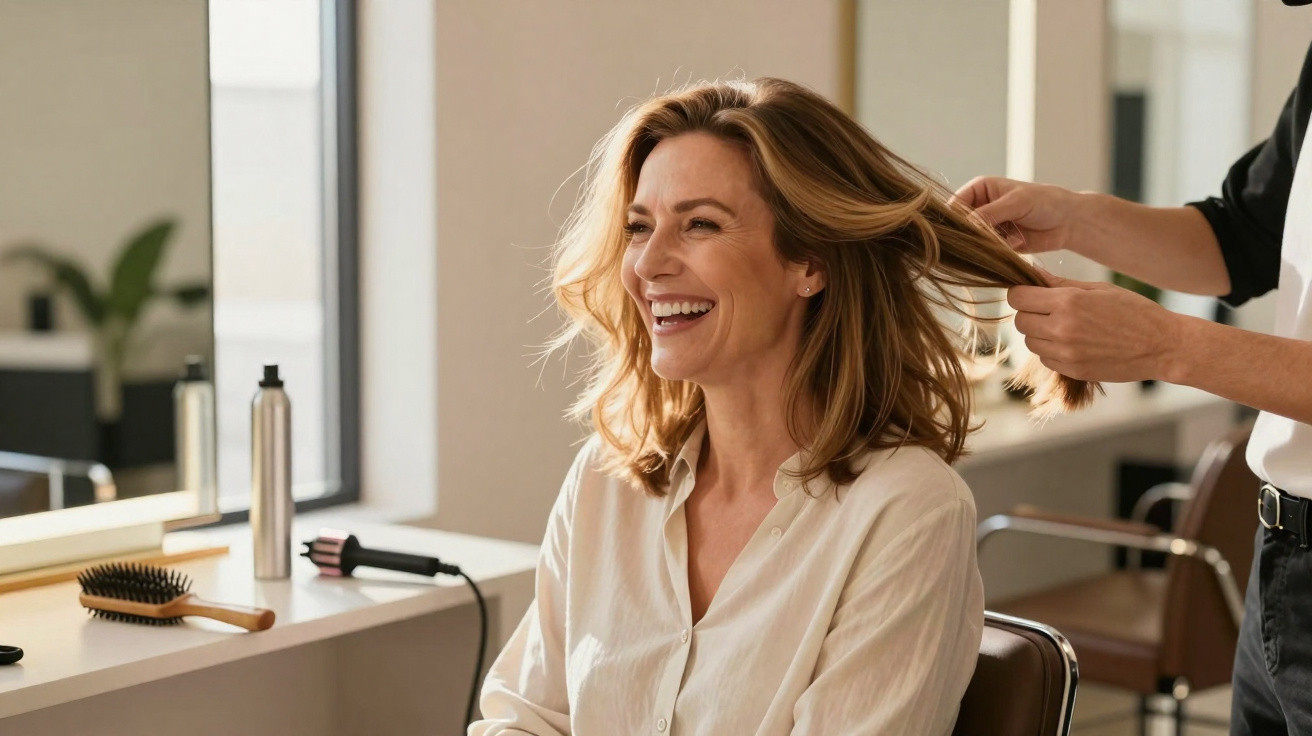
Hormones fluctuate, hair texture can shift, and the styling routines that used to deliver volume can suddenly stop working. Instead of piling on product in the hope of “thicker” hair, many hairdressers point to one standout solution for fine, ageing hair: a precisely planned cut.
Why hair feels thinner after 50
After midlife, hair growth commonly slows and individual strands often become finer. As a result, the scalp can be more visible-particularly at the crown and along the parting. When hair is left long and weighty, the lengths can pull everything downwards, making the overall look appear even sparser.
Stylists often see the same cycle: hair looks good straight after a blow-dry, then the roots drop within a few hours; the ends start to look transparent; and a sleek, poker‑straight finish can make every thinner patch stand out. Many women keep hold of extra length for “coverage”, but that choice can backfire and make fine hair look flatter.
"Length without structure tends to flatten fine hair, while the right cut concentrates what you already have and makes it look fuller."
The cut hairdressers swear by for fine hair after 50
In salons, one recommendation comes up repeatedly: a layered cut, adjusted to your hair’s density and your face shape. This is not the choppy, over‑thinned layering associated with the 2000s. Instead, it’s modern, soft layering that keeps the perimeter looking healthy, while using shorter pieces to introduce movement.
Layers create intentional variations in length through the hair. That breaks up the look of a heavy, limp “sheet” and replaces it with lift and texture. For fine or thinning hair, this usually translates into more bounce at the crown and sides, and less attention drawn to see‑through ends.
"The goal of a layered cut on fine hair is simple: keep the bulk where it’s needed, remove what weighs it down, and build the illusion of density."
How layering helps after 50
- Reduces breakage: It removes damaged, stringy ends, helping strands look healthier and reducing snapping.
- Gives instant volume: Shorter sections at the top and sides make it easier for roots to lift.
- Frames the face: Gentle face‑framing layers can soften the jaw and bring out the cheekbones.
- Modernises the look: Movement in the cut tends to read as fresher and more youthful.
For fine hair, hairdressers frequently suggest keeping the overall length between the chin and just below the shoulders. Very long styles on delicate hair can look thinner, and they can also draw attention to drooping features rather than lifting them.
Choosing the right layered shape for you
Layers are not one‑size‑fits‑all. The most flattering approach depends on your hairline, your natural texture, and the shape of your face.
| Face shape | Layered cut that flatters |
|---|---|
| Round | Longer layers below the chin with volume at the crown to visually lengthen the face. |
| Square | Soft, feathered layers around the jaw to blur sharp angles and add movement. |
| Oval | Most layered bobs and mid-length cuts work; focus on keeping ends blunt, not wispy. |
| Heart-shaped | Layers starting around the cheekbones to balance a wider forehead and narrower chin. |
If you’re worried about losing length, a “micro” layered cut can be a comfortable first step: minimal shaping around the face and crown for lift, while keeping the back a touch longer. Over time, many people end up preferring a lighter, shoulder‑grazing cut because it appears fuller and is easier to manage.
Styling tricks that boost the effect of the cut
A strong haircut does a lot, but day‑to‑day styling often determines whether fine hair reads as flat or full. Hairdressers repeatedly come back to three straightforward tactics that tend to have the biggest impact.
Swap poker‑straight styles for soft waves
A sleek, stick‑straight finish reflects light in a way that can reveal thinner areas and gaps. Loose waves and soft curls, by contrast, create bends and shadows that help hair look thicker.
"Even a few subtle bends through the mid‑lengths give the impression of more strands than you actually have."
Hot brushes, large‑barrel tongs, and heatless options such as overnight twists can all do the job. What matters is keeping the wave relaxed-tight curls can make the ends look thinner on fine hair.
Lift the roots, not the lengths
The most noticeable volume starts at the scalp. Drying with your head tipped upside down, or using a round brush to lift sections at the roots, generally creates more height than focusing on the ends.
Stylists often suggest sticking to lightweight products for fine hair:
- A small amount of volumising mousse applied at the roots.
- Texturising spray through mid‑lengths for grip and separation.
- Very light cream or serum only on the tips to prevent frizz.
Heavy oils, rich masks applied on the scalp, and strong-hold gels can weigh fine hair down and undo the benefits of a well‑cut shape.
Common mistakes that make fine hair look thinner
Once hair changes with age, certain habits can quietly work against you:
- Growing hair too long: Ends become weak and transparent, which highlights thinning.
- Skipping regular trims: Split ends travel up the hair shaft, leaving hair looking frayed rather than full.
- Using harsh colouring methods: Frequent bleaching, or very dark and flat colour, can make a lack of volume more obvious.
- Over‑straightening: Daily high heat strips away natural body and can contribute to breakage.
"Shorter, healthier, well‑layered hair usually looks thicker than long, tired lengths, even if you technically have less hair on your head."
Colour and care that support the haircut
Colour placement can add dimension to fine hair. A single, all‑over black or very dark brown shade can increase the contrast between hair and scalp, making the scalp more noticeable. Soft highlights and lowlights-particularly through the crown and around the face-can create depth that mimics density.
Semi‑permanent tints and gentle highlighting are often kinder to mature hair than aggressive bleaching. Hydrating conditioners still have a role, but they’re best concentrated on the mid‑lengths and ends. Anything heavy near the roots can quickly flatten the lift you get from your cut.
What hairdressers mean by “texture” and “density”
Salon terminology can be confusing, so it helps to pin down a few definitions:
- Texture is the thickness of each hair strand and whether hair is straight, wavy, or curly.
- Density is how many strands you have per square centimetre of scalp.
- Volume is the visible lift away from the scalp, which cutting and styling can create even when density is low.
A layered cut for fine hair mainly changes perceived volume rather than the actual number of hairs. By shifting where the length and weight sit, a stylist changes how light and movement fall across the head-and that’s what the eye tends to register first.
Real‑life scenarios: how the right cut changes daily styling
Imagine two women with similarly fine, thinning hair. One keeps it long and straight to “hide” the loss. She spends half an hour blow‑drying, but by lunchtime the roots have fallen and the ends look stringy.
The other chooses a layered, collarbone‑length cut and wears it in soft waves. She rough‑dries upside down, uses a small amount of mousse at the roots, then scrunches a texturising spray through the mid‑lengths. Her routine takes 10 to 15 minutes, and the hair still looks lifted by the end of the day.
The amount of hair may be comparable in both cases. The difference is structure, not simply length-which is why, for fine hair after 50, so many hairdressers steer clients towards thoughtful, modern layering instead of heavy, ageing lengths.

Comments
No comments yet. Be the first to comment!
Leave a Comment