
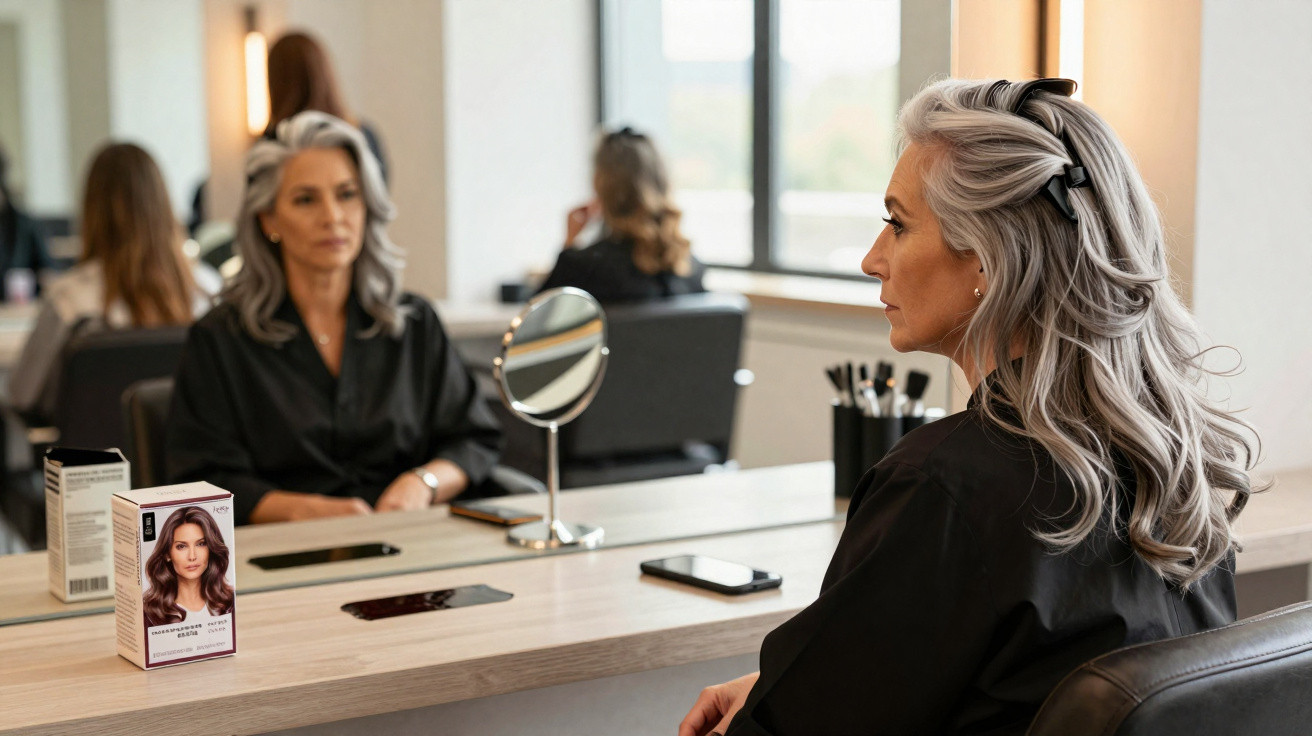
In bathrooms and barbershops up and down the country, a tiny detail keeps fuelling outsized disagreements: how to handle greying hair.
For some, those silvery strands feel like hard-earned proof of life experience. For others, the first glint is a cue to reach for the dye. The salt and pepper hair argument has turned into a low-level tug-of-war about ageing, attractiveness and even bias at work - and it can feel unexpectedly intimate.
Why salt and pepper hair divides opinion
Once upon a time, grey hair was simply evidence that time was passing. These days it often comes loaded with cultural meaning. Social media is packed with polished “grey transformation” makeovers, but hair-colour sales are still thriving - and the friction lives right between those two realities.
One camp reads natural greys as modern, chic and genuine. The other worries that grey makes the face look less vibrant, appears “tired”, or suggests you have “let yourself go”.
Salt and pepper hair has become less about biology and more about what it says about status, sexuality and self-respect.
This isn’t purely a style preference. It also exposes clashing views on getting older, gendered expectations, and the pressure to keep up appearances.
The case for embracing your grey
Authenticity and confidence signals
People who champion grey hair often say the biggest change is mental, not cosmetic. Sticking with your natural colour, they argue, communicates confidence in a culture that prizes youth.
- It signals you’re at ease with your age.
- It cuts out the time, cost and chemical exposure that comes with frequent colouring.
- It can create a bold contrast with your skin tone and eye colour.
Many stylists say clients frequently feel an immediate sense of freedom when they stop hiding grey. The stress of “roots showing” - and the routine of booking colour appointments every few weeks - fades away. That extra mental space, they suggest, can matter more than flawless coverage.
For some, the first fully grey haircut feels less like giving up and more like finally opting out.
Changing beauty standards
Well-known faces who wear visible silver have made the look more mainstream. Men on television with grey at the temples have been accepted for years. More recently, women across media and fashion have challenged the notion that obvious grey means you’re past your best.
Hair professionals also point out that grey can look deliberately stylish rather than uncared-for - provided the cut and condition are right. Because grey hair is often coarser and drier, maintaining texture and shape with regular trims and moisturising products becomes even more important.
The argument that grey “ruins” your look
Age perception and bias
Even with changing attitudes, ageism hasn’t disappeared. Some people worry that visible grey shifts how they’re viewed at work, on dates, and in everyday social situations.
In industries where image is closely watched, there can be an unspoken belief that younger-looking employees are more “marketable”. That can create pressure - particularly for women - to keep hair colour consistent and grey-free.
Grey hair does not change your skills, but it can change the assumptions people make before you even speak.
Dating apps can intensify the worry. Some users say they feel more comfortable swiping with dyed hair in their photos, concerned that grey might make them appear “older” than the age group they’re actually in.
Colour and contrast issues
Those who dislike salt and pepper hair often say the mixed tones dull the face. Uneven greying - silver roots with darker lengths - can photograph poorly and look stark under office lighting.
Hairdressers sometimes meet clients who tried going natural and then feel they look permanently “tired” or “washed out”. In that situation, stylists may suggest softer options such as highlights, lowlights or a warmer tint to bring back contrast, rather than committing to full coverage.
| Viewpoint | Main concern | Common response |
|---|---|---|
| Pro grey | Feeling forced to look younger at any cost | Stop colouring and prioritise the cut and condition |
| Anti grey | Worry about looking older or less attractive | Ongoing colouring plus regular root touch-ups |
| Middle ground | An uneven salt and pepper pattern | Blending methods and partial colour |
How gender changes the rules of grey
It’s difficult to miss the double standard around salt and pepper hair. Men with grey at the temples are often described as “distinguished”. Women of a similar age are more likely to hear that they look “tired” or “older”.
Social expectations strongly influence reactions:
- Men can be praised for a “silver fox” look at 40.
- Women in their 30s with early greys may face surprise or pity.
- Women in senior roles often report pressure to look “energetic” - which can be a stand-in for “younger”.
The same salt and pepper pattern that wins admiration on a man can be read as neglect on a woman.
Because of this, many women who genuinely like the idea of going grey still keep colouring - especially around promotions, interviews or weddings.
The science behind going salt and pepper
Why hair turns grey in patches
Hair colour is produced by pigment cells known as melanocytes. With age, these cells become less active and eventually stop making melanin. It rarely happens evenly, which is why grey often appears first around the temples or along a parting rather than arriving all at once.
Genes are a major factor. If your parents went grey early, you’re more likely to do the same. Habits and circumstances such as smoking and long-term stress can speed things up, but they don’t create greying from nowhere.
Salt and pepper hair is simply a blend of coloured strands and white strands on the same head. Over time the balance shifts, creating a speckled phase before fully silver hair takes over.
Health myths and realities
Dermatologists say most greying is benign and not a sign of poor health. Very rapid, sudden greying can, in rare cases, point to an underlying issue or a major stress event - but that’s uncommon.
Pulling out grey hairs doesn’t make more grow. The myth lingers, although frequent plucking can harm the follicle if you’re rough. And when that hair grows back, it will still be grey, because the pigment cell in that follicle has already stopped working.
Practical paths through the grey debate
If you want to keep dyeing
If coloured hair makes you feel best, the focus should be on upkeep rather than shame. Specialists commonly recommend:
- Picking shades within two tones of your natural colour to make regrowth less obvious.
- Opting for semi-permanent or demi-permanent colour where possible to limit damage.
- Extending the time between full colouring sessions, and using root sprays or powders between appointments.
These approaches help soften the line between dyed lengths and white roots - a contrast many people find more ageing than grey itself.
If you are thinking of going natural
The changeover rarely looks like a shampoo advert. There’s often an awkward in-between stage, particularly when greys are clustered in specific areas.
Stylists often suggest:
- Going shorter to remove old colour faster.
- Using highlights or lowlights to blur the divide between dyed hair and natural grey.
- Trying toning shampoos to reduce yellowing, which can make grey look flat.
The most successful grey transitions usually involve a plan, not just stopping dye overnight and hoping for the best.
How salt and pepper hair affects self-image
For plenty of people, the real conflict happens in the mirror rather than on Instagram. Greying can raise identity questions: do you still look like you? Do you recognise yourself in holiday photos?
Psychologists note that hair is one of the few features people can change quickly, so it becomes a natural place to bargain with ageing. Some feel most like “themselves” with the colour they’ve always had. Others feel strangely inauthentic when their hair and face no longer reflect their real age.
And those mixed emotions can exist at once. It’s common to admire grey hair on friends while privately keeping a colour appointment in the diary.
Scenarios that shape the choice
Circumstances often outweigh principles. A few familiar examples:
- Career crossroads: A person in their early fifties applying for a new role might keep colouring until they feel established.
- New parent at 40: A mother with visible grey could feel self-conscious at the school gate and choose either to dye - or to keep the grey as a deliberate challenge to assumptions.
- Health or financial shift: Someone reducing spending or dealing with a sensitive scalp may stop salon colour and lean into natural silver.
These situations show why blanket advice - “always embrace grey” or “never show grey” - fails to match the complexity of everyday life.
Words and ideas worth unpacking
The language used in this debate often smuggles in judgement. “Letting yourself go” frequently just means failing to meet someone else’s beauty rules. “Age-appropriate” often implies that older people should become less visible - socially as well as aesthetically.
Even the seemingly complimentary term “silver fox” is usually reserved for men, highlighting how limited the vocabulary can be for women ageing in public. Some women prefer “silver siren”, while others skip labels entirely and treat hair as a styling decision, not an identity category.
Risks, benefits and small experiments
Colouring comes with downsides: allergic reactions to dyes, irritated scalp, and gradual damage to the hair shaft. For most people these risks are manageable, but they are real. At the same time, many report an emotional lift from colouring - feeling more refreshed and more confident.
Choosing to go natural removes chemical exposure and cuts costs, but it can introduce different pressures: age-related bias, unsolicited remarks, or a sense that you’re losing control over how you present yourself. Some avoid an all-or-nothing decision by trying small tests first - letting roots grow a bit longer, choosing a softer shade, or asking a trusted friend for frank feedback away from social media.
In day-to-day life, salt and pepper hair is rarely a single, fixed decision. It’s more like an ongoing negotiation between biology, culture and personal comfort. The most vocal opinions often insist there’s only one correct approach, but most people end up living somewhere in between.






Comments
No comments yet. Be the first to comment!
Leave a Comment