
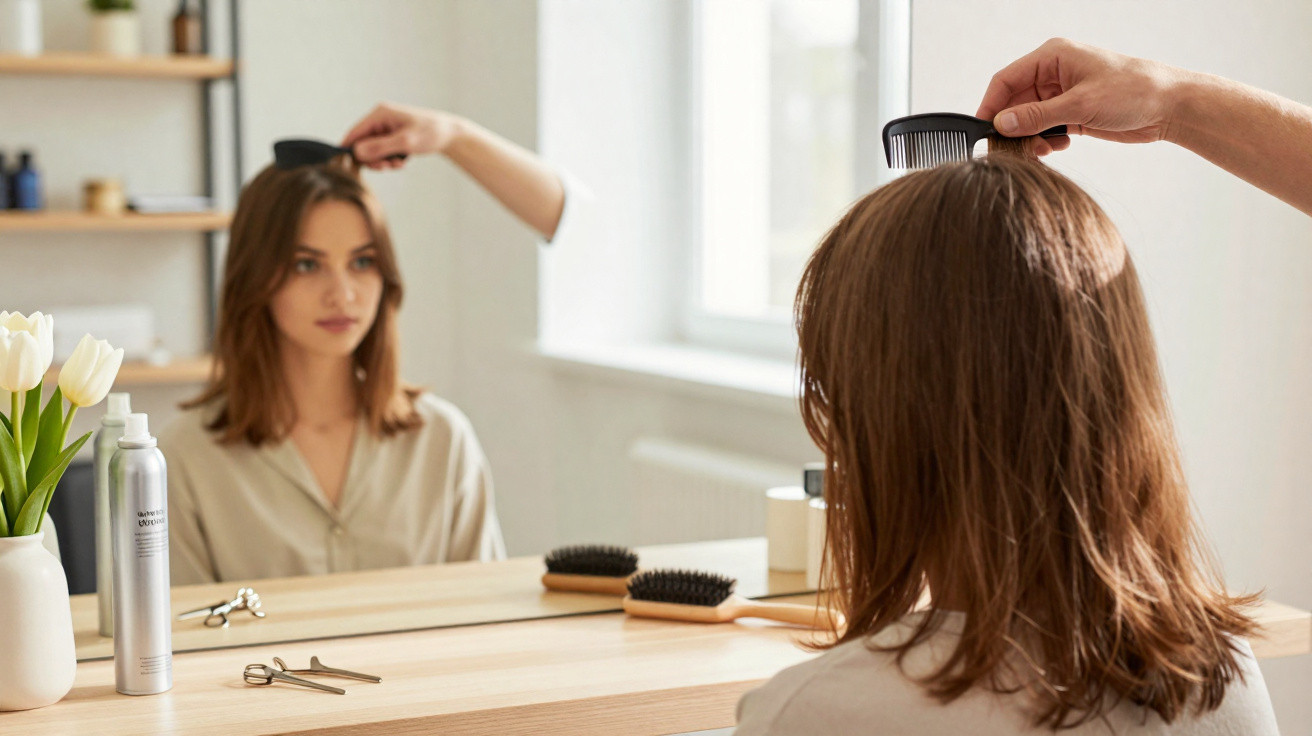
Hair professionals are backing a barely noticeable cutting trick this spring that makes fine hair look instantly fuller.
Anyone with fine hair knows the familiar frustration: it looks acceptable in the morning, then by lunchtime it’s fallen flat against the scalp. Styling products, volume powders and dry shampoo can help briefly, but rarely for long. That’s exactly why more and more hairdressers are changing tack - not by adding yet more products, but by using a specific cutting technique inside the hair that lifts the roots without sacrificing length.
Why fine hair collapses so quickly in spring
Fine hair naturally has a smaller diameter. That means each strand is thinner, loses shape faster and drops more easily. In spring, several things tend to amplify the problem:
- changeable weather with lots of moisture in the air
- more perspiration at the roots as temperatures become milder
- richer winter products still lingering in the routine
- overly long, unstructured cuts that pull the hair down
According to professional bodies, hair density also measurably decreases with age. After the menopause in particular, each fibre can become finer, which can intensify the feeling of “less and less hair”. So rather than relying solely on thickening shampoos, professionals increasingly recommend a “mechanical solution”: a cut that builds volume into the shape.
"If you have fine hair, you don’t need a radical short cut - you need clever cutting architecture that builds volume from the inside."
The best haircuts for more volume - and what fine hair really can’t handle
Hairdressers who specialise in fine hair textures typically rely on clean shapes and controlled layers. The aim is to add body without thinning out the ends.
Cuts that give fine hair a visible volume boost
- Short-cut bob: A precise, more compact bob emphasises a strong outline and makes the hair look denser. The nape can be slightly shorter with a little more length at the front, creating an optical lift.
- Mid-length with gentle layering: If you don’t want to lose length, a shoulder-length cut with subtle layers is a safe choice. Most movement sits in the top sections, while the ends stay full.
- Pixie or bixie: Short styles with textured top layers can be genuine volume-makers for very fine hair. The outline stays neat, while the length on top looks lightly “puffed up”.
What all of these styles share is structure - without turning hair into wispy, thin strands.
Styling mistakes that steal lift at the roots
Having the right cut matters, but knowing what to avoid is just as crucial. Hairdressers repeatedly point to the same fine-hair no-gos:
- very long lengths with no layering at all - the weight pulls everything down
- heavily thinned, “frayed” layers that make the ends look see-through
- heavy oils and rich masks applied around the roots
- straightening too often, which presses out any remaining movement
"The combination of a cut with no structure and over-conditioned roots is the surest route to flat hair."
The invisible volume weapon: a cutting technique with hidden support hairs
The technique hairdressers are talking about has various names, but the principle is always the same: inside the hair, close to the scalp, tiny sections are cut shorter. These short pieces remain out of sight, yet act like supports for the longer lengths above.
How internal volume works
In simplified terms, the method looks like this:
- The hairdresser divides the hair into very fine sections, especially around the crown and back of the head.
- Within the interior - usually one or two layers beneath the top layer - individual micro-sections are cut significantly shorter.
- The top layer is kept longer, fully concealing these short “support” strands.
- The shorter hairs prop up the longer ones, so they lift slightly and don’t collapse as quickly.
The effect is a bit like built-in volume braces: from the outside you only see fuller roots and more “stand”. Most of the length remains, and the ends still look blunt and dense.
"The invisible support hairs work against gravity day and night - without you needing a single tonne of mousse."
Who this technique suits best
This internal root-lift cut is particularly well matched to:
- short and mid-length bobs with a defined outline
- shoulder-length cuts with light layering
- pixie and bixie cuts with a textured top layer
Very long, straight hair benefits less, because the weight of the lengths can partially cancel the lift. The service is especially useful ahead of the warmer months. When the scalp sweats more, the roots need more “counter-pressure” from the cut so the hair doesn’t sit flush to the head.
Colour, care routine, styling: keeping the volume after your salon visit
Even the best cut won’t do much if colour and aftercare visually flatten the hair again. Hairdressers often suggest a kind of volume trio: the right colour placement, lightweight products, and a smart drying routine.
Using colour to fake density
Colour can do far more than cover grey. Applied strategically, it adds depth and makes the overall hair mass appear thicker. Effective options include:
- very fine, multi-dimensional highlights to create light and shade
- glossy toners that deepen the base tone and make the surface look smoother
- subtle light–dark contrast around the face to guide the eye
Large, single-process colours - whether very bright blonde or extremely dark - can make fine hair look “flat” quickly. Without tonal variation, the eye reads it as one solid block.
A light routine instead of heavy conditioning
Day to day, a simple, airy routine tends to help more than five different “miracle” volume products. Typical salon advice includes:
- Clarify the scalp regularly: Use a gentle clarifying shampoo once a week to remove styling residue and sebum. Clean roots hold a lifted shape for longer.
- Condition before shampoo: Apply conditioner or a mask to the lengths first, then use a mild shampoo at the roots - this reduces heaviness, a method many now know as reverse washing.
- Dry with a plan: Blow-dry upside down first until the hair is about 80% dry. Then stand up, set your parting, and finish with cooler air in the direction of growth.
- Use styling products sparingly: Choose a light mousse or a root-lift spray rather than layering multiple rounds of spray and powder.
"A real before-and-after from salons: a client in her mid-50s stopped using silicone-heavy masks, switched to lightweight care and the internal volume cut - and after a few weeks, described her own hair as feeling ‘full’ again for the first time."
What to know before your appointment
If you want this technique, it helps to be specific in the chair. Many salons do it but don’t actively name it. Useful wording is: “I want fine hair with invisible, short support hairs on the inside that lift the roots without thinning the lengths.” A good hairdresser will then ask about face shape, styling habits and how much time you have.
One more thing: this cutting approach depends on precision. That makes it better suited to experienced professionals rather than a quick in-and-out trim. Expect the first appointment to take a little longer. The extra time is worth it if the volume lasts for weeks and styling at home becomes faster.
This approach is also appealing if you want to reduce heat styling. If mornings are already rushed, you benefit from volume that’s literally “built in”. Combined with smartly placed colour dimension and a lightweight, consistent care routine, fine hair can look noticeably stronger through spring and summer than the diameter of each strand would suggest.




Comments
No comments yet. Be the first to comment!
Leave a Comment