
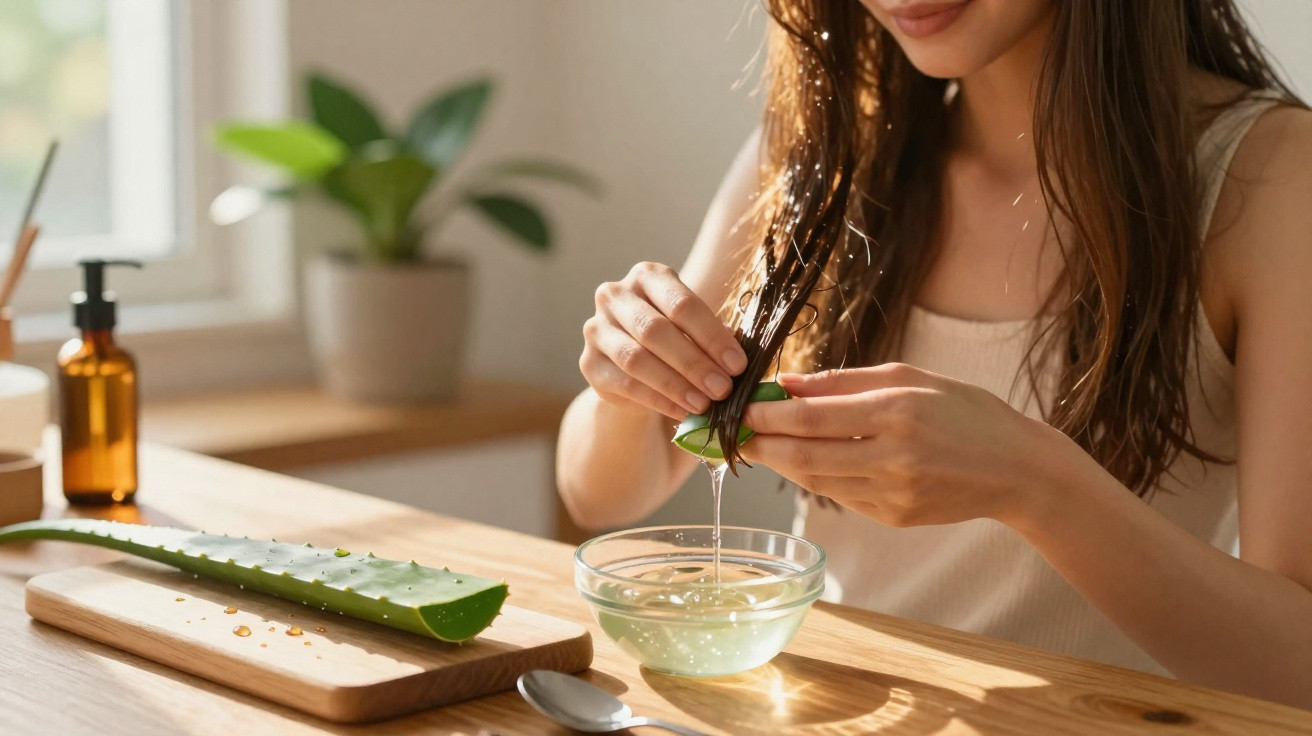
Aloe vera for hair has come back into focus for anyone aiming for better-hydrated strands. However, to get the true benefits of the plant and avoid the compound that may trigger irritation, it is crucial to extract the gel properly.
Why is aloe vera so popular in hair care?
Aloe vera is naturally high in water and contains vitamins, minerals, and moisturising compounds. For that reason, it is often used in DIY treatments to restore softness and shine to hair that feels dry.
When prepared and applied in the right way, it can fit into a regular routine and support deep oiling/moisture treatment. Even so, specialists advise taking care with how it is prepared before you use it.
How do you extract aloe vera gel correctly?
Start by cutting a healthy leaf and standing it upright for around 20 minutes. This helps drain the yellowish liquid known as aloin, which can cause itching and irritation in people with sensitive skin.
Once that time has passed, carefully remove the skin with a clean knife and keep only the clear gel. Doing this limits contact with the irritating substance and makes the mixture safer for the scalp.
What precautions help prevent irritation?
Despite being a natural ingredient, aloe vera can still cause reactions for some people. A patch test on a small area of skin before applying it more widely is an important precaution.
It is also best to use fresh, thoroughly cleaned leaves and throw away any yellow-tinted parts. If you notice burning, redness, or intense itching, stop using it immediately.
What is the step-by-step method for making a DIY mixture?
After extracting the gel correctly, you can put together a simple blend to boost hydration. Combine it with ingredients that suit your hair type, and apply it only to clean hair.
Here is an example preparation commonly used in hydration routines:
- Use only the clear gel from the leaf.
- Blend the gel until it becomes a smooth, even cream.
- Mix it with a moisturising hair mask of your choice.
- Apply from mid-lengths to ends.
- Leave it on for 20 to 30 minutes, then rinse thoroughly.
When can aloe vera hydration deliver the best results?
This approach often works best on hair that is dry, chemically damaged, or frequently exposed to heat from hairdryers and straighteners. The hydration can improve how soft the hair feels and how healthy it looks.
It is worth remembering that aloe vera for hair does not replace treatments recommended by professionals when there are scalp issues. Used correctly, though, it can be a practical at-home ally for keeping hair hydrated.

Comments
No comments yet. Be the first to comment!
Leave a Comment