
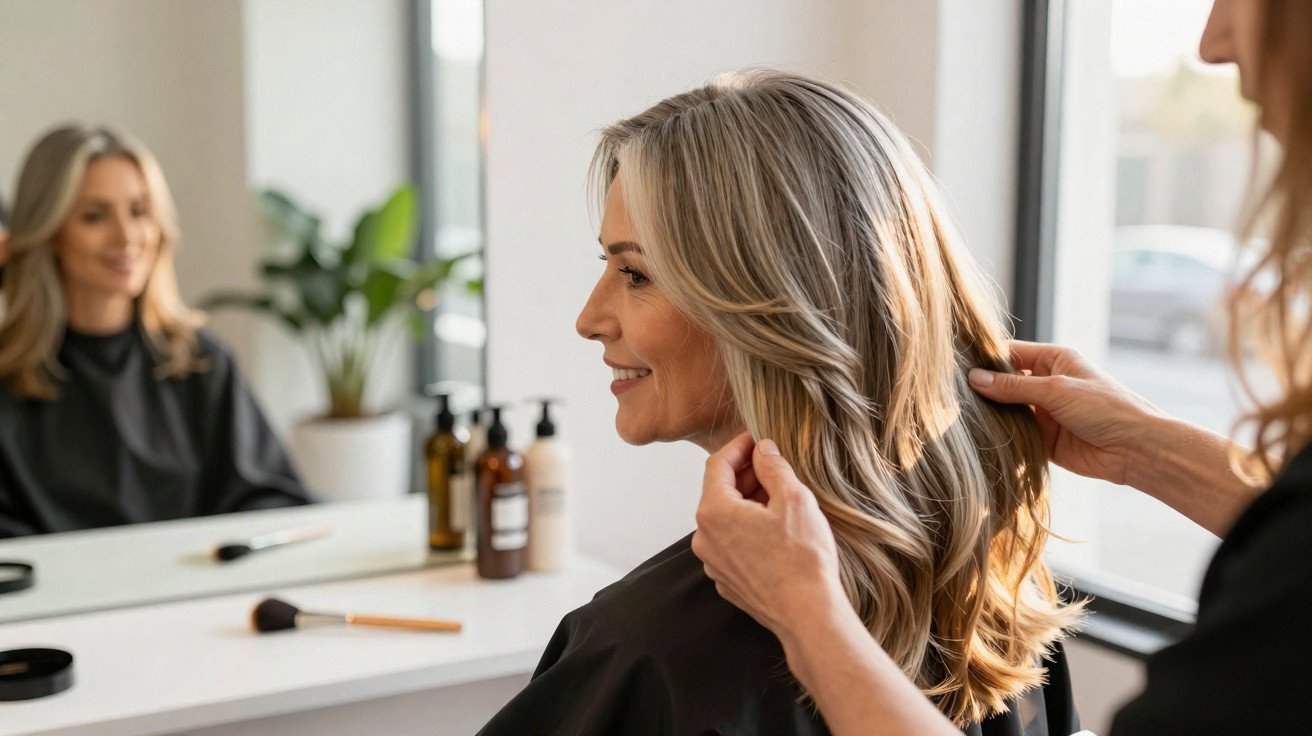
Traditional hair dyeing, with its monthly application and the strong smell of ammonia filling the bathroom, is losing ground to a more modern and gentler technique. Hairdressers at leading salons in London, Manchester and Birmingham have been recommending an alternative that disguises grey hair without compromising hair health, while also restoring a more youthful look to the face. This approach promises to transform the routine of anyone tired of harsh chemical treatments.
What technique is replacing traditional hair dye?
The trend is known as highlight blending, also called dimensional highlighting or grey blending. Rather than covering the entire length with one flat, uniform shade, the stylist places strategic highlights in tones close to the natural colour. This merges grey strands into the base colour without having to dye them completely.
The outcome is hair with movement, depth and a soft transition from roots to ends. Lighter strands blend with the existing grey, giving the impression of natural brightness without the obvious line that reveals root regrowth just weeks after conventional colouring.
- Babylights: ultra-fine highlights that recreate the sun-kissed effect seen in children’s hair, delivering exceptionally natural, subtle brightness around the face.
- Traditional balayage: a freehand sweeping application that produces a natural gradient from dark to light, without harsh lines.
- Foilyage: a combination of balayage and foil that allows for greater lift; it is ideal for people with lots of grey hair who want more noticeable coverage.
- Colour melting: a blending method between the roots, mid-lengths and ends which completely removes abrupt transitions across different areas of the hair.
- Lowlights: strategically added darker strands that bring depth and volume back to hair where grey has become too even and lacks dimension.
Why does this approach look more youthful than ordinary hair dye?
Flat, very dark shades can make facial features appear harsher and draw attention to expression lines around the eyes and mouth. Multidimensional tones act like light on the face, softening contours and bringing a lighter appearance back to mature skin. The change is not limited to the hair itself, but lies in how it frames and enhances a person’s expression - which is precisely why it looks visually younger than all-over coverage in a single shade.
The method also gets rid of the stark contrast that emerges as roots grow after traditional colouring. With highlight blending, natural regrowth merges into the intentional effect of a darker root, leaving the hair looking presentable for much longer between salon appointments.
Who can choose highlight blending and which hair types respond best?
This technique works well for a range of people, although some situations achieve better results than others. Looking at the percentage of grey and the natural shade helps determine whether moving from traditional colouring to a dimensional approach is worthwhile before booking the treatment.
Hair profiles that respond best to highlight blending
Five characteristics that suggest the technique will work well
People with up to 60% grey hair achieve the best results, as this percentage still enables a natural blend with pigmented strands. Natural brunette, blonde and red bases all take tonal blending well, creating dimension without an artificial finish. Straight, wavy and curly hair respond equally well - texture is not a limiting factor in this case.
Previously dyed hair may need a planned transition lasting several months before it can fully move to blending, especially where the current base is very dark or unlike the natural colour. Sensitive scalps benefit in particular because the chemical product does not come into direct contact with the scalp, as most highlighting methods do not require root application. Speaking to the stylist before choosing a technique is essential for matching expectations to the hair’s actual condition.
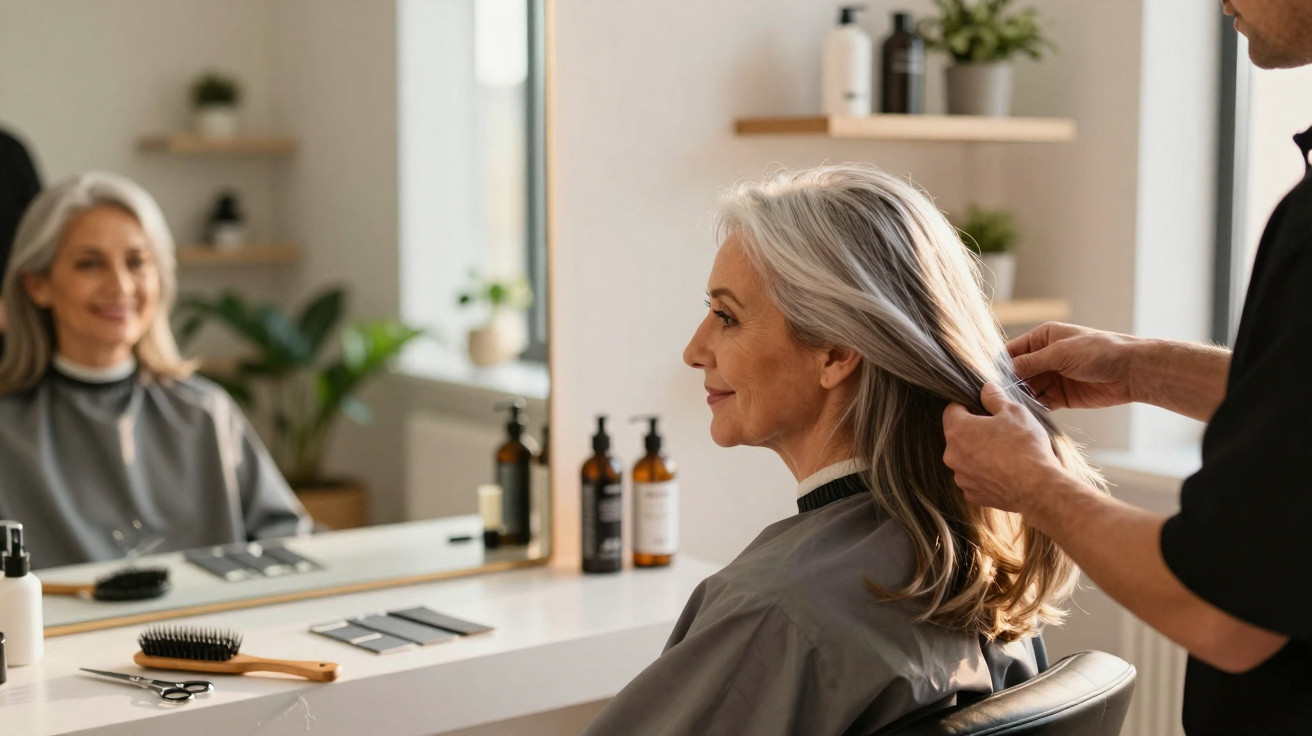
For those whose hair is already entirely grey and who simply want to soften the overall look, lowlights are the most suitable choice. They add depth and dimension without the need to cover every strand with chemicals. The finished result is hair with life and movement, even for someone who has chosen to embrace grey as a permanent part of their look.
How long does the effect last before the next salon visit?
One of the method’s main advantages is the time between maintenance appointments. Traditional dye requires root touch-ups every three or four weeks, whereas dimensional highlights can be spaced three to four months apart, because natural growth blends in with the deliberate darker-root effect.
This saving in time and money matters for both budgets and schedules. The initial investment is usually higher than standard colouring, but the annual cost is comparable or even lower when the reduced number of salon visits across the year is taken into account. For anyone who previously had monthly touch-ups, the difference in frequency represents a genuine and significant saving.
How to preserve the result for longer at home
How long the treatment lasts depends directly on post-salon care. Professionals advise using a toning shampoo once a week to neutralise the yellowing that grey strands tend to develop over time. They also recommend weekly nourishing masks containing plant oils to retain shine and softness through the lengths where highlights were applied.
Heat protection before using a hairdryer and straighteners safeguards the cuticles of lightened hair and prevents progressive dryness that can spoil the look between salon visits. Shampoos without harsh sulphates also help extend the tone of the highlights, which tend to fade more quickly in hair made more porous by the lightening process.
What changes in your relationship with your hair after the switch?
Giving up full coverage changes the relationship a person has with their hair and their reflection. The strands regain natural movement, texture becomes more vibrant, and healthy shine appears without the weight of chemicals building up through the lengths. Many people report less breakage, fewer split ends and a healthier scalp after months without ammonia being applied over the entire head.
The message from professionals is clear: approaching the first signs of ageing intelligently creates a more authentic and elegant look than attempting to conceal them with artificial colours that do not suit one’s age. Illuminated highlights offer the ideal middle ground for those who want to disguise grey hair, enhance the face and keep their strands strong, shiny and full of natural movement. Share this with anyone considering saying goodbye to monthly hair dye but unsure which route to take.



Comments
No comments yet. Be the first to comment!
Leave a Comment