
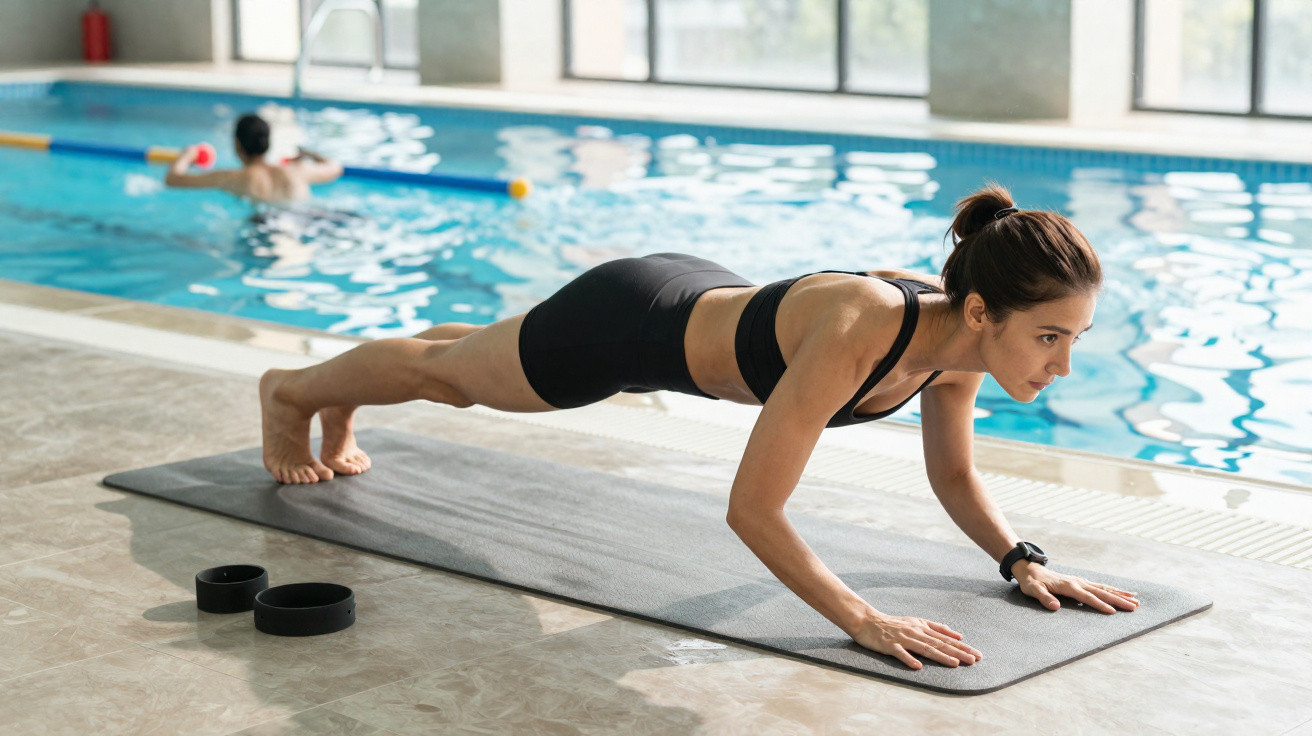
Many people take part in water-based activities for joint comfort, yet a sedentary routine requires targeted strength stimuli. Adding the traditional plank deeply recruits the core muscles, providing greater support to meet everyday postural demands with efficiency and vitality.
Why does the plank complement low-impact training?
While aqua aerobics provides excellent cardiovascular exercise while protecting the joints, it does not create the same isometric tension through the torso. This floor-based exercise complements aquatic activity by working against gravity and engaging the fibres that keep the body firm and balanced during movement.
Combining the lightness of water with sustained contraction on the floor helps the participant build functional endurance without overloading the tendons. This pairing strengthens the body’s centre, helping to prevent the weakening caused by long periods of sitting and improving safety in everyday tasks.
How long should you hold a plank for your age?
The ability to maintain the position varies considerably over the years, revealing specific patterns for each age group that… Read more
How does the Unterarmstütz strengthen back muscles?
Known in Germany as the Unterarmstütz, this forearm-supported position intensely engages the paraspinal muscles. By keeping the torso straight, the deep back tissues work alongside the abdominal muscles, creating a natural protective brace that brings relief and firmness to the lower back.
Continuous activation of the back muscles spreads biomechanical loads evenly. This static contraction, without joint movement, reduces direct pressure on the spinal discs and promotes tone without wearing down cartilage, ensuring lasting protection and resistance.
Below is a video from the YouTube channel AOK – Der Gesundheitskanal that explores the points discussed in this topic:
What benefits does spinal stability provide for the body?
Keeping the spine stable supports everyday body alignment and corrects common postural deviations. Well-conditioned core muscles prevent the lumbar curve from being placed under unintentional strain, distributing body weight harmoniously and avoiding episodes of discomfort or early fatigue.
Beyond its immediate physical support, spinal stability improves breathing capacity and local circulation. Strengthened muscle tissues lessen back stiffness, allowing people to go for walks or carry out household tasks with greater freedom and physical energy.
Foundations of strengthening
Pillars of support
Essential elements for improving spinal support:
- Conscious, continuous activation of the abdominal muscles throughout the entire hold;
- Neutral alignment between the neck and the lumbar curve;
- Weekly regularity to consolidate back endurance.
How should the exercise be performed with correct alignment?
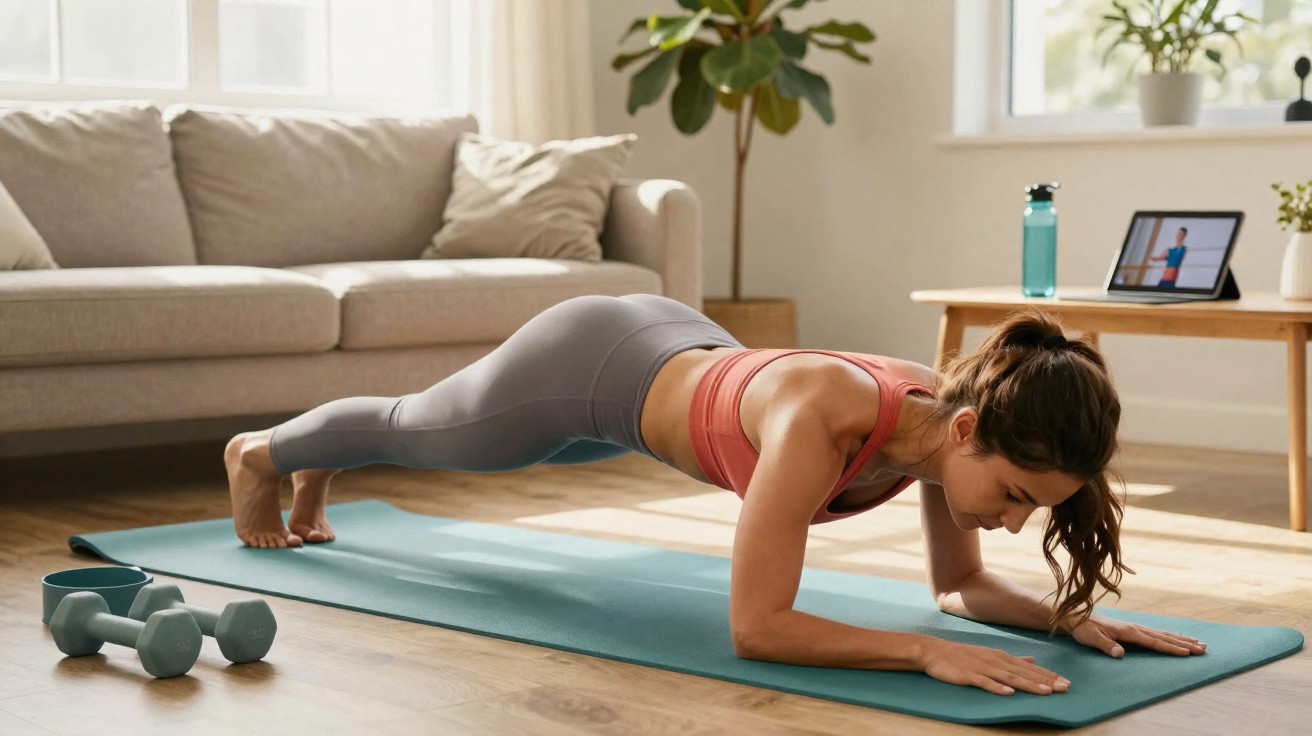
To perform it, place the elbows directly beneath the shoulders on a comfortable mat. The body should create a straight line from head to feet, with the abdomen contracted to prevent the waist from arching downwards, ensuring precision in the muscular stimulus.
Looking slightly ahead of the hands preserves the neck’s natural curve. Steady, calm breathing prevents tension in the chest, enabling the back muscles to work in balance with the glutes and provide postural stability and control.
A few essential precautions prevent common mistakes and maximise the exercise’s benefits:
- Keep the abdominal muscles and glutes engaged throughout the hold;
- Avoid raising the hips too high or allowing them to drop towards the floor;
- Breathe slowly and continuously through every repetition.
What frequency is recommended for lasting results?
Beginners can start with short holding sets, resting between intervals to maintain proper technique. As the torso becomes stronger, the isometric holding time can be gradually extended, encouraging safe adaptations that strengthen consistency and physical progress.
Performing this hold three times a week produces noticeable changes in body support. This consistent frequency protects the spine from the wear of daily life, making it possible to enjoy aqua aerobics sessions with better performance and a pleasant feeling of health and comfort.





Comments
No comments yet. Be the first to comment!
Leave a Comment