
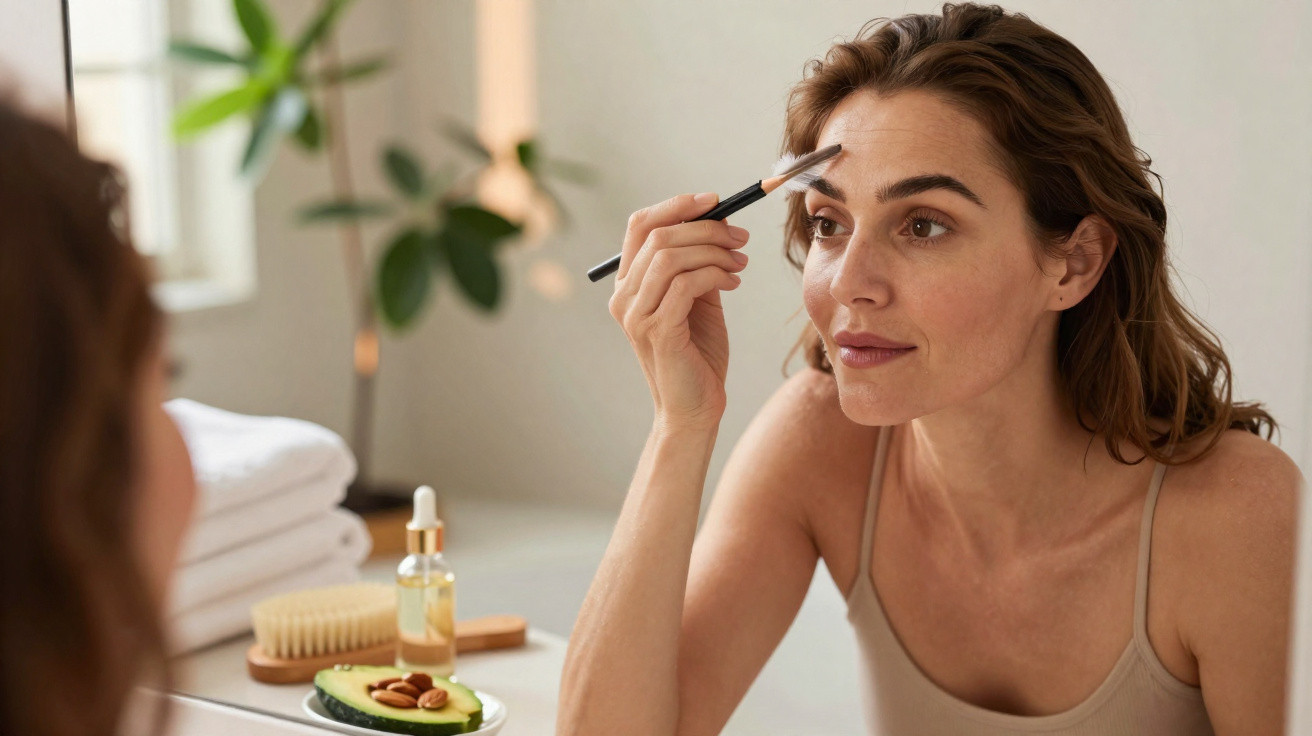
With three straightforward strategies, your eyes can look brighter and more awake again.
Many women reach a point where the mirror reveals a change: eyebrows look sparser, tiny gaps appear, and the area above the eyes seems more tired than it used to. That is not your imagination. Hormonal shifts, skincare missteps and the natural ageing of the hair root all play a part. The encouraging news is that with targeted care, smarter make-up and a few tweaks to what you eat, you can noticeably soften the effect.
Why eyebrows suddenly look thinner after 50
As the years go by, hair growth slows down. That applies not only to the hair on your head, but also to your brows. The hairs tend to become finer, take longer to regrow and snap more easily. If you did a lot of plucking in the past, the change can feel even more dramatic: some hair roots may be permanently weakened or even damaged.
On top of that come hormonal fluctuations around the menopause, plus so-called oxidative stress from sun exposure, smoking or environmental pollution. Together, these factors can put extra strain on the follicles in the brow area. The result is often an uneven line, less definition around the eyes, and a face that can look harsher or more tense.
"Even small changes to the eyebrows can make the whole face look softer, more awake and younger."
Rather than jumping straight to more drastic options such as permanent make-up, it is worth committing to three fundamentals. They work best as a set: care, visual shaping and diet.
Step 1: care for and rebuild eyebrows like hair
Plenty of people fill in their brows every day but do almost nothing to condition them. That is a mistake. If you want to support a thinning brow line, treat it like a delicate section of hair.
Clean gently, then strengthen with purpose
Start with thorough but gentle make-up removal. Leftover gel, powder and pencil can weigh the hairs down and irritate the skin underneath. An oil-based remover or an especially mild cleanser is usually best-something that does not sting or leave the skin feeling tight.
After cleansing, consider brow-care formulas with ingredients that support the hair root, such as:
- Biotin (vitamin B7) to help create a stronger hair structure
- Peptides, which may stimulate the hair root
- Plant oils such as castor oil to deeply nourish eyebrow hairs
Apply these products in the evening, when no make-up will go on top. Use a clean spoolie or cotton bud, apply sparingly along the brow line and massage in lightly. After a few weeks, the line often looks more filled-in.
Castor oil: a home remedy with surprisingly strong results
Castor oil has been recommended for generations as a tip for fuller brows and lashes. It contains a high proportion of a particular fatty acid that may boost circulation at the hair root. When massaged in regularly, it can help deliver more oxygen and nutrients to the follicle.
A practical option is a homemade brow balm: melt 1 teaspoon of organic castor oil with 1/2 teaspoon of beeswax in a hot-water bath to create a small setting balm. Pour into a clean jar, let it cool, and it is ready. With a tiny amount on a spoolie, you can brush the hairs into shape-combining care and styling in a single step.
"If you use castor oil daily for at least six to eight weeks, you often see a visibly calmer, denser brow line."
Step 2: use light and line to create instantly fuller-looking eyebrows
Skincare pays off with patience, but sometimes you want an immediate difference. This is where make-up helps-used with precision rather than as a heavy layer of colour.
Highlight, not a block: how to make the eyes look fresher fast
Make-up artists often rely on light. A pale, creamy concealer or a softly luminous highlighter placed just beneath the brow arch can make a noticeable difference. Follow the natural shape and blend gently. This creates a subtle contrast that gives the brow more presence without painting it on.
The key is shade choice: go only slightly lighter than your own skin tone. If it is too light-or overly glittery-the area can quickly look unnatural or overdone.
Imitate hairs instead of drawing a solid brow
Instead of filling the brow as one continuous strip, use a “hair-by-hair” approach. A sharp, fairly dry brow pencil or a fine powder texture in an exact colour match works well.
For a subtle lifting effect:
- Spot the gaps and fill only those areas with short, fine strokes.
- Brush through with a brow spoolie so the pigment and hairs blend together.
- Finish by brushing the brows slightly upwards and outwards to open up the eyes.
Very strong setting gels can leave the hairs feeling stiff and brittle, and they sometimes deposit faint white residue. If your skin is dry or sensitive, lighter, conditioning gels-or a homemade balm-are often a better option.
Be cautious with permanent methods
Microblading can sound like an easy long-term fix. However, after a few years, drawbacks often appear: the initially fine strokes can spread, and pigments may shift in tone, turning greyish or pulling towards red. Multiple top-up sessions can also further irritate the already delicate skin around the brows.
For mature skin in particular, many specialists therefore favour reversible methods. Mistakes are easier to correct, trends can be adjusted, and the skin gets regular breaks to recover.
Step 3: fuller eyebrows start on the plate
Eyebrows are simply hair-and hair is built from protein. If you are not getting enough protein and specific micronutrients, it may show up not only as brittle ends but also as sparser brows.
These nutrients support connective tissue and hair roots
For stronger brow hairs, the following are especially relevant:
- Protein to build hair structure
- Biotin to support keratin formation and resilience
- Omega-3 fatty acids to help the skin barrier
- Zinc for cell division at the hair root
- Iron to support good oxygen delivery to the follicles
In everyday life, you can cover a lot of this with simple meals, for example:
- Morning: an egg, plus yoghurt with chia seeds.
- Lunch: salad with salmon or mackerel and a portion of lentils.
- Evening: vegetable soup, supplemented with chickpeas or red beans.
If you are unsure whether you have low iron or another nutrient deficiency, discuss it with your doctor. A targeted blood test can provide clarity.
How small habits affect the eyebrows
Alongside the three core areas-care, make-up and diet-daily routines matter too. If you frequently rub your brows hard (for instance while removing make-up or during allergy flare-ups), you can pull out fine hairs more easily. Very hot showers or sauna sessions without follow-up care can also dry out the skin in that area.
More helpful are gentle movements with minimal pressure, lukewarm water temperatures, and moisturising care around the eye area to keep the skin supple.
What is realistic-and what is not
In most cases, you cannot completely recreate the thick, bushy brows of your twenties once you are over 50. Genetics, earlier plucking habits and hormonal factors set limits. But if you are consistent with care, eat in a nutrient-rich way and use a few smart styling techniques, you can significantly improve the brow line you have.
A useful habit is to set aside one or two days a month for an honest check in the mirror. Does the shape still work? Is the highest point of the brow sitting in the right place, or is it visually pulling the eye down? These small details often decide whether the expression looks open and friendly-or tired.
"Three levers-care, light placement, nutrition-are often enough to noticeably rejuvenate the face’s expression without looking ‘done’."
If you are not confident with your technique, a one-off consultation with a professional brow specialist can help. A well-adapted base shape and a few at-home steps you can copy often achieve more than any quick trend online. That way, brows can remain a strong, natural frame for the face well beyond your 50th birthday.



Comments
No comments yet. Be the first to comment!
Leave a Comment