
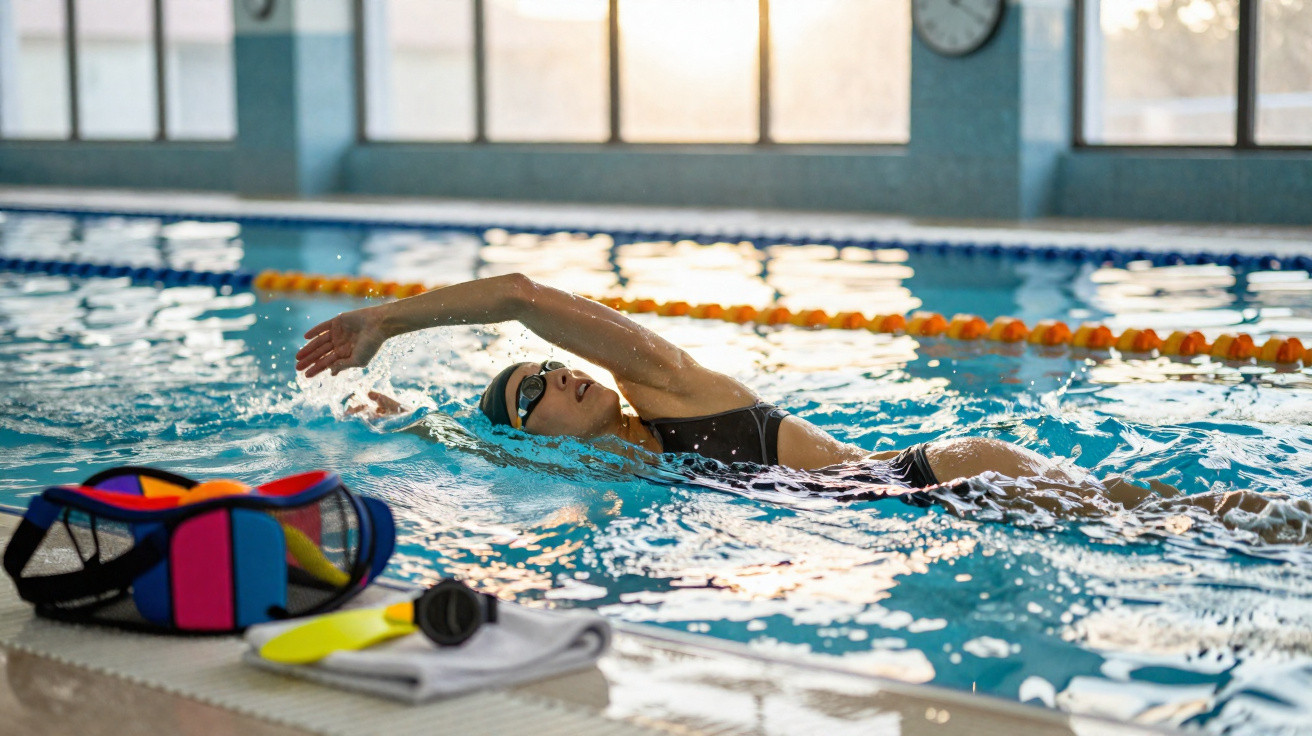
The beach holiday is getting closer, your trousers feel tight, and your T‑shirt is clinging around the middle: by spring at the latest, many people head to the pool hoping that regular swimming will specifically reduce belly fat. A fitness coach explains what training time in the water is realistic, how to pace yourself, and which exercises hit the waist particularly hard.
Why swimming noticeably firms up your midsection
Swimming challenges your heart, circulation and muscles all at once. That combination makes it especially appealing when belly fat is what bothers you most. Every arm pull and leg kick has to work against resistance in the water, while your torso is constantly stabilising you. And that’s where your abdominal muscles come in - even if you’re not consciously thinking about “ab training”.
Another benefit: water supports your body weight. That takes significant strain off the joints, discs and back. Plenty of people with back issues can barely manage longer cardio sessions on land, yet can suddenly keep going in the pool without trouble. That means you can rack up more active minutes, which is what ultimately helps drive fat loss.
One thing matters, though: expectations need to stay realistic. No one can choose where the body loses fat first. You can’t simply “swim belly fat away”. Your body draws on its reserves overall. But if you burn calories regularly and strengthen your core at the same time, your midsection will gradually look more defined and feel firmer.
"Swimming burns calories, shapes the core muscles at the same time, and takes pressure off the back and joints - ideal for anyone wanting to target their belly."
The ideal length of a swim session, according to the coach
The coach puts it plainly: if you want a smaller waistline, you mainly need cardio. It should feel like endurance training - not a leisurely splash about. You ought to be breathing noticeably faster, yet still able to speak in sentences without being completely out of breath.
As a rule of thumb, the coach recommends at least 45 minutes per session. That duration keeps your heart rate elevated long enough for calorie burn to genuinely add up. Shorter swims can still get the circulation going, but they tend to have a much smaller impact on waist measurement.
To get through 45 minutes comfortably, it helps to alternate calmer spells with more intense efforts. That way you stay in a cardio-focused zone without running out of steam after ten minutes.
Which strokes burn how many calories
The exact figure depends on body weight, technique and pace. The coach gives these guide values for half an hour:
- Breaststroke: around 340 kilocalories per 30 minutes
- Butterfly: around 380 kilocalories per 30 minutes
Freestyle and backstroke usually sit somewhere in between, often a bit higher than an easy breaststroke. If you swim efficiently and at a good clip, you can easily burn several hundred kilocalories in 45 minutes - on top of the extra core work.
A 45-minute sample workout for a firmer waist
The coach recommends a clearly structured session that also works for motivated beginners. It includes three sections: a warm-up, the main set, and a short in-water core circuit.
1. Gentle start: warm up without pressure
Begin with 10 to 15 minutes at an easy pace. The goal is to raise your breathing and heart rate gradually:
- a few lengths of breaststroke at a steady rhythm that isn’t too fast
- alternating onto your back (backstroke or relaxed back swimming) to take stress off the neck
Focus on long strokes and calm breathing. There’s no need to push hard yet.
2. The main set: alternating intensity for maximum impact
The main set is where the session becomes the real “waist shredder”. Allow roughly 20 to 25 minutes:
- 4–6 minutes of brisk freestyle or backstroke; your heart rate can rise noticeably
- 2–3 minutes of easy swimming or kicking drills with a float to catch your breath
- repeat this alternation between faster work and recovery several times
During the quicker blocks, you’ll be pulling strongly with the arms while keeping a stable body line. Your core stays engaged and your hips don’t drop - exactly the kind of demand that challenges your abs.
3. Finish with an in-water core circuit
To end the session, the coach adds targeted midsection work. 10 to 15 minutes is enough here, and it can be intense:
- Flutter kicks with a kickboard: three rounds of 2 minutes of strong kicking face-down, with 30 seconds rest between rounds. Your lower abs work continuously against the resistance of the water.
- Freestyle with emphasised trunk rotation: four slow lengths. Deliberately rotate shoulder and hip together as the arm enters the water. This especially activates the side abdominal muscles.
- “Plank hold” at the pool edge: hold the edge with arms straight, body in the water, then draw your knees towards your chest alternately or together. Three sets of 15 repetitions.
"This mix of endurance work and core exercises can bring visible changes to the waist and stomach within a few weeks - provided the sessions happen regularly."
How many sessions per week actually lead to progress?
Once a week of “a little swim” is rarely enough if you want a clear change in the mirror. The coach advises aiming for two to three sessions per week. That creates enough training stimulus while still leaving room for recovery.
If you’ve hardly exercised recently, it’s best to start with two sessions per week and gradually build up to the 45-minute mark. As your fitness and technique improve, you can increase pace and intensity step by step.
Diet and daily habits: why your stomach shrinks only as part of a team
Even the best swim workout loses its effect if you immediately eat the calorie surplus back afterwards. The coach stresses that a balanced diet speeds the process up considerably. That doesn’t mean starving yourself. But soft drinks, large amounts of alcohol and constant evening snacking can seriously slow progress.
A practical approach: drink more water, include protein (for example from fish, eggs and pulses) in every meal, and cut down on refined carbohydrates such as white bread. Staying active in everyday life - taking the stairs instead of the lift, walking short journeys - strengthens the pool’s effect even further.
How to pace swimming properly: heart rate, breathing, technique
To burn fat, your heart rate needs to stay elevated for an extended period. Many people use a simple check: you can still talk, but you can’t comfortably deliver long sentences. If you want more precision, use a watch with heart-rate tracking and aim for a moderate to moderately hard range depending on your fitness.
Breathing sets your pace. If you’re gasping for air on every stroke, you’re going too fast. A steadier breathing pattern works better - for instance, in freestyle, breathing every three arm strokes. That keeps oxygen supply stable and makes it easier to last the full 45 minutes.
One more factor that’s often underestimated is technique. If you’re battling the water but not gliding efficiently, you may burn energy yet hit your limit quickly. A few technique lessons or well-chosen videos can massively improve your stroke - and help you work more effectively on both waist and endurance.
Who benefits most from core-focused training in the water
Swimming is particularly suitable for people who:
- are overweight and want to avoid overloading their joints
- have back or knee problems
- want to get back into sport after a break
- feel quickly overwhelmed by traditional jogging
In the pool you can push yourself hard without the impact and jolting loads. The risk of typical running injuries drops markedly, while core stability improves - an important protective factor for the lower back.
How long does it take until your stomach looks noticeably slimmer?
If you consistently swim two to three times per week, stick to the 45-minute guideline, and don’t constantly overdo it with food, you may notice the first changes after four to eight weeks: your waistband feels looser, your stomach feels firmer, and your posture becomes more upright.
The exact timeline depends on starting weight, age, hormones and stress levels. A realistic way of tracking progress helps you stay consistent: measure your waist and stomach circumference every two weeks, for example, rather than fixating on a single number on the scales. Photos taken in the same light and in the same clothes often reveal changes more clearly.
Ultimately, the message is straightforward: if you want to reduce your stomach noticeably before summer, don’t settle for a gentle pace in the pool. Regular sessions of around 45 minutes, with smartly alternating intensity plus a short core circuit, deliver far more than the occasional splash around. Combined with sensible eating, the swimming pool becomes a highly effective ally against stubborn centimetres around the waist.





Comments
No comments yet. Be the first to comment!
Leave a Comment