
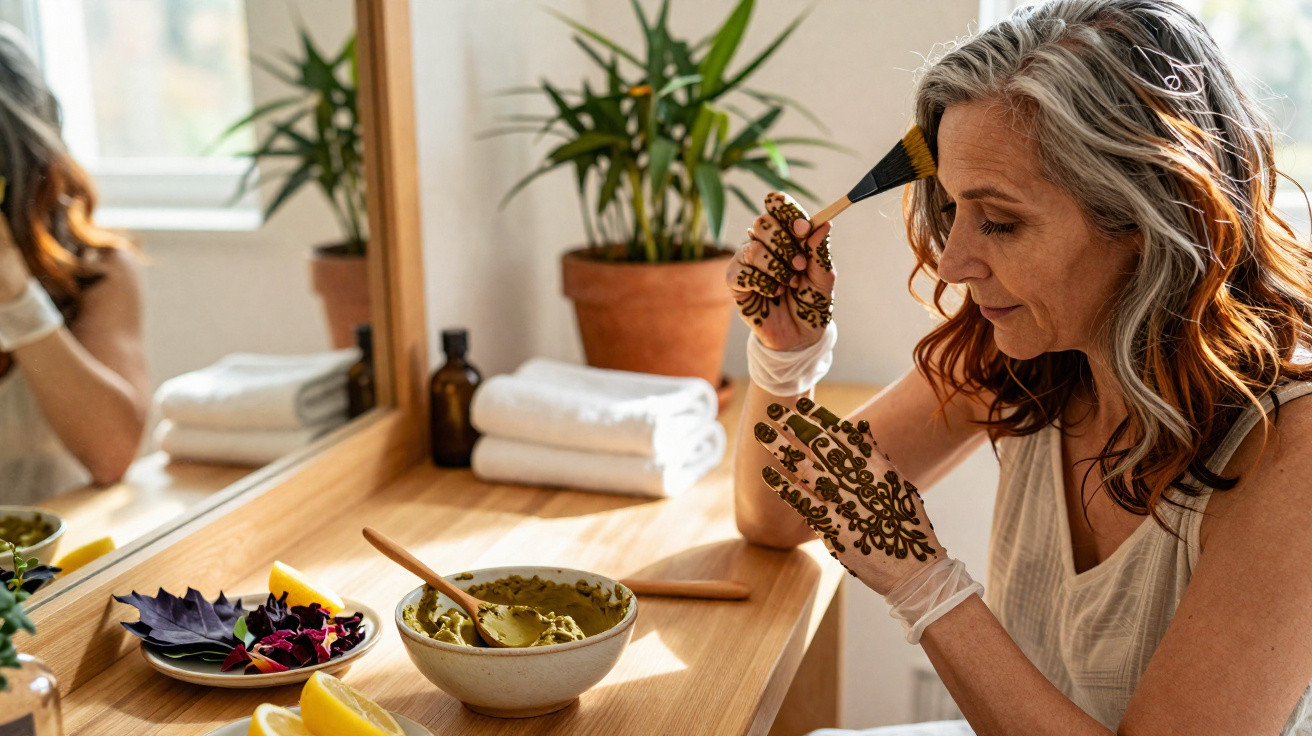
Hiding those first grey hairs can turn into a daily mission for anyone who checks the bathroom mirror every morning. That’s why so many people look for gentler, more natural plant-based hair colouring options to freshen up their look without exposing the hair fibre to heavy salon chemicals.
How does natural henna cover white strands?
This plant-based colouring, made from Lawsonia inermis, works by forming a protective film around the hair fibre. In practice, that creates long-lasting coverage for white strands without undermining the cortex or triggering breakage within the hair’s internal structure.
Unlike industrial permanent dyes that force the cuticles open aggressively, this plant pigment settles into existing gaps along the strand. The result is a convincing disguise at the grey root, while also supporting visible, natural hair recovery.
With ongoing use, this blend can bring specific benefits to both the scalp and the lengths:
- Pigmentation: Strong fixation of the naturally reddish tone.
- Shine: Light-catching reflections that enhance the look.
- Softness: Cuticles sit flatter for a silkier feel.
- Protection: An outer layer that helps shield against everyday stressors.
- Strength: More body for fine, weakened strands.
What are the advantages compared with chemical dyes?
Switching from synthetic products to this plant-based alternative can help prevent common reactions on a sensitive scalp. With no ammonia or parabens, the at-home routine is presented as safe for pregnant people, and also suits anyone committed to a clean beauty and more sustainable approach.
Beyond the dermatological reassurance, fading tends to happen gradually and subtly, rather than leaving a harsh line at the roots. That means fewer frequent touch-ups, which can translate into real savings while keeping healthy hair intact.
The full mixing and correct application process can be viewed in detail on the Henna Garden YouTube channel.
Why does the right preparation make the colour last longer?
Dye release depends mainly on combining the powder with a mildly acidic liquid at room temperature. Letting the paste rest for the proper period activates key molecules so they can bind with maximum intensity to white strands at the hair root.
Ideal activation
The acid tip
Using lemon or vinegar speeds up the oxidation of the protective plant pigment.
Allowing the mixture to sit helps it reach the right consistency for even, controlled application.
Taking your time during the resting stage directly affects how well the reddish hue stays on grey hair. For the first rinse, it’s best to skip ordinary shampoo so the pigments can fully set, ensuring a long-wearing natural finish.
Key steps to keep the plant-based tone looking vibrant after rinsing include:
- Avoid using clarifying, residue-removing shampoos straight away.
- Protect hair from strong, direct sun exposure.
- Moisturise the fibre with pure plant oils.
How can you apply it at home without staining your skin?
Because the mixture is thick and paste-like, it’s best applied carefully with a proper tint brush, working section by section from the nape upwards. Shielding the hairline and ears with a generous layer of moisturiser helps prevent unwanted stains on the skin.
Wearing plastic gloves and securing all the hair under a thermal cap can boost colour development. This controlled warmth supports absorption of nutrients, leaving strands notably soft, with impressive flexibility, and an intense improvement in hair shine.
For a smoother at-home application, follow these steps:
- Split dry hair into four equal sections.
- Apply the paste generously at the roots.
- Leave it on for the time recommended by the manufacturer.
What should you expect from the final result on grey hair?
White strands can shift through shades ranging from bright copper to a deeper auburn, depending on the total processing time. This variation produces multi-dimensional reflections that mimic natural hair tones, avoiding the artificial look of a boxed, solid paint effect.
Over the following days, the colour settles and blends more naturally with the darker lengths. The coarse feel often associated with grey hair can disappear, giving way to a smoother texture with replenished body that creates a very elegant, rejuvenated look.
Read also: The homemade dye that permanently covers white hair while offering shine and softness




Comments
No comments yet. Be the first to comment!
Leave a Comment