
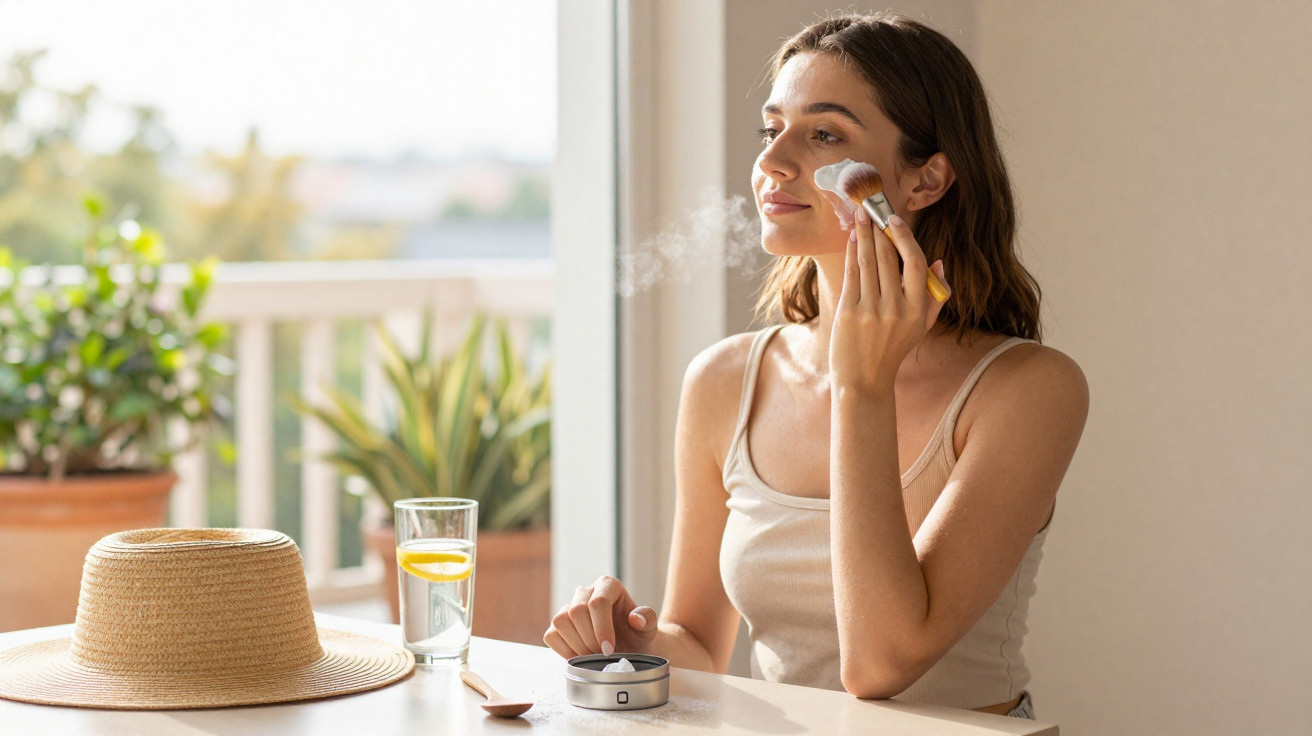
If you have spent most of the winter months indoors, March usually brings that familiar craving for sunshine, daylight and longer evenings. At the same time, the same question comes back every year: how do you protect your skin without smothering it in a heavy cream - and without buying more plastic bottles each spring? That is exactly where an old, well-researched ingredient comes back into view: mineral zinc oxide in powder form.
Why so many people are fed up with traditional sunscreen
As soon as temperatures start to rise, sunscreens reappear on the shelves in high-street chemists. But many shoppers have become increasingly sceptical, and the reasons tend to be the same:
- Creams can feel greasy or sticky
- White streaks, shine and clogged pores are a daily annoyance
- Certain chemical filters are criticised - for example, because of coral reefs or potential hormone-like effects
- New plastic packaging every year, much of which ends up as waste
Anyone already trying to live a little more sustainably - less plastic, more mindful skincare choices, simpler ingredients - quickly wonders whether UV protection can be done differently.
The “new” old answer: a simple white powder
Online, a product keeps popping up that looks almost too plain to be interesting: a loose, white, mineral-based powder, usually with zinc oxide as the main active ingredient. The concept is straightforward: instead of a cream, a fine powdery layer sits on the skin and reflects UV rays.
“Mineral pigments such as zinc oxide don’t work via a chemical reaction; they reflect part of the sun’s rays - a principle dermatologists have known for years.”
At first glance, it can look like an ordinary setting powder from the make-up aisle. The difference is that it contains defined amounts of mineral UV filters and is sold as a sun-protection product, sometimes with a stated SPF.
How zinc oxide powder provides protection in practice
Zinc oxide is one of the so-called physical filters. On the surface of the skin, tiny particles form a layer that:
- blocks a large proportion of UVB radiation (responsible for sunburn)
- can also reduce UVA radiation (which accelerates skin ageing), depending on the formula
- penetrates the skin very little, remaining largely on the surface
Zinc oxide has been established in research for decades. What matters is particle size, concentration and how the powder is applied. The denser and more even the layer, the more dependable the protection.
When powder can make sense instead of cream
In certain situations, a mineral powder can fit surprisingly well into everyday life, for example:
- the first, still gentle spring sunshine during a typical office routine
- short trips around town, a lunch break on a bench, coffee on the terrace
- people with combination or oily skin who want to avoid shine
- sensitive skin that reacts to fragrance or certain chemical filters
If traditional sunscreen tends to trigger spots, you often notice the difference with powder very quickly: skin looks more matte, doesn’t feel “coated”, and make-up is easier to apply on top.
How to apply the powder properly
For that attractive compact to translate into meaningful UV protection, application needs a bit of care:
- Cleanse the skin and apply a lightweight day moisturiser that does not leave a heavy oily film.
- Pick up powder with a large, dense brush and gently tap off any excess.
- Apply generously in circular motions over the face, ears, neck and décolletage.
- If you stay outdoors for longer, reapply several times - especially if you sweat or after contact with water.
If you only dust on a very thin layer, you may get a nice mattifying effect but not the level of protection stated on the packaging. That is true for every type of sun protection.
What research says about mineral powders
Scientific studies on zinc oxide and titanium dioxide have confirmed for years that:
- with the right formulation, they provide reliable UV protection
- non-nano particles generally do not penetrate deeply into the skin
- mineral filters are well tolerated for many allergy sufferers
The catch is that most testing is done under laboratory conditions. In those tests, an exact amount of product is applied - usually two milligrams per square centimetre of skin. In real life, hardly anyone uses that much.
“If you rely entirely on mineral powder, you should know this: the protective effect depends heavily on whether enough product is applied evenly across the skin.”
For that reason, dermatologists repeatedly stress that for very high exposure - midday beach time, a mountain hike, or highly reflective surroundings such as water or snow - a generous layer of classic sunscreen with a clearly stated SPF remains the safer option.
How powder fits into a sustainable skincare routine
People trying to consume more consciously often like powder for two main reasons: fewer ingredients and, in many cases, less packaging. Some brands offer refill systems, while others use metal tins or glass containers.
If you are generally “decluttering” your bathroom, you may prefer a small number of multi-purpose products. A mineral powder can then serve several functions at once:
- a lightly mattifying make-up finish
- partial everyday sun protection
- a practical travel option, because nothing can leak
At the same time, it reduces the chance of throwing away half-used tubes of sunscreen after a season because they have passed their expiry date.
Powder plus a hat instead of a third layer of cream
If you care about both the environment and skin health, powder is often paired with other simple protective habits:
- a sun hat with a wide brim
- sunglasses with UV protection
- thin, tightly woven clothing for shoulders and back
- seeking shade at midday, especially for children
This can be a pragmatic middle ground in spring: no fear of every ray of sunshine, but no unprotected baking either.
Who zinc oxide powder is less suitable for
As appealing as it sounds to skip sunscreen when the first spring sunshine appears, there are clear limits. Extra caution is sensible if you have:
- very fair, sun-sensitive skin
- pre-existing conditions such as skin cancer or a strong family history
- prolonged outdoor exposure, for example on building sites, while gardening or during sport
- holidays in southern countries or at high altitude
In these cases, skin specialists usually recommend a clearly stated, higher SPF and generous application. Powder can be an add-on, but it should not be the only protection.
How to recognise a trustworthy powder product
The market for “natural sun protection” is growing fast. Alongside reputable options, there are unfortunately also questionable listings with vague promises. A few checks can help when buying:
| Criterion | What to look for |
|---|---|
| SPF stated | A specific SPF on the packaging suggests tested protection. |
| Ingredients | Zinc oxide and/or titanium dioxide should be clearly listed as the active UV filters. |
| Transparency | The manufacturer explains particle size, how to use the product and its limits. |
| Credibility | No miracle claims such as “complete protection in any sunlight”. |
If you are unsure, you can ask your dermatologist or a pharmacist which mineral products have been through credible testing.
What many people underestimate in the first spring sunshine
In March, the sun still feels mild, yet UV radiation rises faster than many people realise. After winter, skin is barely acclimatised to sunlight and its natural protection is low. Even a long walk in the park can lead to redness.
At the same time, spring energy pushes many people outdoors more often: coffee outside, gardening, the first trip to the lake. If you then rely on a very light make-up style of protection, you may do more harm than expected. Particularly with very fair skin, it helps to pay attention to time of day, how long you are outside, and the sun’s intensity.
Practical everyday combinations
In day-to-day life, a hybrid approach often seems to work best. A typical routine might look like this:
- Weekdays in the office: a lightweight day moisturiser with a moderate SPF, topped with zinc oxide powder for mattifying and extra protection.
- Weekend in the park or on the balcony: classic facial sunscreen, then after a few hours touch up with powder to reduce shine.
- A quick trip to the baker’s or the nursery: powder as a practical, quick option when you will soon be back in the shade anyway.
Once you get to know your skin, you quickly learn when redness tends to appear. UV Index apps can also help, showing how strong radiation is on a given day. That makes it easier to judge whether powder alone is enough or whether stronger protection is needed.
One more point that is rarely said out loud: lots of people simply do not enjoy wearing classic sunscreen. If a light mineral powder means some protection actually ends up on the face, that is often better in real life than the “perfect” cream left unused in the cupboard.
If you test, step by step, how your skin responds to a scientifically supported zinc oxide powder, you can build confidence in spring around the option that suits you - somewhere between comfort, sustainability and a healthy respect for the sun.


Comments
No comments yet. Be the first to comment!
Leave a Comment