
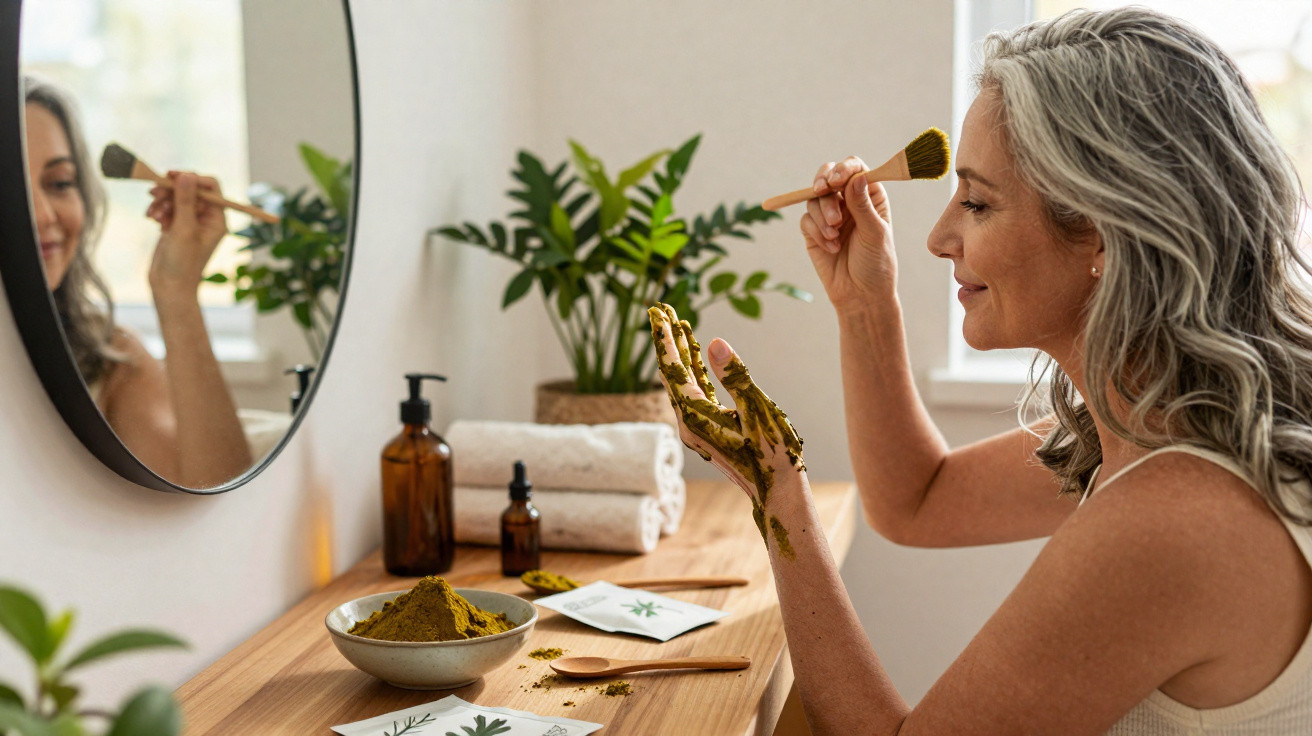
Organic colouring with henna and plant-based pigments has become an alternative for anyone wanting to soften grey hair with a more natural-looking result. The idea is to cover or tone the strands without the flat, one-note effect often associated with traditional at-home dye.
Why has plant-based henna become a trend for grey hair?
As more people look for softer results, many have moved away from very stark dyes and towards plant-based formulas. When you choose and apply henna correctly, it can deposit colour onto the hair while keeping the overall look richer in shine and naturalness.
Henna is a dye derived from the plant Lawsonia inermis and has long been used to colour hair and skin. In hair products, it may be blended with other plant pigments to create a wider range of tones.
This approach stands out for the following reasons:
- Plant pigments: they tend to give a softer, less artificial-looking coverage.
- Customised tone: plant blends can be adjusted for warm, cool, or brown reflections.
- Shine: the finish often leaves the hair looking visibly more luminous.
- Gradual longevity: the colour fades little by little, without a sharply defined regrowth line.
- Patch and strand test: a skin test and test strand help prevent surprises on the scalp and in the final colour.
Who is henna with plant pigments recommended for?
This technique often suits people with scattered grey strands who want a less rigid kind of coverage, where the tone looks integrated with the rest of the hair. Rather than completely masking regrowth, it forms a layer of colour with a degree of transparency.
On very white hair, or on hair with a history of intensive chemical treatments, results can vary a great deal. For that reason, it’s best to assess porosity, any previous colour, and the intended end result before applying-helping to avoid patchiness, unwanted reflections, or uneven coverage.
How do you apply plant-based colour evenly?
Preparation usually starts by mixing the plant powder with warm water until it becomes a creamy paste that spreads easily. Hair should be clean, detangled, and sectioned so the product can reach each grey strand.
Plant-based colour with a natural-looking finish
Evenness depends on working section by section. The product needs to fully coat grey strands, particularly at the roots and around the hairline.
A strand test makes it easier to anticipate the tone before applying it all over.
Processing time varies by brand, the shade you want, and how resistant your hair is, but many applications fall between 40 minutes and 2 hours. The lighter or whiter the hair, the more attention you need to pay to the tone and distribution.
The basic step-by-step is:
- Do a patch test and a test on a hidden strand.
- Mix the plant powder following the manufacturer’s instructions.
- Divide the hair into fine sections before applying.
- Focus product on grey strands and any visible regrowth.
- Rinse thoroughly and avoid harsh shampoo on the first day.
How long does the colour last on grey hair?
Longevity usually ranges from 3 to 6 weeks, depending on how often you wash your hair, its porosity, sun exposure, and the formula used. Unlike permanent dye, plant-based colour typically loses intensity gradually, maintaining a smoother transition.
To keep the shine for longer, it helps to use gentle shampoos, avoid very hot water, and cut back on heat tools. It’s also important to choose reliable products, because some blends marketed as natural may contain additives that irritate the scalp.
To maintain the result, keep in mind:
- Wait at least 48 hours to judge the final oxidised colour.
- Use mild products designed for colour-treated hair.
- Avoid mixing henna with chemical dyes without professional guidance.
- Touch up only when fading or regrowth starts to bother you.
What’s the difference compared with ordinary at-home dye?
As with simple tricks for disguising grey hair, the goal here is to soften the look without making weekly touch-ups feel compulsory. Plant-based colouring generally produces a less defined, more long-lasting effect in a gradual way.
Conventional at-home dye usually covers faster, but it can leave a clearly visible regrowth line as hair grows. Henna with plant pigments, on the other hand, calls for patience, testing, and careful application-while offering a more natural, luminous, and progressive finish.




Comments
No comments yet. Be the first to comment!
Leave a Comment