
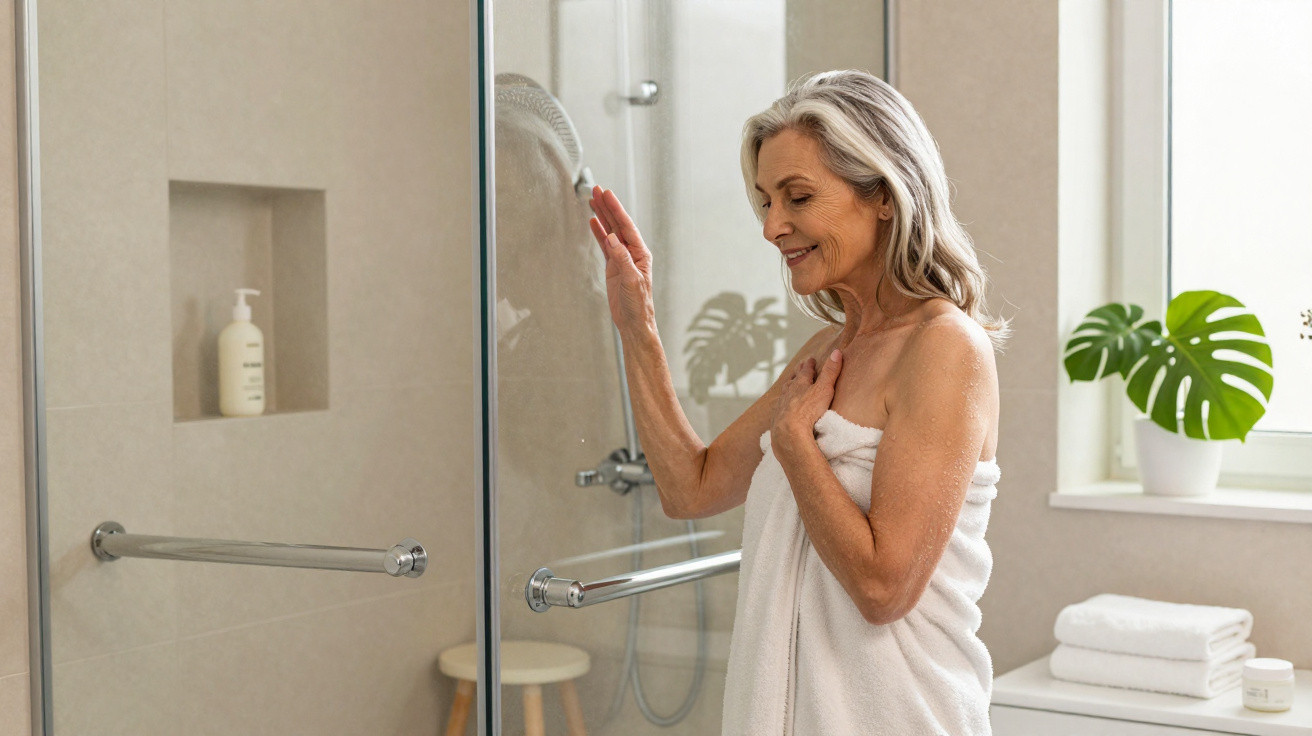
Each time you wash, you end up weighing up comfort, routine and what your skin is still able to tolerate.
For plenty of people over 65, bathing stops being an automatic daily habit and becomes a considered choice. You still want to feel fresh and maintain your dignity, but skin that once coped easily can suddenly flare up. Dermatologists are now less focused on “scrubbing properly” and more concerned with protecting a delicate barrier, keeping hygiene and comfort in balance, and preventing that slow-building itch that can ruin your sleep.
When skin matures: Why less can feel better
After 65, the skin shifts in several ways at once. Sebum levels drop. The outer layer becomes thinner. The barrier is more easily disrupted. Hot water and bubbly shower gels don’t just remove sweat and grime - they also strip away the lipids that help keep the surface supple and resilient.
For most older adults, showering two to three times a week is usually enough for both hygiene and skin comfort.
Dermatologists across European and US skin societies are increasingly describing the same trend: people who have showered daily for decades start developing dry areas on shins, forearms and the back, splits around the ankles, or a persistent need to scratch. The desire to feel clean remains, but the skin quietly starts asking for a different approach.
There is a biological reason for this change. As we age, collagen and elastin production slows. Skin becomes more permeable and responds more sharply to soap, heat and rubbing. Meanwhile, the microbiome - the helpful bacteria living on the surface - does not cope well with harsh cleansing. Long, hot showers and strongly foaming products disturb this balance and dehydrate the outermost layer, the stratum corneum. That doesn’t make you “cleaner in a good way”; it simply leaves the skin less protected.
A strict, daily full-body wash can also trap older skin in a repeated loop of irritation followed by repair. Over time, that cycle pulls moisture from the skin and may aggravate eczema, psoriasis, or straightforward age-related dryness (xerosis). Reducing how often you shower often gives the barrier a chance to rebuild - which can mean fewer creams, fewer appointments, and fewer nights spent awake with itchy calves.
The “cat wash” concept: Fresh without a full shower
On days between full showers, washing only what needs washing can be remarkably effective. Many geriatric care teams rely on a straightforward method: clean the areas linked to sweat and odour, use mostly water elsewhere, and keep both products and tools gentle.
A quick “cat wash” of armpits, groin, feet and skin folds can replace a full shower on many days.
- Use a fresh, soft flannel or a cotton pad.
- Opt for lukewarm water rather than very hot water.
- Use a mild, fragrance-free cleanser only on areas that need it.
- Rinse well and pat dry, paying extra attention to skin folds.
- Apply a light moisturiser to any dry patches.
This routine helps manage odour, supports intimacy and dignity, and avoids soaking fragile skin every day. Many older adults say that after two or three weeks of keeping to this pattern, tightness and irritation ease and their skin feels more settled.
A practical routine after 65: Short, lukewarm, gentle
When specialists describe a shower routine that suits older skin, they tend to reduce it to three words: short, lukewarm, mild.
| Aspect | Recommended choice after 65 |
|---|---|
| Frequency | 2–3 full showers per week, with in‑between wash at the sink |
| Water temperature | Lukewarm, slightly below body temperature |
| Duration | About 5–7 minutes |
| Cleansing product | pH‑balanced, fragrance-free, lipid-replenishing wash or syndet |
| Areas with cleanser | Armpits, groin, feet, buttocks; rest mostly water |
| Aftercare | Pat dry, then moisturise on slightly damp skin |
Most of the time, the whole body does not need soap from head to toe. Unless they are visibly dirty, arms and legs often do fine with water only. Priority should stay with the places where sweat and bacteria build up. Scented scrubs and abrasive sponges add physical damage on top of chemical irritation, which is why geriatric dermatologists commonly recommend steering clear of them.
Retire rough loofahs and old sponges; they scratch the skin and can harbour bacteria over time.
Once you step out, it is kinder to blot the skin with a soft towel rather than rub it vigorously. While the skin remains slightly damp, applying a cream or lotion containing lipids and humectants (for example glycerin or urea at low concentrations) helps seal in moisture. In terms of long-term comfort, this matters far more than staying in the shower for an extra minute.
Adjusting the rhythm to seasons and health conditions
There is no universal timetable that suits everyone over 65. Your health, medications and everyday routine all play a part. Someone with diabetes may have drier skin that is more prone to infection and may need especially careful drying between the toes. A person dealing with incontinence might need more frequent, targeted washing in the groin while still keeping full-body showers limited. People who swim regularly in chlorinated pools may benefit from an extra rinse, even if they still keep it brief and gentle.
The season also makes a difference. In winter, heated indoor air dries the skin more quickly, so a once- or twice-weekly full shower followed by rich moisturising often works best, with “cat washes” on the other days. In summer, warmth and sweat can call for more frequent freshening up at the sink, yet even then a gentle full shower every second or third day is usually enough if clothes are changed regularly.
More than hygiene: Showering as a source of calm and structure
After 65, showering is rarely just about being clean. It also relates to routine, self-image and independence. Many older adults describe their morning shower as a mental reset - the dividing line between nightwear and the day ahead, between feeling sluggish and feeling ready.
The goal shifts from “perfectly scrubbed” to “comfortable in my own skin, today, with the body I have now”.
When ageing comes with reduced mobility or a fear of slipping, the shower can start to feel stressful rather than enjoyable. Changing both the frequency and the set-up can bring back a sense of control. A solid shower stool, a handheld showerhead and non-slip mats can reduce worry. Short, planned showers on set days, combined with quick washes at the sink, also make the task easier and more predictable.
Relatives and carers may worry about odour and push for daily showers. However, research from geriatric care settings indicates that clean clothing, frequent underwear changes and targeted washing manage odour just as well as daily full showers - with fewer skin issues. Conversations that focus on comfort rather than “rules” often produce better routines and more willingness to stick with them.
Gut feeling and mental wellbeing
“Gut feeling” may sound like a figure of speech, but there is a genuine link. Ongoing itching, tightness and minor skin damage increase stress and disrupt sleep, which can then affect digestion and appetite. Older people whose skin feels calmer often report improved sleep and a more settled mood, and that inner calm shapes how they evaluate their own cleanliness and physical comfort.
Gentle contact with water can also encourage circulation and improve mood. A brief lukewarm shower, followed by a few minutes of rest, can soothe the nervous system without overtaxing the body. Many people find that alternating between a full shower one day and a targeted wash the next creates a workable balance between the emotional benefits of showering and the need to protect the skin barrier.
Extra tips: When to seek advice and what to watch for
It is not true that every itchy spell or red patch is caused by showering too often. Some medicines, as well as kidney or liver disease, thyroid disorders or blood cancers, can also lead to persistent itching. If your skin changes suddenly, bleeds easily, or wakes you up several nights running, it is sensible to see a GP or dermatologist. Taking a list of the products you use in the shower can help them identify whether fragrance or preservatives might be contributing.
A basic monthly home “check‑up” can be useful too. After showering, stand somewhere well lit and check your legs, arms, trunk and back using a mirror or asking a partner for help. Watch for new moles, sores that do not heal, or thick crusted areas, particularly where the sun hits most. In that way, shower time can double as a regular opportunity to spot skin cancers early, improving treatment options.
Lastly, treat bathing as a flexible toolkit rather than a fixed rule. After gardening or a long walk in hot weather, a full lukewarm shower may be the right choice. On quieter days at home, a careful wash at the sink might be all you need. Paying attention to how your skin feels 12 hours later - dry, calm, tight, or pleasantly soft - will often guide you better than any rigid schedule.
That ongoing dialogue with your own skin, backed up by a few practical tweaks, often does more for health, sleep and a steady “gut feeling” than any pricey cream or complicated ten-step routine.





Comments
No comments yet. Be the first to comment!
Leave a Comment