
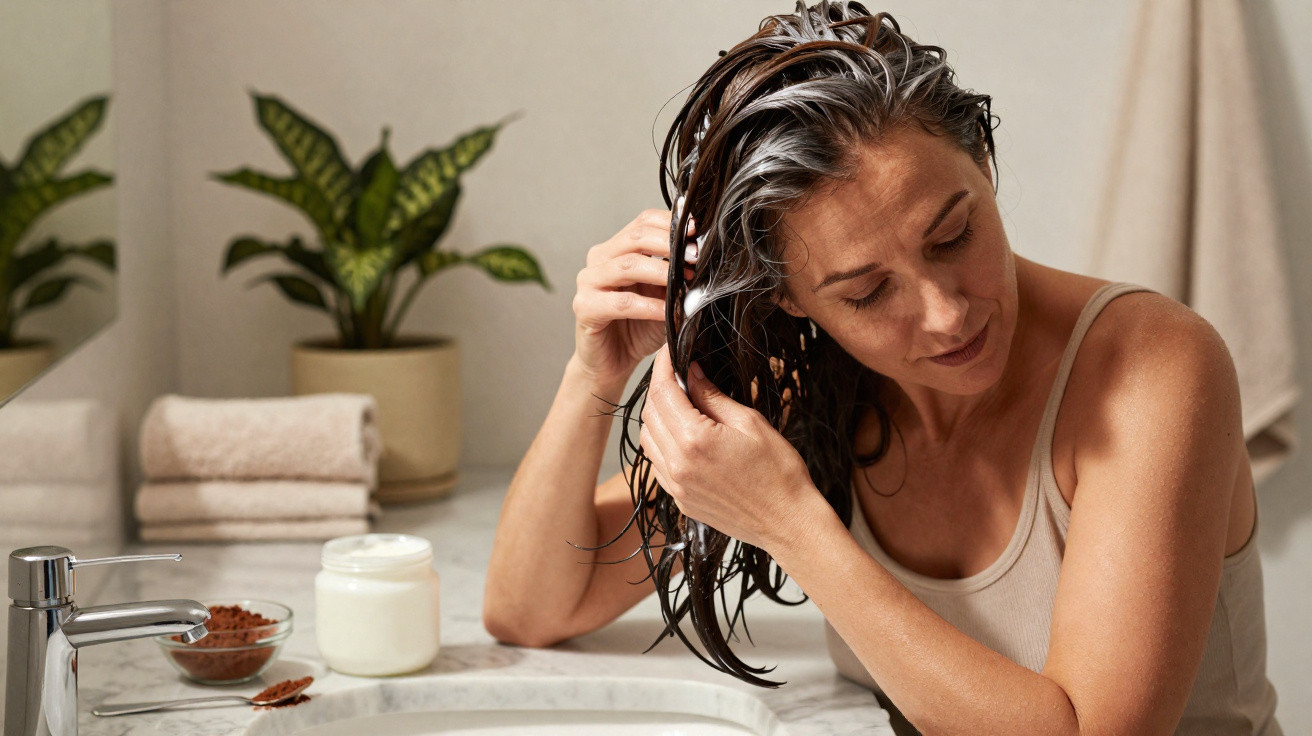
More and more people don’t want to cover grey hair with a harsh, all-over dye. Instead, they’re looking for a gentler way to blur it while also caring for the hair. That’s exactly where an unusual kitchen trick comes in: adding one simple ingredient to your conditioner can make your hair look visibly darker, shinier and smoother - without traditional colouring.
Grey hair: between acceptance and camouflaging
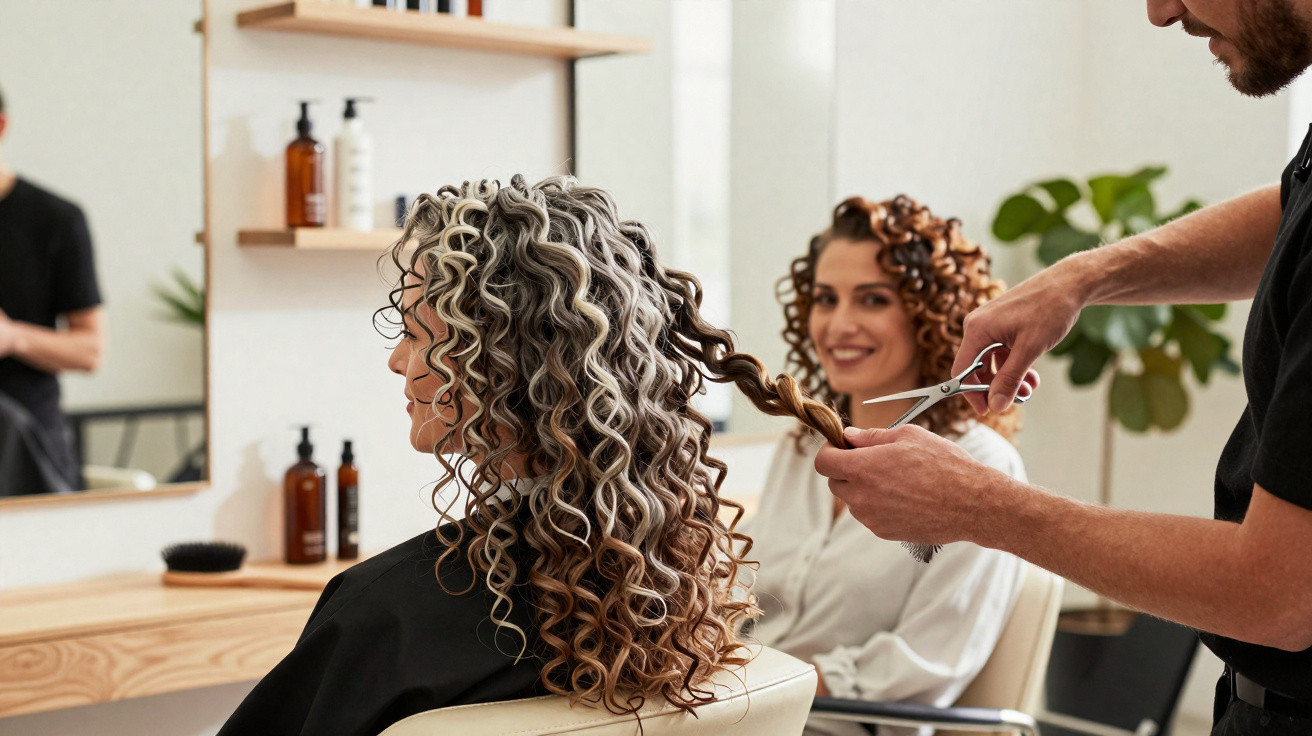
Grey hair appears when the hair root produces less pigment. As a result, the hair looks lighter and often feels drier and duller too. For many, it can make them feel older than they really are.
Typical knee-jerk reactions tend to be the same:
- Plucking individual grey hairs out with tweezers
- Reaching for a first full-head dye
- Trying tinted products or sprays as an emergency fix
The catch: frequent colouring can strain the hair fibre. Grey strands in particular are often drier and more fragile. Strong oxidative dyes may worsen these weak points, leading to split ends or breakage.
"If you want to camouflage grey hair without putting it under extra stress, you need a milder strategy than constant chemicals from roots to ends."
Natural colouring methods such as henna or plant dyes can look beautiful and are often less harsh on the hair, but they don’t deliver the desired coverage for every hair type. Many people complain about unpredictable tones or a slight reddish cast, which doesn’t suit everyone.
A kitchen staple ingredient that changes everything
In beauty forums, one name keeps cropping up when people talk about managing grey hair without dye: cocoa. Not sweet instant drinking chocolate, but unsweetened, as pure a cocoa powder as possible.
Why cocoa can work on grey hair
Cocoa powder contains natural colour pigments that can sit on the surface of the hair like a fine veil. Unlike oxidative dyes, they don’t penetrate deep into the hair fibre - but visually they can add depth and warmth, especially to lighter and grey sections.
On top of that, there are several side benefits that are particularly appealing for more mature hair:
- Moisture: Cocoa contains fats and antioxidants that can make dry lengths feel softer.
- Shine: When the cuticle lies flatter, it reflects more light - helping grey hair look less matte.
- Protection: Some compounds in cocoa may offer a light buffer against heat stress from a hairdryer or straighteners.
- Scalp balance: Many users report a less greasy root area with regular use.
"On grey hair, cocoa doesn’t behave like a classic tint - it’s more like a natural filter that bends light and softens harsh contrasts."
How to mix the cocoa conditioner correctly
The method is not to use cocoa on its own, but to blend it into a nourishing conditioner. That way, the colour spreads more evenly, while your haircare becomes more intensive at the same time.
Step-by-step instructions
| Step | What to do |
|---|---|
| 1 | Wash your hair as usual with shampoo and rinse thoroughly. |
| 2 | In a bowl, mix 2–4 tablespoons of your conditioner with 1–3 tablespoons of unsweetened cocoa powder. |
| 3 | Adjust the amount depending on your hair length until you get a smooth, creamy, clearly brown paste. |
| 4 | Work the mixture through clean, towel-dried hair section by section - especially where grey areas are most noticeable. |
| 5 | Leave on for 20 minutes; optionally cover with a shower cap or towel to keep warmth in. |
| 6 | Rinse thoroughly with lukewarm water until no brown residue is visible. |
Even after the first application, the hair often looks slightly darker, and the transition between grey and your natural shade appears softer. With each repeat use, the effect tends to build.
"The more regularly you use the cocoa conditioner, the more even and richer the tone looks - without the hard edges you can get after a classic dye job."
Who the cocoa method suits best
Conditioner mixed with cocoa won’t suit everyone in exactly the same way, but certain groups tend to benefit most:
- People with the first few scattered grey strands
- Natural brunettes and dark blondes who simply want a softer overall look
- Anyone whose hair is dry, rough, or damaged from colouring
- People with a sensitive scalp who react to stronger dyes
If your hair is very light blonde or bleached, it’s wise to test on a small strand first. On heavily lightened hair, the shade can come out stronger - sometimes a little warm brown. If you prefer cooler, ashier tones, proceed carefully and patch-test on hair first.
Setting realistic expectations for the “magic” result
Cocoa in conditioner can be very noticeable, but it won’t replace a full salon colour. Grey hairs won’t vanish completely; instead, they tend to look more harmoniously blended into the overall shade. Many describe a “soft-focus effect”: hair can appear fuller and denser because stark light–dark contrasts are reduced.
What you can expect:
- A softer transition between your natural colour and grey
- More shine and less frizz
- A nuanced, natural-looking darkening rather than a dramatic colour shift
- A slightly deeper tone with each application
What you shouldn’t expect:
- Total coverage of pure white hair
- Platinum blonde or cool ash tones
- Weeks-long durability like permanent dye
Risks, limits and small pitfalls
Compared with traditional dyes, cocoa is considered gentle. Still, no new hair routine is entirely risk-free. If you’re prone to allergies, apply a small amount of the mixture to the inside of your elbow and wait 24 hours. Redness or itching means you should avoid using it.
Another practical issue is staining. Cocoa powder can brown sinks, towels or clothing. It helps to use:
- An old T-shirt or a colouring cape
- Disposable gloves if your hands are sensitive
- Quick wipe-downs of splashes on tiles and bathroom fittings
If you have very fine hair, don’t overdo the cocoa powder. Mixes that are too thick can weigh down the lengths, making hair look flatter and less voluminous.
What’s behind the effects: a quick look at the chemistry
Grey hair contains less melanin, meaning fewer natural pigments. Its surface is often rougher and reflects light less evenly. Cocoa powder brings plant pigments that can “settle” into that uneven structure without triggering chemical reactions with the hair proteins.
The conditioner acts as the delivery vehicle. Its caring ingredients slightly lift the cuticle, helping conditioners and pigments deposit more precisely. When you rinse, the cuticle lies down again. Some pigment clings on while the rest washes away. That’s why the result builds gradually rather than changing hair abruptly.
Real-life examples: how day-to-day life changes with cocoa in conditioner
If you previously needed root touch-ups every three to four weeks, the cocoa trick can help you stretch the gap between appointments. The first few millimetres of new grey growth don’t stand out as strongly because the overall colour looks softer. Some people use the method every one to two washes; others apply it specifically before events, photos, or a dinner out.
It’s particularly useful for mixed approaches - for example, people who still colour their hair but want to protect the lengths. In that case, classic dye can be used only on the roots, while the lengths are cared for and lightly toned with cocoa conditioner. This can significantly reduce the overall chemical load.
"Cocoa in conditioner won’t completely replace the hairdresser, but it can turn the visit into a more targeted, gentler ritual."
What you can combine – and what you’d better avoid
If you enjoy natural ingredients, it’s tempting to mix several home remedies at once. Some pairings work well; others are less predictable.
- Good combinations: A splash of coffee or black tea in the mix can deepen the tone slightly.
- Be careful with henna: The order and the outcome when combined with cocoa are hard to predict, so a strand test is essential.
- No sugar: Sweet cocoa drinks make hair sticky and can attract insects - pure powder is the better option.
If you like hair oils, you can smooth a few drops into the ends after rinsing. Using too much oil inside the cocoa conditioner itself can reduce how well pigments cling, so it’s better to keep the steps separate.
Overall, this kitchen staple shows how much small tweaks in a care routine can change the look of grey hair. A spoonful of cocoa powder in conditioner won’t turn grey hair into a completely different identity, but it can bring it noticeably closer to what many want to see in the mirror: well cared for, lively, full of character - and without constant pressure to book colouring appointments.
Comments
No comments yet. Be the first to comment!
Leave a Comment