
“Every day? That can’t be right at my age,” she mumbles, rubbing the papery skin on her forearm. A couple of lockers along, a man in his late sixties cinches his towel tighter, waiting for the water to “heat up” despite the steam already rolling off it.
Across the aisle, someone boasts: “I only shower on Sundays now, my doctor says I shouldn’t dry my skin.” There’s a laugh, a wince, and then that unspoken doubt that seems to settle over everyone: have we all got this wrong?
After 60, hygiene simply doesn’t work the way it did at 30. Skin changes, immunity shifts, and even what feels comfortable in the bathroom is different. That’s why the usual advice - either a daily shower or a weekly “eco” wash - often misses what matters.
The healthiest approach, it turns out, is usually found in a place most people don’t expect.
Why daily showers backfire after 60 (and weekly ones aren’t the solution either)
Ask a roomful of people over 60 how often they shower and you’ll hear everything from “once a day, no excuses” to “once a week, to protect my skin” - or simply because it feels tiring. The problem is that both ends of the spectrum can create slow-building issues that only become obvious later.
Specialists who regularly treat older adults tend to repeat the same warning: daily showers can strip already delicate skin of the oils it needs to stay resilient. Yet leaving it a full week can allow sweat, bacteria and dead skin to build up. Odour is only part of the story. Low-grade inflammation, itching and small infections can take hold quietly.
After 60, the body still has strength, but the protective “armour” is thinner. The hygiene rules many of us grew up with were never designed for ageing skin.
A telling example comes from a geriatric clinic in northern England. Nurses observed that patients who insisted on daily, hot showers experienced more skin tears and frequently complained of persistent itching. Many were still using strong soaps and scrubbing vigorously, as they had for decades - but their skin could no longer tolerate it.
Home-care teams reported the opposite pattern at the other extreme. People who had slid into a “Sunday-only” routine were more likely to develop fungal infections, rashes under the breasts and lingering body odour. It wasn’t that they were “dirty”; it was that the schedule no longer matched the needs of their changing bodies.
When researchers examined hygiene habits in older groups, they also noticed links that went beyond skin: bathroom falls, sleep quality and even loneliness. If washing feels painful, unsafe or exhausting, people start avoiding outings, social plans and exercise. Hygiene can become a quiet obstacle to living well.
On a biological level, this is easy to explain. After 60, the skin’s outer layer thins. Sebum production declines, collagen reduces, and the skin’s protective “acid mantle” becomes more fragile. Hot water, harsh cleansers and long daily showers wear down that barrier faster, leading to dryness, tiny cracks and a higher chance of infection entering through the skin.
But if you push showers out to once a week, you tip into a different imbalance. Sweat, small urine splashes, skin flakes and normal bacteria sit for longer in warm folds. That’s when underarm odour tends to worsen and irritation can flare in the groin or as redness beneath the breasts or belly - not because someone is “unclean”, but because the skin ecosystem is out of tune.
The message many experts now agree on is straightforward: hygiene after 60 is less about “clean versus dirty” and more about finding the right frequency and gentleness for your skin, health and day-to-day life.
The surprising “sweet spot”: how often should you really shower after 60?
Dermatologists who focus on ageing skin often arrive at the same practical recommendation: two to three full-body showers a week, paired with light daily washing of key areas. Not every day. Not only once a week. A flexible middle ground that supports the skin while still keeping odour and bacteria under control.
For people who are fairly active, a routine like this is commonly workable: a proper shower every two or three days, and a quick “top and tail” wash at the sink on the in-between days. Focus on the armpits, groin, under the breasts, feet, and any skin folds where moisture tends to linger.
What surprises many people is what happens when they try it. Older adults often report less itching, improved sleep and reduced anxiety about slipping in the shower. Clinicians also tend to see fewer small skin complaints that used to crop up repeatedly.
One retired bus driver in his seventies put it like this: “I used to shower every morning, scrub like mad, then spend all day scratching my calves. My daughter made me switch to three times a week, lukewarm water, quick wash on other days. Took me a month to admit she was right. My skin feels like it belongs to me again.”
Another woman, 64, who was caring for her husband with Parkinson’s, had reduced showers to once a week for both of them because it felt safer and less draining. A visiting nurse suggested a different pattern: brief showers twice a week, with seated sponge baths on other days. Within a few weeks, her husband’s recurring groin rash eased, and she no longer dreaded “shower day” as much.
The figures align with these experiences. Clinics that help older patients move away from daily hot showers often see fewer complaints about dryness. Care settings that stop relying on a once-a-week “bath day” often report fewer skin infections. The middle option doesn’t just feel more pleasant - it quietly prevents problems.
The reasoning is almost practical engineering. Two to three showers a week allow time for the skin to rebuild lipids between washes, particularly when the water isn’t scalding and the cleanser is mild. Meanwhile, daily targeted washing of warm, moist areas keeps bacteria and odour in check. It suits the slower skin turnover that comes with age while still supporting comfort, confidence and dignity.
There’s a psychological benefit too. A routine that feels realistic is easier to maintain. A full daily shower can become a burden or a hazard. A weekly shower can start to feel like a major task you keep postponing. Showering “every two or three days” can be oddly freeing: missing a day isn’t failure - it’s simply following a rhythm that fits your body now.
Let’s be honest: hardly anyone truly does it every single day.
How to wash smarter after 60: small moves, big impact on health and comfort
Frequency matters, but technique matters just as much. Start with temperature: choose warm, not hot. If the mirror fogs up immediately, the water is probably too harsh for ageing skin. Aim for gentle warmth - more like a mild summer day than a blast of sauna heat.
Keep showers brief. Five to eight minutes is usually plenty. Use cleanser mainly on the “high-traffic” areas: armpits, groin, feet, buttocks and skin folds. On arms, legs and back, a light wash is often enough. Shins in particular rarely need scrubbing; they generally need gentleness.
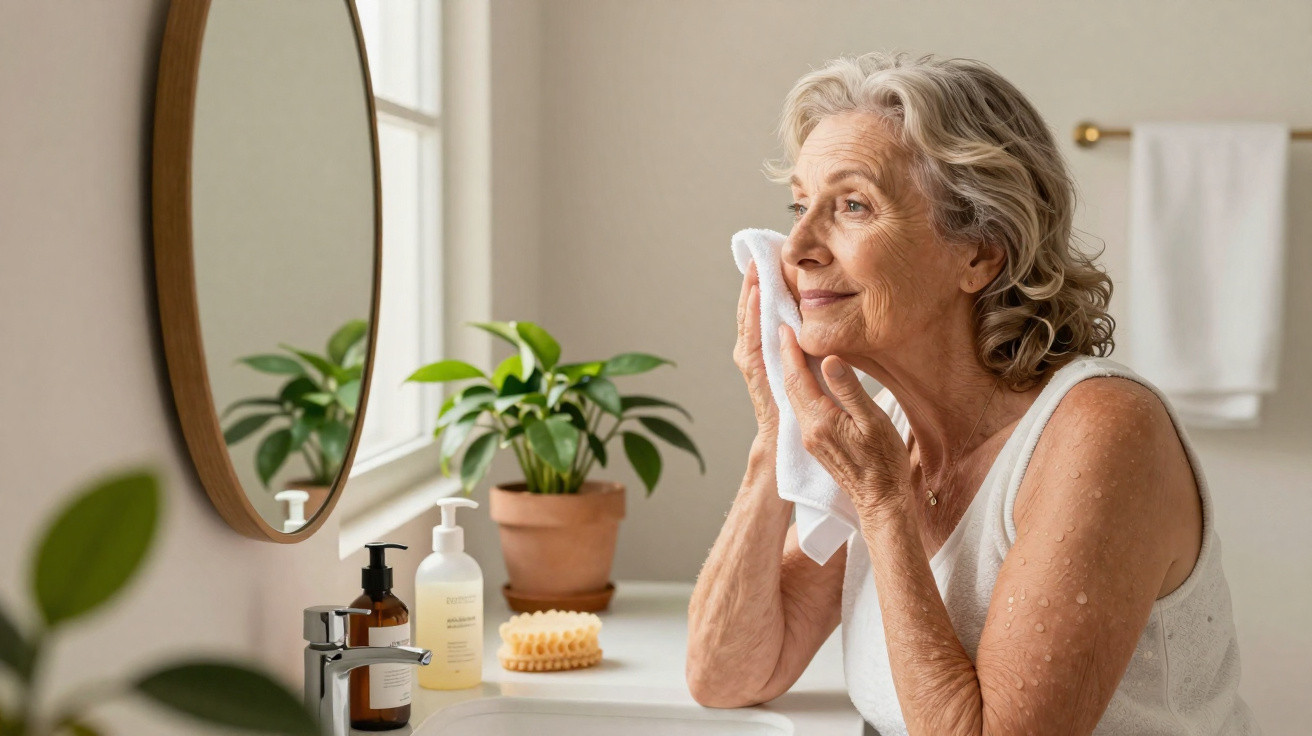
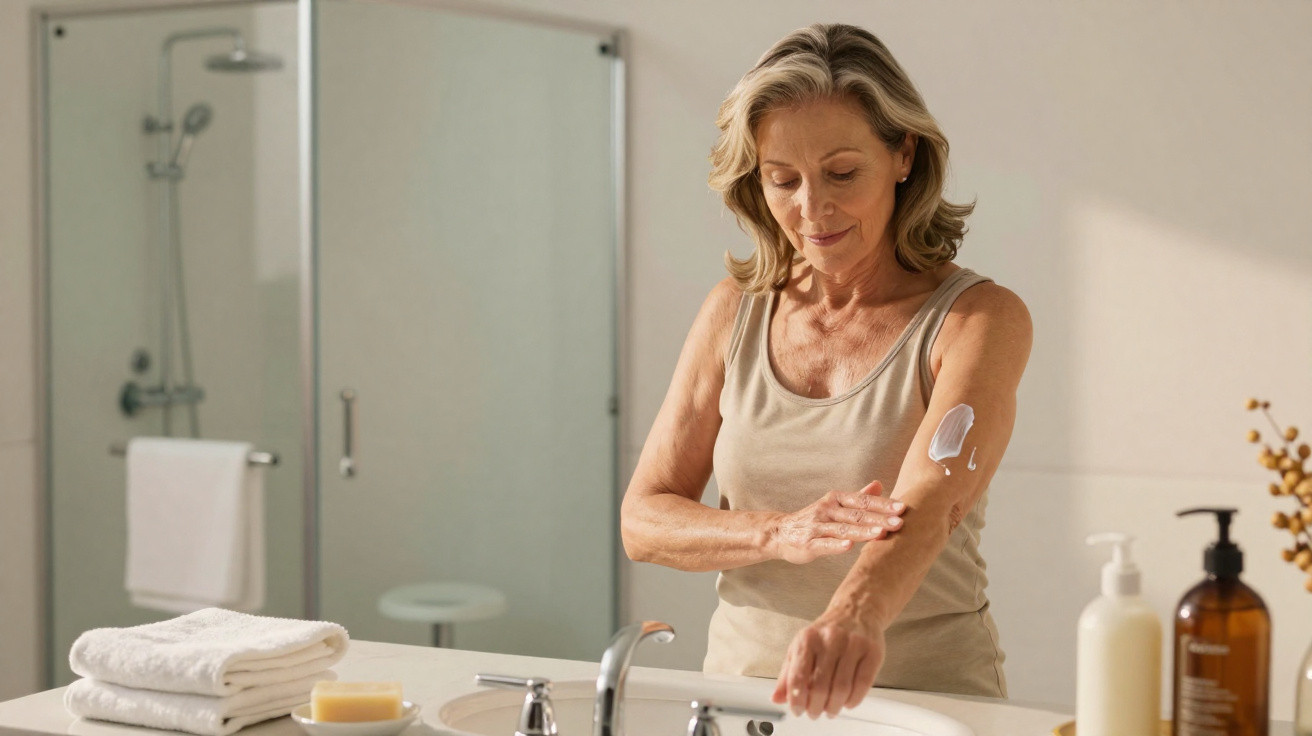
Dry by patting with a soft towel rather than rubbing. Then, while the skin is still slightly damp, apply a simple, fragrance-free moisturiser. It doesn’t need to be expensive - the timing is what makes the difference.
On non-shower days, think in terms of “key zones” rather than “all or nothing”. A bowl of water, a soft flannel and a small amount of mild cleanser can do a lot. Wash the armpits, under the breasts, groin, genitals, feet and any folds. Doing this while seated can reduce fatigue and lower the risk of a fall.
Wet wipes can be useful occasionally, but choose unscented, alcohol-free options. They can help on days when pain, cold weather or low energy make even a sink wash feel overwhelming. One emotional piece that’s rarely spoken about is how much pride or shame can be tied up in hygiene. On a difficult day, skipping a shower can feel like “losing yourself”. It often helps to reframe it as a deliberate, kinder decision.
A common stumbling block is the assumption that “good hygiene” means “a full shower every time”. In practice, the body mostly cares about what’s happening in warm, damp areas where bacteria thrive. Everything else is largely about comfort.
As Dr. Rachel M., a geriatric dermatologist in London, puts it: “After 60, the goal is not to be squeaky clean. The goal is to have skin that doesn’t crack, itch, or burn, and a body that feels pleasant to live in.”
- Use warm, not hot, water to protect thin, ageing skin.
- Limit full showers to 2–3 times a week, with daily targeted washing.
- Choose gentle, fragrance‑free cleansers and moisturisers.
- Keep showers short and safe: non-slip mats, a seat if needed.
- Listen to your own skin: more dryness means you’re overdoing it.
Shifting the way we think about hygiene, ageing and what “feeling clean” really means
There’s a quiet relief in recognising that the “one shower a day” rule was never a universal law. It was habit, culture and sometimes marketing. After 60, your skin sends different signals - and there’s something empowering about responding to them instead of battling them.
You might recognise that push and pull in your own bathroom. Part of you holds on to the routine you had at 40, while another part dreads a slippery bath or hates the stinging sensation on your shins afterwards. Changing how often you shower isn’t “letting yourself go”. It’s a practical upgrade, tailored to the body you live in now.
On a personal level, many older adults say that once they land on their “sweet spot” - often two to three showers a week with quick daily washes - small things improve. They feel less drained, less rushed, and more willing to take a walk, go to a class or invite someone round without worrying whether they “smelled okay”.
The science of hygiene after 60 is still developing, but one point already stands out: extremes tend not to help. Neither the strict daily scrub nor the once-a-week “that’ll do” wash respects what older skin, joints and energy levels need. The middle path may not sound glamorous, but it’s often where comfort, dignity and real health meet.
Most of us know that moment: stepping out of the shower thinking, “That was too much,” or lying in bed wondering whether it was “bad” to skip it. That internal negotiation may never disappear completely. But when it comes up again, it helps to remember that the healthiest choice is rarely found at either end.
It’s usually in the middle - in a gentle, achievable rhythm that keeps you clean enough, safe enough, and fully at home in your own skin.
| Key point | Detail | Why it matters to you |
|---|---|---|
| Ideal shower frequency | 2–3 full showers per week with daily targeted washing | Offers a clear, realistic routine to protect skin and control odour |
| Water and products | Warm (not hot) water, gentle fragrance‑free cleansers and moisturisers | Reduces dryness, itching and micro‑tears on ageing skin |
| Safety and comfort | Short showers, non‑slip setup, option to sit or use basin washes | Lowers fall risk and fatigue while keeping a sense of dignity and freshness |
FAQ:
- How often should I shower after 60 to stay healthy? Most experts suggest two to three full showers a week, plus daily washing of armpits, groin, feet and skin folds.
- Is it unhealthy to shower every day as an older adult? For many people over 60, daily hot showers dry and irritate the skin, increasing itch and small cracks that can lead to infections.
- What if I exercise or sweat a lot? You can rinse off with a quick, lukewarm shower focused on sweaty areas, or use a basin wash on those spots, instead of a long full‑body scrub each time.
- Which soap is best for ageing skin? A mild, fragrance‑free cleanser or syndet bar is usually kinder than deodorant soaps or heavily perfumed shower gels.
- Can I rely only on wet wipes instead of showering? Wipes can help occasionally or on low‑energy days, but they don’t fully replace regular showers or thorough basin washes over the long term.

Comments
No comments yet. Be the first to comment!
Leave a Comment