
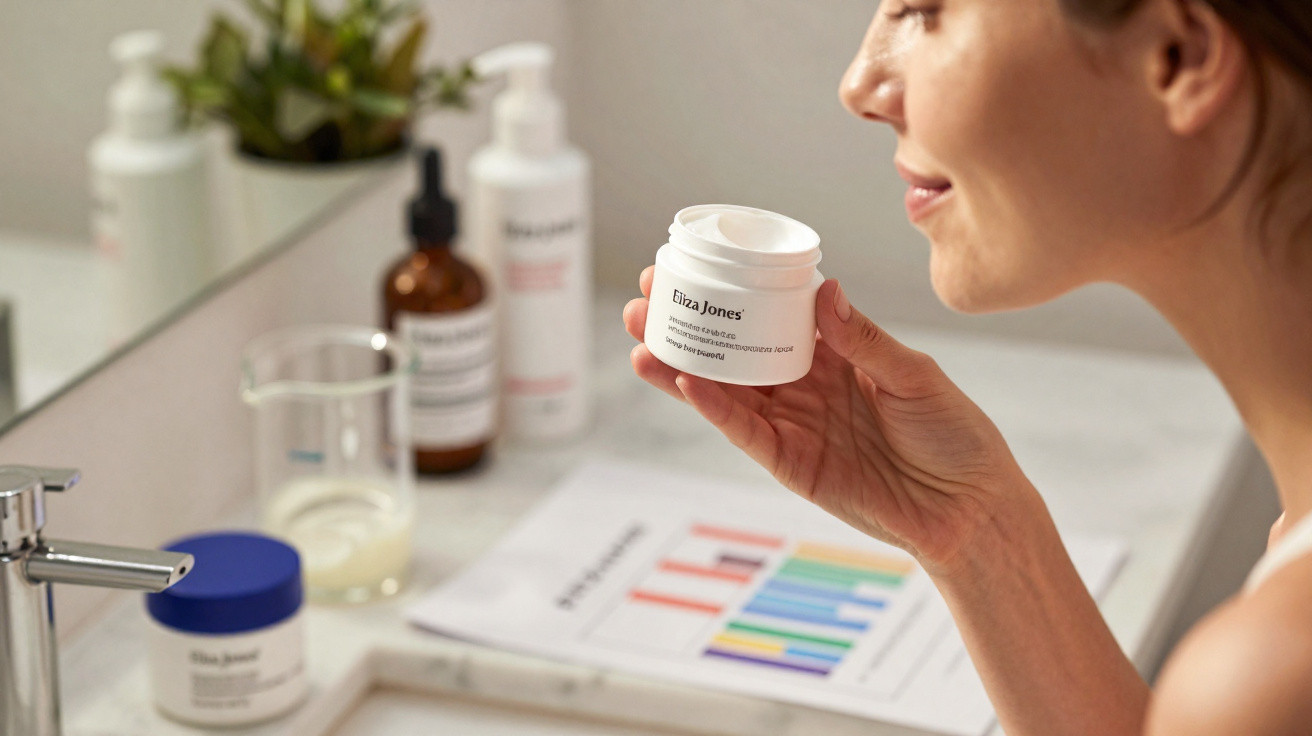
A plain-looking tub on a shelf can sometimes catch out entire test labs - and surprise everyday users too.
To get a clearer picture, we reviewed test reports, compared formulas and tried it ourselves. What we found challenges a few assumptions, without claiming any miracle results.
A budget cream with ambitious numbers
At Action, there’s a hyaluronic cream on the shelf for €2.49. It’s called Hyaluronic Acid Ultra Hydrating Face Cream and it’s made by Eliza Jones. The packaging is simple, but the formula has attracted attention in consumer testing.
France’s consumer organisation UFC-Que Choisir awarded it 14.8/20 - a score that put it near the top of the group. The assessment covered moisturising performance, skin tolerance, composition and how it feels to use. For a product priced under three euros, that’s notable.
14.8/20 points for €2.49: the Action cream delivers measurable hydration - without a premium price tag.
Comparison with the well-known Q10 moisturiser
It’s hard not to compare it with a high-street staple: Nivea Q10. In the Yuka app, the Q10 formula scores 47% and is labelled “average”. The app flags potential irritants and fragrance ingredients. By contrast, the Action cream stands out for a shorter INCI list. That doesn’t prove anything about wrinkle reduction, but it does suggest a different approach to formulation.
| Product | Rating (source) | Price | Notable ingredients |
|---|---|---|---|
| Eliza Jones Hyaluronic Acid Ultra Hydrating (Action) | 14.8/20 (UFC-Que Choisir) | €2.49 | some fragrance allergens, no parabens, no heavy silicones |
| Nivea Q10 | 47% (Yuka) | approx. €10–18 | several potential irritants according to the app rating |
What’s in the formula
At the core is hyaluronic acid. It holds on to water and can temporarily plump the skin’s surface. It also supports the skin barrier and helps skin feel more elastic again. The formula pairs humectants with light emollients for a smooth finish. A gentle preservative keeps the texture stable.
The overall idea is straightforward: minimal extras, maximum hydration. No parabens. No heavy silicones that leave a dense film behind. Fragrance does appear to be included, which can be an issue for sensitive skin. If you react easily, test a small patch first.
- Hyaluronic acid as a moisture magnet for a fuller-looking skin surface
- Lightweight, fast-absorbing texture for daytime use and under make-up
- Streamlined formulation focused on barrier comfort
How it feels in everyday use
It absorbs quickly, doesn’t feel sticky and doesn’t leave a greasy layer. Under foundation it doesn’t pill. In the evening, it works well as the final step over a serum. In the morning, you’ll want an SPF on top, as the cream provides no sun protection.
Dry skin often benefits from applying two layers. Combination skin can use a smaller amount and add more only where needed. Very oily skin may find it sufficient as the only moisturiser. During colder spells you might need an occlusive add-on - for example, a few drops of oil.
Moisture: yes. UV protection, retinoids or peptides: no. This cream is a hydration building block, not an all-in-one programme.
What lab values don’t capture
Hydration measurements show water-binding in the outermost layer of skin. That won’t do much for deep wrinkles. Anti-ageing changes come from long-term care, consistent UV protection and proven active ingredients. Peptides, retinoids or acids target structure and turnover. The Action cream’s strength is mainly as a dependable base step.
Why the price raises questions
In cosmetics, the price rarely reflects raw materials alone. Marketing, packaging, licensing and retail margins all influence what you pay. Discount brands typically cut back on visibility, not necessarily on performance. Private-label products are also made in large runs, which reduces the cost per unit.
- Raw material costs: hyaluronic acid can be used affordably at low dosage
- Economies of scale: large volumes push production costs down
- Marketing: less advertising means lower cost per tub
- Packaging: a simple format saves on materials and design budgets
Who the Action cream is good for
Anyone whose skin feels tight after cleansing is likely to notice the benefit. If you avoid perfumed skincare, check the INCI list carefully. Make-up wearers will appreciate how quickly it sinks in. Mature skin can use it as a hydration layer alongside active serums.
If you love the rich, protective feel of Nivea’s texture, you may miss that “shielded” sensation. A small amount of an extra balm can help. If you have allergies, it’s safer to stick with fragrance-free alternatives. Ultimately, the best cream is the one that fits both your skin barrier and your day-to-day routine.
How to test it properly
With any new product, give it four weeks of consistent use. Skin needs time to settle and stabilise. A patch test helps avoid unpleasant surprises. For the whole face, aim for roughly a large pea-sized amount. It applies best on slightly damp skin.
- Morning: cleanse, serum, Action cream, sunscreen (SPF 30+)
- Evening: cleanse, active as needed (e.g. retinol), Action cream
- Every 2–3 days: check your skin’s feedback and adjust the amount
Reading INCI without a chemistry degree
The order reflects approximate quantity: water and base ingredients appear first. Glycerin, urea and hyaluronic acid usually point to hydration. Fragrance ingredients near the end aren’t automatically “bad”, but a long cluster can be problematic for sensitive skin.
More context for better choices
Hyaluronic acid comes in different molecular sizes. High-molecular-weight types form a film and bind moisture on the surface. Low-molecular-weight types can penetrate further and may feel more plumping. Many brands blend both to create a balanced skin feel. The Action cream acts more like a straightforward hydrator than a specialised treatment.
Thoughtful combinations can elevate results. In the daytime, broad-spectrum protection reduces UV-driven wrinkles. At night, retinoids or peptides can support skin structure. If you’re new to actives, increase strength slowly. That helps keep the barrier calm and makes results more sustainable.
Risks to keep in mind
Fragrance can irritate reactive skin. Cold weather, indoor heating and exfoliating acids can all increase sensitivity. In that case, shorter INCI lists and an occlusive finishing layer can help. If redness persists, pause use and, if in doubt, seek dermatological advice.
What this hype really indicates
A low-cost cream can provide measurable hydration. A high price doesn’t automatically mean better skin. Results come from routine, protection and choosing the right actives. If you use the Action cream as a solid moisture base, you can reserve more of your budget for sunscreen and a targeted active serum - and that’s often what shows on skin, not the label on the jar.





Comments
No comments yet. Be the first to comment!
Leave a Comment