
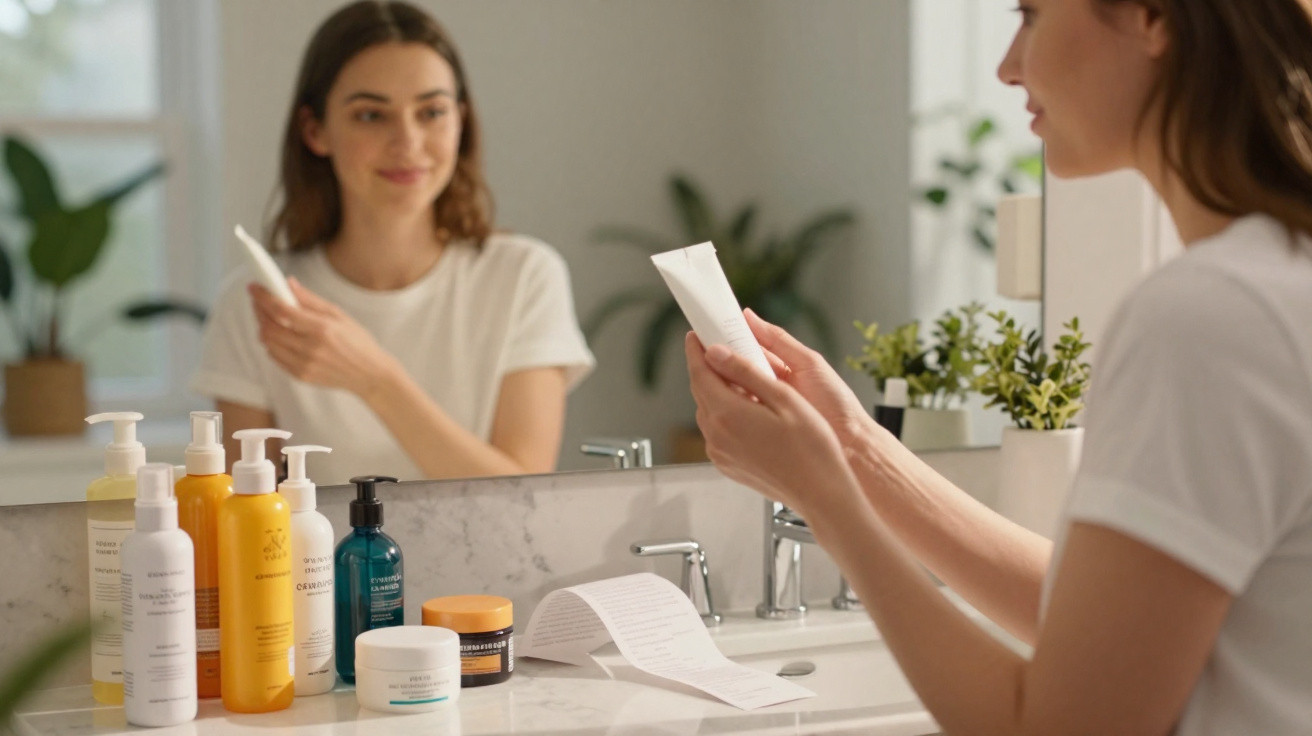
The cheap white tub sat wedged between two glossy, influencer-approved jars that cost more than dinner for two. No marble lid, no gold pump, no dreamy name promising “moonlit glow”. Just a barcode, a generic logo, and a price label that looked like it had been misprinted. A pharmacy assistant gave a little shrug: “People either ignore it… or they buy six at once.”
Later that night, while scrolling through reviews, the same thread kept surfacing: understated five-star ratings, low-key selfies, and lines like “I don’t get the hype, this just works”. No viral push. No celebrity tie-in. Just skin that looked settled and properly moisturised.
And that’s where the uncomfortable question begins.
The quiet cream that won
Skincare aisles now resemble airport duty-free: glass, chrome, and promises that sound almost impossible. Yet, somewhere among the glowing displays, a few cheap, nearly anonymous moisturisers persist like hardy weeds among designer flowers. They don’t trend on TikTok. They don’t show up much in dermatologist-sponsored reels. And still, they keep ending up in baskets.
Ask people, casually, what they actually use at home, and you’ll often hear a version of the same confession: “Oh, just that basic cream… it’s not cute, but it works.”
The real skincare shift is happening well away from the spotlight.
Consider Mia, 29. She walked into a Paris chemist’s on a rainy Tuesday with €12 left in her account, her cheeks stinging after a “brightening” serum she’d bought via Instagram. She reached for the cheapest fragrance-free cream on the bottom shelf, less out of optimism than surrender. There was no talk of glass skin-only a short ingredient list she could actually understand: water, glycerin, petrolatum, and a couple of humectants.
Two weeks on, the redness eased. The peeling stopped. Friends began saying, “Your skin looks different, what did you change?” She paused, almost sheepish about the answer.
Her €5 moisturiser had quietly done better than the €60 “science-backed” gel she’d been guilt-buying for months.
Underneath the “unknown cream beats luxury” storyline is something far less glamorous-and far more logical. At base level, skin tends to want three things from a moisturiser: water (humectants such as glycerin), something that keeps that water in place (occlusives such as petrolatum), and a bit of cushioning support (emollients that smooth the surface). Many budget formulas get this trio right. They invest in stability and function, not in lyrical textures or brand storytelling.
Luxury creams, by contrast, often pile on fragrance, exotic extracts, fashionable peptides, and packaging that can cost more than the formula inside. The science they advertise can end up as a supporting actor in a film led by marketing. Dermatologists are well aware that plain, fragrance-free moisturisers are often a first-line recommendation. What they don’t always hurry to say is that the cheapest dependable option can do the job just as well as the star product on the shelf.
How to spot the “boring” moisturiser that secretly wins
The approach is almost annoyingly straightforward. Ignore the front label for a moment, turn the tub around, and read the back. You’re looking for a short, steady ingredient list where water, glycerin, and perhaps petrolatum or dimethicone appear near the top. That’s the core hydration team. Overly long perfume names, random plant cocktails with no clear purpose, or sparkly “gold extract” are easy to skip-with zero guilt.
Next, test the feel on your hand. Does it disappear instantly and leave your skin oddly squeaky? That’s often a sign of more story than substance. The cheap, unknown creams that genuinely help tend to feel a bit plain, slightly thick, and they leave a soft, protective film. Not Instagram-cute-but your skin reads it as comfort.
Here’s the line no brand wants to say openly: consistency beats innovation. A basic, well-made cream used morning and night will almost always outperform a hyper-complex cream used only “when you remember”. Let’s be honest: nobody really does that every day.
If your skin is sensitive, avoid fragrance and essential oils even when the label shouts “natural”. If your skin is oily, look for “non-comedogenic” and a lighter lotion texture, but keep the same fundamentals: humectant + emollient + a gentle film. And if money is tight, drop the guilt. The right €5 cream, applied reliably, can do more than an entire shelf of half-used luxury jars.
Dermatologist Dr. Lena K., who works in a busy public hospital, told me quietly between two consultations:
“If people saw what we actually recommend in hospital settings, half the beauty industry would have a crisis. Plain, cheap moisturizers fix more skin than any trending active.”
Choosing the unsexy tub can feel oddly rebellious. On a bad skin day, reaching for a no-name cream is a small act of self-protection, not self-punishment. At a deeper level, it’s a refusal to accept that good skin is reserved for people who can drop €100 on a jar. When life already feels like a fight, one straightforward, dependable product can feel like the one thing that stays on your side.
- Look for short, readable ingredient lists.
- Favour fragrance-free if your skin is reactive.
- Don’t confuse price with performance.
- Test texture on hands, not just on the face of a model.
- Give one cream 3–4 weeks before judging.
The uncomfortable truth about the skincare “scam”
Most of us know the scene: a bathroom shelf that’s become a graveyard of half-empty bottles. Each one began as hope in a box. Each one ended as clutter. Behind that personal mini-drama sits a billion-euro machine powered by a simple message: your skin is never “enough”, and the answer is rarely cheap, simple, or already sitting in the chemist next door.
The unknown moisturiser disrupts that script. It murmurs a different idea: perhaps your skin doesn’t need 10 steps. Perhaps it needs a calm, consistent routine and fewer experiments. That doesn’t move as many serums-but it can feel strangely liberating.
Speak to dermatologists off the record and you’ll hear the same admission: many of the irritated, inflamed faces they see aren’t suffering from “bad genes”. They’re dealing with over-layering, over-exfoliating, and over-spending. A barrier wrecked by a cocktail of actives, then frantically patched with yet another pricey product claiming to “repair what we broke”.
In that kind of chaos, the anonymous bottom-shelf cream becomes almost radical. It doesn’t promise glow, glass, or “baby skin”. It offers less drama. It gives your barrier the space to rebuild quietly overnight. For many people, that’s where the real before-and-after begins-far from ring lights and filters.
Once you strip away the glitter, the scam isn’t that every expensive cream is pointless. Some are genuinely well formulated and a pleasure to use. The scam is the message that only those creams can be “number one”, that price equals respect, and that affordability equals mediocrity.
The cheap moisturiser that wins in dermatology clinics, in hospital corridors, and in the bathrooms of exhausted nurses and students isn’t interested in status. It simply keeps doing what skin needs: sealing in water, protecting you through the day, and giving your face a break from performance. And that’s exactly why it quietly exposes an industry that too often sells insecurity more than science.
Once you notice this, it’s difficult to unnotice. Next time you walk into a shop, you may feel a subtle shift: the spotlights, the glass cabinets, the pseudo-lab coats in adverts start to look like set dressing rather than truth. You might reach for the plain white tube and feel a different sort of power-one that doesn’t demand attention.
And telling a friend - “Hey, I switched to this super basic cream and my skin calmed down” - can feel surprisingly intimate, like sharing a small personal workaround in a noisy system. Some people will keep loving their luxury jars, and that’s fine. Others will quietly scale back, and their skin will quietly thank them.
The skincare conversation is only just starting to grow up: less about status, more about skin that doesn’t sting, doesn’t flake, and doesn’t require hours of maintenance. Somewhere between those two worlds, a cheap, unknown moisturiser is already number one in ways brand rankings can’t measure.
| Key point | Detail | What it means for you |
|---|---|---|
| The basics of a good cream | Water, humectants (glycerin), simple occlusives, fewer ingredients | Know how to spot an effective product without paying for the brand |
| The role of price | The cost often reflects marketing and packaging, not performance | Spend less without sacrificing quality of care |
| Usage strategy | Fewer products, more consistency with a basic cream | Improve your skin by simplifying your routine |
FAQ:
- How can a cheap moisturiser be “number one” if dermatologists promote big brands? In private practice, doctors may collaborate with brands. In hospitals and clinical protocols, they often reach for simple, low-cost, fragrance-free creams because they reliably calm irritated skin.
- What ingredients should I look for in an effective budget cream? Water, glycerin, hyaluronic acid, petrolatum, dimethicone, ceramides are solid basics. Short, familiar lists usually beat long, “fairy tale” formulas stuffed with perfumes and marketing extras.
- Can I really skip expensive serums if I find a good cheap moisturiser? Many people see big improvements just by repairing their barrier with a basic cream. Actives like vitamin C or retinol can help specific concerns, but they’re optional once your barrier is stable.
- Won’t a cheap cream clog my pores or cause breakouts? Check for “non-comedogenic” and a lighter lotion texture if you’re acne-prone. Patch test on a small area for a few days. Price doesn’t predict breakouts - formulation does.
- How long should I test a new moisturiser before deciding if it works? Give it at least three to four weeks of consistent use, with minimal other changes. Your skin barrier needs time to settle before you judge the real effect.


Comments
No comments yet. Be the first to comment!
Leave a Comment