
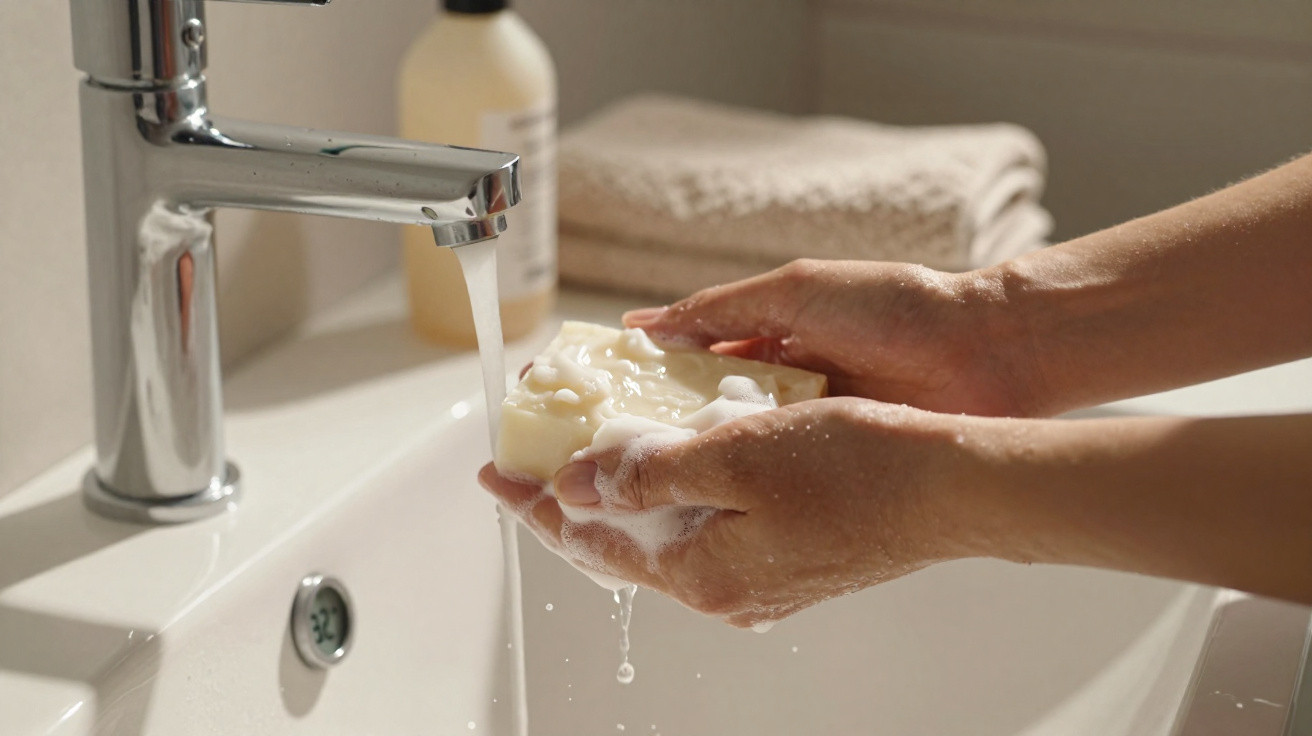
The real cause often isn’t hiding in your hand cream at all - it’s right there at the tap.
Plenty of people moisturise their hands several times a day and still can’t work out why their skin feels tight and rough, almost like sandpaper. Before you spend money on yet another “miracle cream”, it’s worth paying attention to a very ordinary moment: washing your hands. Change a few small details here and, all of a sudden, you need far less cream - while your hands feel noticeably softer.
Why your hands dry out even though you moisturise all the time
When your skin starts to sting or feel tight, most of us react the same way: reach for hand cream. It may feel better briefly, but after the next wash everything is back to square one. That’s how many people end up stuck in a care loop that soothes symptoms but never tackles the cause.
“If you wash your hands the wrong way, you’re basically moisturising a sieve - everything just runs straight back out.”
The real issue is often not the weather or “not enough skincare”. More commonly, it’s the mix of tap water, the soap you use, and how you dry your hands. Together, these decide whether your skin’s natural protective barrier stays in place - or is stripped away every time you wash.
Tap water as a hidden enemy to skin
Tap water seems harmless - after all, you need it for hygiene. But its composition can make a real difference to your skin. In areas with hard water in particular, dissolved minerals can be harsh on the skin’s surface.
Limescale residue can sit on the skin, draw out moisture and leave your hands feeling dull and rough. If you wash your hands frequently, you expose your skin to this irritation again and again - and then compensate with more cream, instead of addressing what’s happening at the source.
The simple trick: wash more gently instead of moisturising more often
The answer isn’t to wash your hands less, but to wash them more intelligently. When you adjust your routine on purpose, you support the skin barrier rather than attacking it each time. Two key factors are the right water temperature and choosing a milder cleanser.
- avoid washing with extremely hot or ice-cold water too often
- steer clear of overly aggressive liquid soaps and harsh surfactants
- be gentle when drying - don’t rub
The 30–35-degree rule: lukewarm water makes the difference
You can’t easily change your tap water at home, but you can change the temperature - and that’s one of the most effective levers you have. People still say hot water cleans “better”, or cold water is “healthier”. For the skin on your hands, neither is true.
How heat and cold can effectively “strip” your skin
Very hot water dissolves the skin’s natural oils, which act like a protective coating. If that film is removed too often, your hands are left exposed, become reactive, and dry out. Ice-cold water isn’t a good alternative either: blood vessels constrict, nutrient supply drops, the skin becomes more sensitive, and it reacts more strongly to outside irritation.
“Hands off boiling-hot and ice-cold water - both stress the skin and make it rough.”
Why dermatologists back lukewarm water
The sweet spot sits close to body temperature: around 30 to 35 degrees. Lukewarm water is warm enough to loosen dirt and germs without damaging the skin’s protective barrier. Specialists confirm that this temperature range best balances hygiene with skin comfort.
In practical terms, that means checking the tap briefly and adjusting if needed. Within a few days you’ll instinctively know the right setting. Many people notice that, after about a week, their hands feel far less tight - without buying any new cream.
Switching soaps: why a superfatted bar soap can work wonders
What you wash with matters just as much as temperature. Standard liquid soaps, shower gels and stronger wash lotions often contain powerful surfactants such as sulphates. They don’t only remove dirt and grease - they can also compromise the skin barrier overall.
Superfatted soap: less dryness, more care
If you switch to a superfatted soap or a mild syndet, the difference is often obvious quickly. These products commonly include caring ingredients such as plant oils, shea butter or glycerin. After rinsing, a thin, conditioning film remains, helping to protect the skin instead of leaving it “squeaky clean”.
“Dermatological data show that using superfatted soap can significantly reduce the skin’s moisture loss.”
There’s also a practical bonus: many of these options come as solid bars. That means less packaging, they last a long time, and they’re kinder not only to your skin but also to your wallet.
How to tell if your current soap is too harsh
A few signs suggest your current product may be too strong for your hands:
- your skin feels noticeably tight straight after washing
- you get a mild burning sensation or a rough feel
- you need cream immediately afterwards just to feel comfortable
- redness or small cracks keep returning
If you move to a superfatted soap, give your skin a few days to adjust. During that time, your natural oil layer gradually stabilises again. Many people then find they reach for hand cream far less often.
The often-overlooked role of towels
Once you turn off the tap, your skin is slightly swollen from the water - and therefore more sensitive. Right then, it’s decided whether your hands get further irritated or can settle down. The most common mistake is vigorous towel-rubbing.
Why hard rubbing leaves tiny injuries
Rubbing your hands forcefully damages the top layer of skin. It creates tiny, invisible micro-tears. Over time, that can lead to redness, rough patches and an unpleasant tight feeling. If your skin is already dry, the effect is even more noticeable.
The better method: gentle patting
Instead of rubbing, you mainly need a clean, soft towel - and a different technique. Pat your hands dry: press briefly rather than scrub. Take a little longer between the fingers so no moisture remains, which can otherwise contribute to swelling or cracks later on.
“Switching from rubbing to patting takes daily stress off your skin - without adding even a minute.”
Spring, garden, workshop: extra strain for your hands
In spring especially, many people notice how much their hands suffer. Gardening, DIY jobs or long walks in fresh air all put extra stress on the skin. Soil, tools, wind and shifting temperatures draw oils out of the skin and roughen the surface further.
Washing after gardening: how to do it properly
After working in the flowerbeds or at the workbench, lots of people automatically use very hot water and scrub hard to shift stubborn dirt. That only makes things worse. A better approach is simply to slow down and do it methodically:
- set the water to about 30–35 °C
- massage superfatted soap thoroughly into the dirty areas
- if soil is really ingrained, use a soft brush rather than more pressure
- rinse with lukewarm water, then pat dry gently with a towel
If you like, you can apply a thin layer of hand cream afterwards - but with the right washing routine, you often won’t need to do it every day.
How these small changes show up in daily life
Many people underestimate how often they wash their hands: after using the toilet, before cooking, after shopping, after cleaning, after coming home. Each one of those moments affects the skin barrier. Small changes add up over weeks into a clear difference.
| Habit | classic approach | skin-friendly approach |
|---|---|---|
| Water temperature | very hot or very cold | lukewarm, about 30–35 °C |
| Soap | strong liquid soap with sulphates | superfatted soap or mild syndet |
| Drying | vigorous rubbing | gentle patting |
| After-care | thick layer of cream out of habit | thin and targeted, only when needed |
When you adjust your habits like this, you often only realise the improvement in hindsight: less tightness, fewer cracked areas, and a much lower need for hand cream. Some people even stop using cream daily and keep it for exceptions - for example in bitterly cold winter weather or after particularly tough jobs.
There’s a psychological change too. When your hands aren’t constantly burning or feeling tight, you stop anxiously checking every little rough patch. Your skin gets a chance to settle, and reaching for the tube becomes a deliberate choice rather than a constant fix. That’s when it becomes clear just how powerful a “boring” detail like the right water temperature - and a smarter approach to soap and towels - can be.



Comments
No comments yet. Be the first to comment!
Leave a Comment