
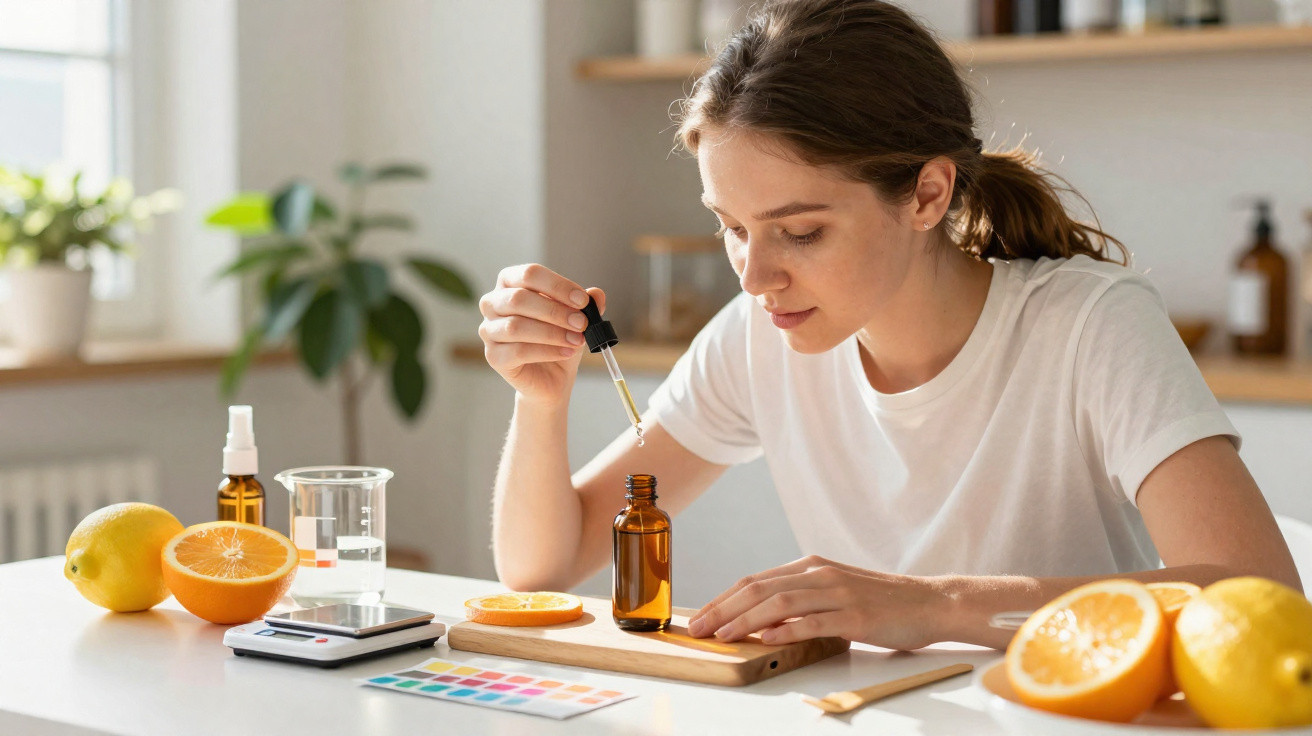
Many people chasing luminous, even-toned skin have started putting their money into homemade skincare. Making your own product means it’s freshly mixed and you have complete control over the active ingredients, steering clear of industrial preservatives that often trigger unnecessary irritation in the dermis.
Why does vitamin C oxidise so quickly in cosmetics?
Ascorbic acid is highly unstable once it’s dissolved in water-based formulas. When exposed to oxygen and light, this potent ingredient undergoes rapid oxidation, turning into a yellowish by-product that loses its original, valuable antioxidant properties.
Big brands usually rely on expensive stabilisers to keep these products shelf-ready for longer. By mixing a fresh batch at home, you can skip that step and still tap into vitamin C’s maximum cell-rejuvenating potential-without spending fortunes.
How to prepare aloe vera gel for your face?
Aloe vera holds remarkable secrets for deep cellular regeneration, but the extraction process requires specific care to… Read more.
What are the advantages of making your own serum?
The biggest benefit of DIY is being able to control the exact concentration of ascorbic acid. You can tailor the formula to your skin’s sensitivity, creating a personalised treatment with a high absorption rate and strong day-to-day value for money.
On top of that, using a product that’s genuinely fresh removes any uncertainty about how effective the active really is. By quickly making weekly portions, your daily self-care gets an extra boost against premature ageing in a sustainable way-without added synthetic preservatives.
Below is a video from the Lab Muffin Beauty Science channel (YouTube) on YouTube that explains this process in detail:
How do you adjust the preparation to the correct pH?
A safe, effective serum depends on balancing its hydrogen potential. In water, the pure acid is extremely acidic, so raising the pH is essential to prevent serious burning and redness in the skin’s protective barrier.
pH indicator strips make it easy to keep track of acidity. Carefully adding sodium bicarbonate works as a neutralising agent, helping you reach the ideal range between three and four-resulting in a product that is highly stable and comfortable to use.
Essential kit for preparation
Indispensable materials
To make your serum safely and accurately, set aside these essentials:
- 1
High-quality pure ascorbic acid powder; - 2
Distilled or deionised water free from heavy metals; - 3
Sodium bicarbonate and reliable pH test strips.
What are good hygiene practices during the process?
Keeping containers properly sanitised is vital to prevent unwanted growth of harmful microorganisms. Even though the formula’s acidic environment makes bacterial growth more difficult, correctly sterilising every tool ensures an application that is safe and highly effective.
Before you start your homemade mix, wash the chosen bottle with hot water and mild soap. Then rinse thoroughly with alcohol to sterilise the glass, so the active ingredients can sit on a surface free from impurities that could harm the integrity of the serum.
To sanitise your glass container properly, follow these recommended steps:
- Wash the entire bottle using warm water and your preferred mild soap;
- Do several rinses with liquid alcohol to remove any remaining residue;
- Rinse with distilled water and leave the bottle to air-dry completely.
How should you store the product properly?
Correct storage is what extends the usable life of your homemade vitamin C. Dark containers help protect the liquid from light-driven degradation, but wrapping the bottle in aluminium foil is an easy, low-cost way to block light.
Keep the bottle somewhere cool and avoid sudden temperature changes. Because the solution contains no heavy preservatives, make small batches to use within two weeks, ensuring the formula keeps its radiance and hydrating power.


Comments
No comments yet. Be the first to comment!
Leave a Comment