
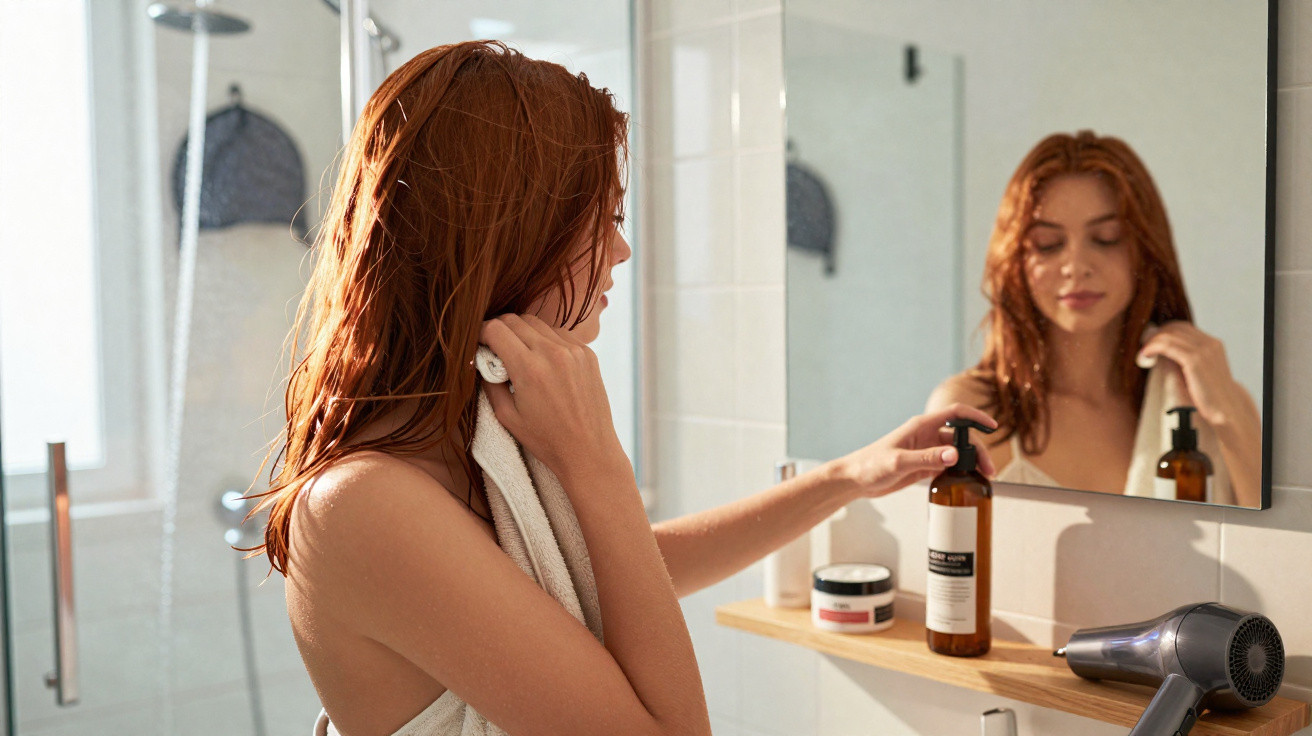
Many people assume that how long a hair colour lasts depends mainly on the dye brand or the stylist’s skill. In fact, small everyday habits determine whether colour looks dull after only two weeks or still appears radiant months later. Water, heat, shampoo and exercise all affect how long pigments remain in the hair.
The first 72 hours after colouring are crucial
Immediately after colouring, hair looks flawless. However, the structure inside the hair fibre is far from fully stable. Although the colour pigments are already within the hair, its cuticle remains slightly open. At this stage, hair is particularly vulnerable.
“Anyone who washes too soon or with water that is too hot during the first three days after colouring is quite literally washing the shine straight back out.”
For this reason, hairdressers give clear advice: wait around 72 hours before using shampoo for the first time. This period allows the hair structure to close again. Pigments can become more securely “anchored”, while the colour appears richer and lasts longer.
If waiting feels impossible because the scalp is becoming oily or the hair smells of smoke and city air, dry shampoo can be used as an emergency solution. Apply it only to targeted areas, though, so that a film does not build up on the scalp and later affect the hair colour.
Water, washing frequency and temperature: avoid washing colour away
The biggest enemy of any hair colour is not the sun, but the everyday shower routine. Each wash releases tiny amounts of pigment from the hair fibre. Shampooing daily speeds up this process considerably.
How often should you wash hair after colouring?
A useful rule of thumb is:
- 2–3 hair washes per week are ideal for coloured hair.
- For particularly delicate shades such as copper, red or cool blonde, it is better to stay closer to 2.
- Between washes, choose dry shampoo or a loose bun instead of shampoo.
For instance, someone who fully shampoos their hair every day after the gym will notice colour fading far sooner than someone who gently cleans only the scalp and leaves the lengths alone.
The right water temperature matters more than you might expect
Hot water may feel wonderful, but it causes problems for coloured hair. Heat lifts the hair cuticle, and when the cuticle is open, pigments can escape more easily.
- Lukewarm water is best for washing the hair itself.
- Finish with cool water to help the cuticle close slightly and make the surface look smoother.
- Avoid scalding water whenever possible, especially straight after colouring.
Many people find that switching from hot to lukewarm water alone visibly extends colour shine by several weeks.
Exercise, swimming pools and the sea: protecting your colour day to day
Everyday activities can also wear away at hair colour. Pigments are affected not only by direct sunlight, but also by sweat and certain substances in water.
Sweat and intense workouts
During exercise, the scalp becomes warm and damp. This alters its pH level and puts stress on the hair fibre. Shampooing immediately after every workout further increases colour loss.
A practical approach:
- Tie hair into a loose ponytail or bun before exercising so it does not become completely soaked with sweat.
- After training, rinse with plain water only, or apply a very mild shampoo exclusively to the scalp.
- Shampoo the lengths only when they are genuinely dirty.
Chlorine and salt water: the hidden threat to pigments
Chlorine in swimming pools and salt in sea water open the hair structure and draw pigments from the fibre. Blonde shades can quickly become dull or take on a greenish cast, while darker colours lose their shine.
“Briefly wetting coloured hair with tap water before swimming takes away the hair’s worst ‘thirst’ for chlorine and salt.”
Useful habits at the beach and pool include:
- Pre-wet the hair with plain water before going into the water.
- If desired, apply a light conditioning oil or protective spray to the lengths.
- Rinse the hair with tap water immediately after swimming rather than letting it dry in.
- Use a moisturising mask regularly to compensate for lost moisture.
Shampoo, masks and leave-in products: which products genuinely protect colour
Not every product on the high-street shelf is suitable for coloured hair. Strong clarifying shampoos remove more than styling residue; they also lift out pigments.
Shampoos for coloured hair
These are the points many professionals look for:
- A shampoo specifically for coloured hair, usually containing gentler surfactants.
- Ideally, a formula without harsh sulphates, which can strip the hair and wash out pigment.
- pH-balancing formulations that keep the cuticle supple.
If in doubt, take home the shampoo used at the salon or ask your hairdresser for a specific recommendation rather than experimenting blindly.
Conditioning masks and colour refreshers
A good mask can make a remarkable difference. It fills minor damage in the hair, smooths the surface and allows light to reflect more effectively. As a result, colour automatically looks more vibrant.
| Product type | Main benefit | When to use it? |
|---|---|---|
| Conditioning mask without colour | Adds moisture, smooths the hair structure | 1× per week after shampooing |
| Mask with colour pigments | Revives the shade, evens out slight colour loss | Every 1–3 weeks, depending on fading |
| Leave-in spray | Lightweight protection, shine, easier combing | After every wash on the lengths |
Colour masks are particularly suited to red, copper and cool blonde tones. They restore lost reflects without immediately requiring a full colouring appointment.
Heat styling: using hairdryers, straighteners and curling tongs correctly
Heat is a real stress test for coloured hair. The higher the temperature, the more the hair fibre dries out. Dry hair retains pigments less effectively and soon looks dull.
“Anyone who loves heat needs heat protection – without exception and with every use.”
Key rules for heat styling:
- Always apply a heat-protection spray or serum to the lengths.
- Do not set the hairdryer to its highest setting; use medium heat instead.
- Set straighteners and curling tongs only to the temperature required – modern tools often offer specific degree settings.
- Do not straighten coloured hair every day; refresh your look on the second day instead.
Many hairdressers recommend avoiding heat styling entirely for at least two to three days per week and allowing hair to air-dry. A braid worn overnight creates waves without any temperature shock.
How long does a hair colour realistically last?
Longevity depends on several factors: the starting hair, the type of colour treatment, the selected shade and the daily routine. Permanent colour remains visible for longer but gradually loses intensity. Semi-permanent colour fades more evenly, although it needs refreshing more often.
Typical guidelines:
- Brown and dark shades: often retain good colour shine for 6–8 weeks.
- Red and copper shades: usually remain intense for 4–6 weeks, then fade more noticeably.
- Cool blonde shades: prone to yellow tones, so regular purple shampoos or colour masks are needed.
Anyone who adapts their care routine will get considerably more from each of these periods – “four weeks of looking good” can quickly become “eight weeks of being wearable”.
When a colour refresh is worthwhile – and when a break makes sense
Some people reach for colour again every three weeks because they dislike visible roots. Over time, this can overwhelm the hair structure. Brittle ends, dull shine and frizz are typical signs that hair needs a break.
A salon consultation can help: many hairdressers offer root colouring or gentle semi-permanent colours that are kinder to the lengths. If you are unsure, you can deliberately skip an appointment and bridge the time with colour refreshers and conditioning treatments.
One frequently underestimated factor is the pH level of tap water, which varies between regions. Very hard water with a high limescale content can make hair colour look dull more quickly. In these cases, limescale-removing hair products or a filtered shower head may be useful, particularly for blonde shades.
By following these rules even a little, there is no need to recolour constantly. Targeted care, an adjusted washing routine and mindful use of heat can make the time in the hairdresser’s chair last considerably longer – while keeping hair colour closer to the shade originally paid for.




Comments
No comments yet. Be the first to comment!
Leave a Comment