
Salons are quietly moving on from layered bobs this spring, opting instead for a crisper, cleaner outline that seems to suit nearly everyone.
This rising favourite, dubbed the “broom bob”, is already turning up on red carpets as well as in local salons. Compared with the choppier cuts that dominated early 2026, it offers more structure with less faff - and it can create a gentle lifting effect, particularly for faces over 50.
What exactly is the broom bob?
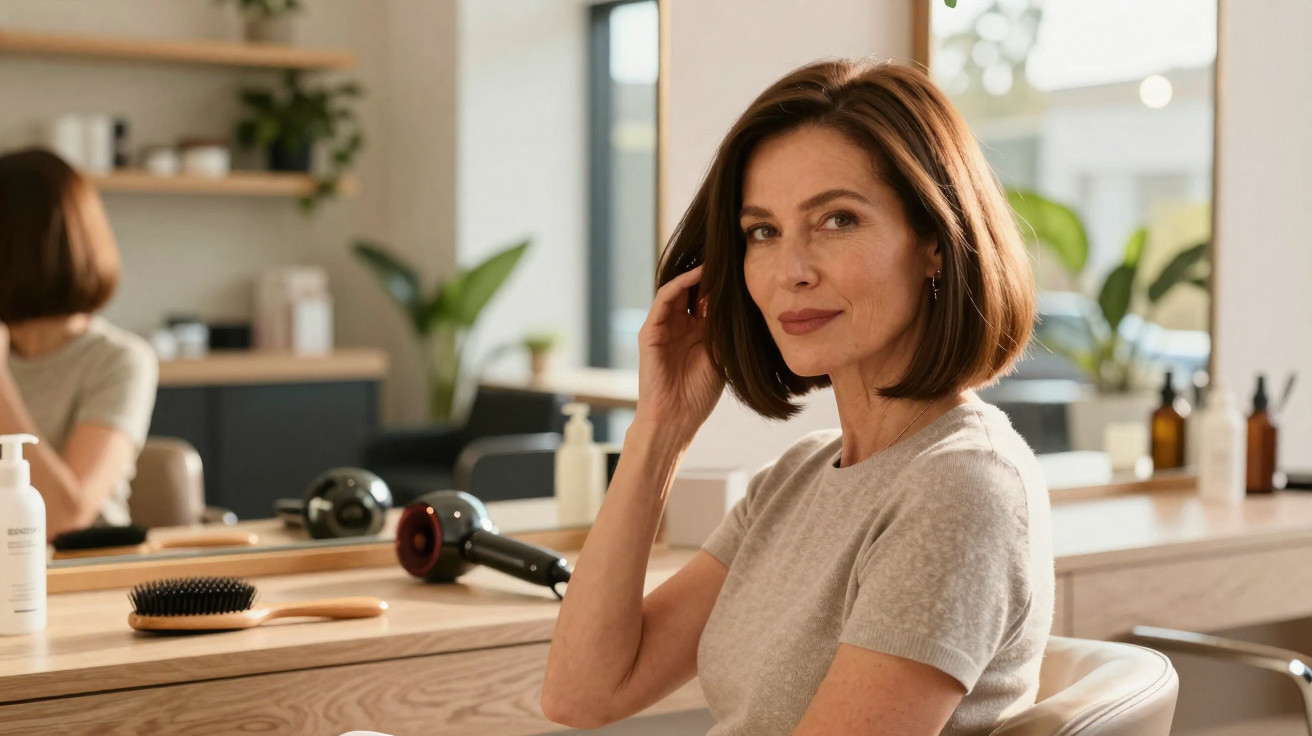
The broom bob - also known as the “broomstick bob” - is a straight, mid-length bob that sits just below the chin. Picture a bold, graphic edge that lands roughly 2–3 centimetres beneath the jaw, with no obvious layers.
The broom bob is a blunt, jaw-skimming bob, cut just under the chin with a clean, almost ruler-straight outline.
While recent looks such as the shag, butterfly bob or tapered lob leaned into movement and feathery ends, this one is noticeably more restrained. Its silhouette is close to geometric. Most of the weight is kept at the perimeter, forming that “broom” finish: compact, neat and slightly firm - intentionally so, and very modern.
This style isn’t designed to bounce and flick with every step. Instead, it settles into place, framing and shaping the face. When the cut is executed properly, the edge reads as almost unbroken from side to side, with very little internal layering.
Why it’s replacing layered bobs this spring
Layered bobs have been the go-to for several seasons, particularly for anyone wanting more movement and volume. The downside is that they can be high-maintenance: daily styling, frequent precision trims and a handful of products are often needed to avoid the dreaded “fluffy triangle” shape.
The broom bob aims for impact with less effort: fewer layers, fewer styling steps, but a sharper result.
With a blunt finish, hair tends to fall more consistently. Rather than the ends kicking out in different directions, they sit together - which makes the style easier to manage at home with a straightforward blow-dry, and for some hair textures, even with air-drying.
Stylists also highlight a useful bonus: as it grows out, a broom bob gradually relaxes into a long bob instead of turning into something undefined. That can translate into slightly longer gaps between appointments.
A flattering option for women over 50
For mature faces, the broom bob hits a particularly flattering middle ground. It avoids the way very long hair can sometimes pull features down, but it also steers clear of the starkness of an ultra-short crop.
The strong, straight edge creates a subtle lifting effect along the jaw, giving a fresher, more awake look.
Because the line falls just below the chin, it visually “supports” the lower part of the face. That can minimise the look of jowls, emphasise the jawline and draw attention towards the lips and cheekbones.
Against very heavily layered cuts, the tighter outline can also make hair appear thicker. After 50, when lengths often start to thin, a blunt cut can help hair look fuller simply by keeping the ends dense.
How it compares to other “youth-boosting” bobs
For 2026, stylists are highlighting a few bob variations believed to deliver an especially fresh, energising effect:
- French bob: a shorter shape, typically above the chin, with soft, lightly tousled ends and often a fringe.
- Jawline bob: finished exactly at the jaw to spotlight bone structure and create a tightening effect.
- Cheekbone bob: cut around cheek height, great for showing off prominent cheekbones and visually shortening a long face.
- Broom bob: slightly longer, sitting under the chin, with a straight, compact outline and almost no layering.
Placed between a jawline bob and a long bob, the broom bob gives strong structure while still leaving enough length to tuck behind the ears or add waves.
How to style a broom bob at home
Although it looks polished, the broom bob doesn’t demand a drawer full of tools. What matters most is building enough lift so the blunt edge feels lively rather than weighed down.
Styling centres on one hero product: volumising mousse, applied from roots to mid-lengths before drying.
A simple at-home routine many stylists suggest looks like this:
| Step | What to do | Why it helps |
|---|---|---|
| 1 | Towel-dry hair until just damp. | Removes excess water so products work better. |
| 2 | Apply a golf-ball sized amount of volumising mousse, focusing at the roots. | Gives lift, thickness and hold without stiffness. |
| 3 | Blow-dry using a flat or paddle brush, pulling hair straight down. | Emphasises the straight, graphic line. |
| 4 | Finish by beveling the ends very slightly inward. | Prevents the cut from looking too harsh or “chopped”. |
If your hair is naturally wavy, using a diffuser can preserve some texture while still keeping the blunt perimeter. With stronger curls, you may want a smoothing cream or a light pass with straighteners to showcase the line for special occasions.
Who suits the broom bob best?
The cut is adaptable, but certain traits make it particularly effective.
Face shapes and features
The broom bob is often especially flattering for:
- Oval faces, where nearly any bob length tends to work.
- Round faces, because the straight sides and slightly longer length can elongate the overall shape.
- Soft jawlines, as the clear outline helps define the lower face.
If you have a very strong, square jaw, you might prefer a touch of micro-softening at the corners - tiny, hidden “invisible layers” - so the edge doesn’t compete too strongly with your natural bone structure.
Hair types and texture
This style generally looks its best on straight to softly wavy hair, where the line stays clearly visible. On thick hair, it creates bold, graphic weight. On fine hair, the blunt ends can make the lengths look denser, particularly when paired with volumising products.
Very curly or coily textures can still wear the shape, but unless it’s smoothed or stretched regularly, the finish will read more rounded than broom-like.
Maintenance, risks and small adjustments
Because the broom bob depends on accuracy, a trim every six to eight weeks helps keep the ends sharp. Leaving it much longer can cause the silhouette to drop into an awkward in-between stage.
The only real risk is ending up with a cut that feels too severe for your personality or styling habits.
If you don’t style your hair often, ask for micro-texturising at the tips so the outline stays clean but a fraction softer. A light, wispy fringe can also soften the geometry for anyone wary of an ultra-precise edge.
Colour can influence the overall impact as well. Solid, dark tones will heighten the graphic feel, while subtle highlights can reduce harshness and add dimension around the face.
Practical examples and style combinations
For example, someone in their 50s with shoulder-length hair that’s thinning could move to a broom bob that sits just under the chin. The blunt perimeter immediately makes the hair look thicker, and the shorter length can visually lift the features. With a gentle side parting and a little mousse, the morning routine could drop to around ten minutes.
In another case, a younger person tired of a shag might ask their stylist to slowly remove the surface layers, transitioning towards a broom bob across two appointments. That approach avoids a sudden dramatic chop and gives them time to adjust to a straighter outline.
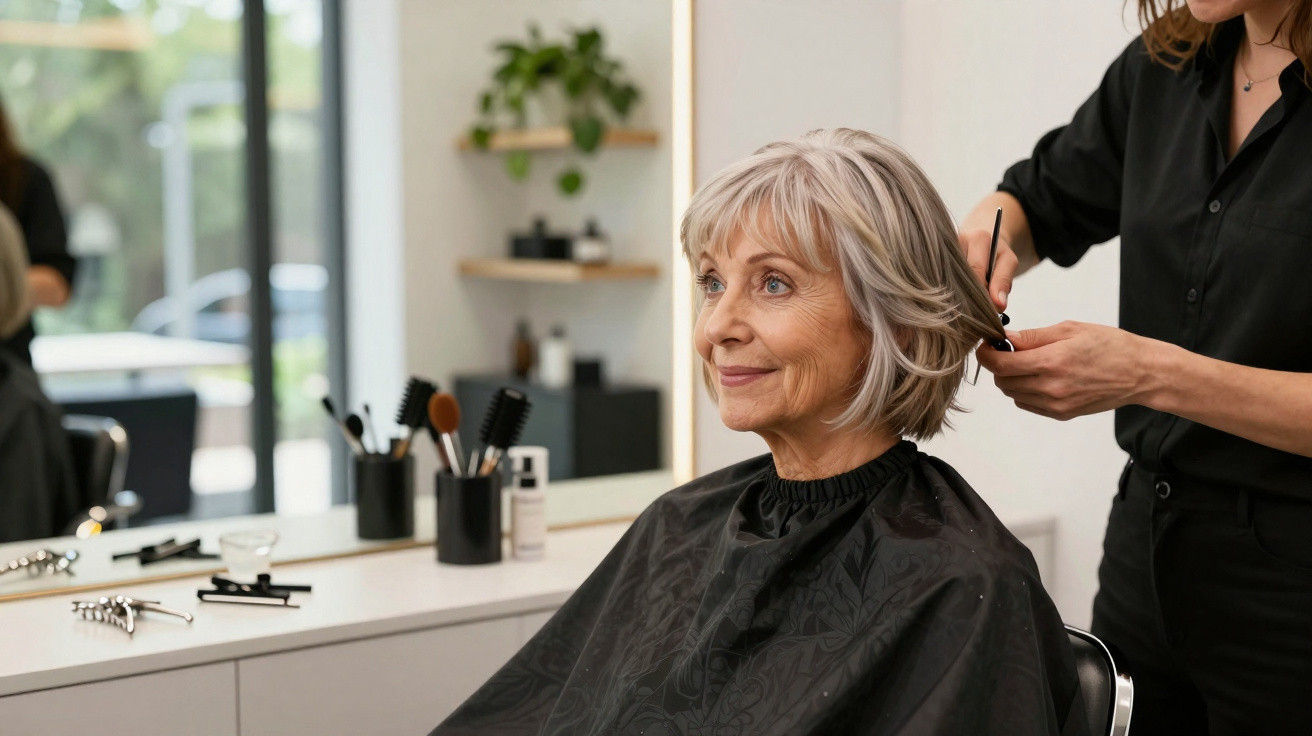
If commitment feels daunting, a stylist can mock up the look by pinning the hair under to imitate a broom-length bob. In the mirror, you can see how the new line sits against your jaw and neck before any cutting happens.
It also helps to understand the language used in consultations: “blunt” means the ends are cut in a straight line; “internal layers” are hidden layers that don’t change the outline; “graduation” is a gentle stacking of lengths to prevent bulk. Asking clearly for a “blunt bob under the chin, minimal layers, almost no graduation” will take you closer to a true broom bob.




Comments
No comments yet. Be the first to comment!
Leave a Comment