
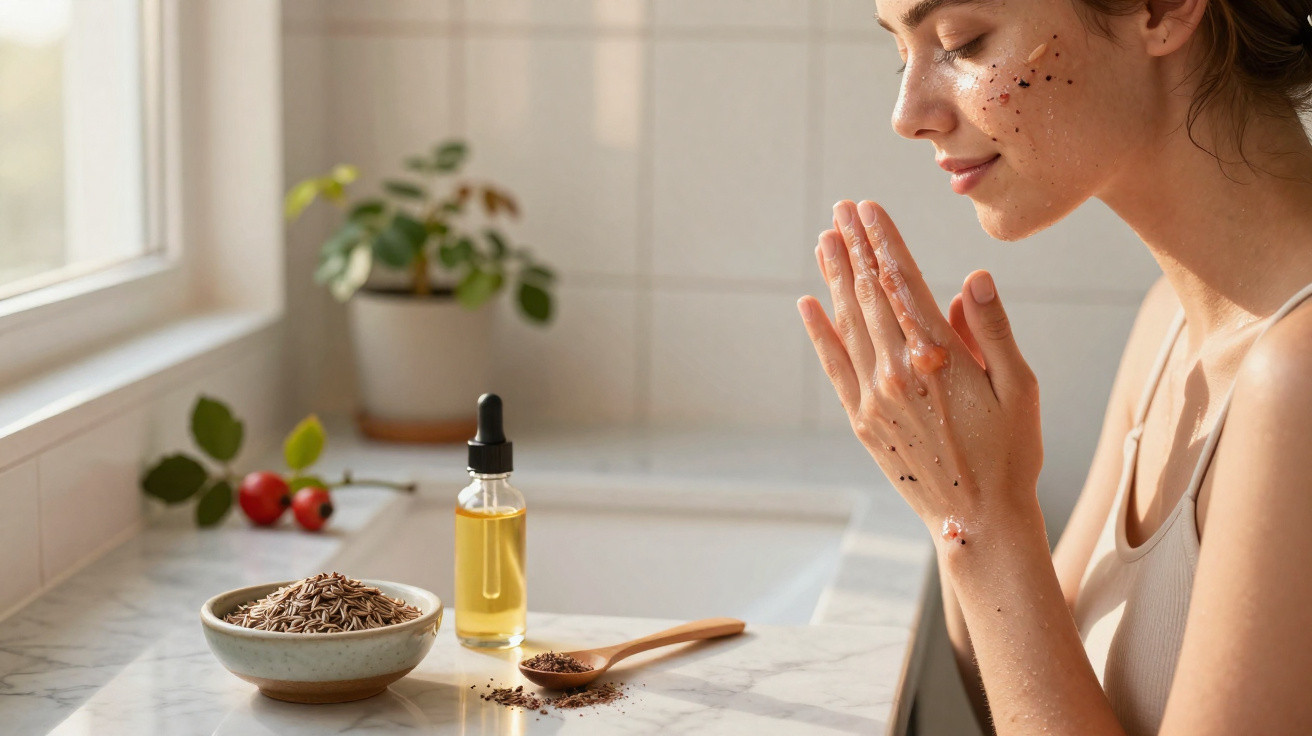
Rather than reaching for the next pricey exfoliating cream from the perfumery, more and more beauty fans are turning to a pure natural product: a plant-based rosehip peeling powder made from rosehip seeds. With just a few quick steps at home, it can be mixed into a personalised exfoliator. On a well-known cosmetics review site, a community rates it highly - and shares that their skin looks smoother, brighter and more refined.
Why a good exfoliation can genuinely transform your complexion
If you look in the mirror and see a dull, grey, tired-looking complexion, there is usually a very specific cause: a build-up on the skin’s surface of dead cells, sebum, dirt particles and make-up residue. The result is an uneven texture, light doesn’t reflect as well, pores appear larger and blemishes stand out more.
"A well-targeted exfoliation lifts that ‘grey veil’ from the skin and reveals the fresh, rosy layer beneath."
Conventional exfoliators often rely on plastic microbeads or harsh surfactants. Many users say their skin feels tight afterwards or looks reddened. Natural, mechanical exfoliators made from finely milled plant material work differently: they gently loosen the outermost layer without setting off a chemical firestorm.
What makes rosehip peeling powder so special
The spotlight here is on an organic-certified botanical powder made from ground rosehip seeds, sold by Aroma-Zone. It contains just one ingredient and can be blended with a range of bases. The powder effectively does two jobs at once:
- Mechanical exfoliation: the fine grains lift away dead skin flakes.
- Revitalising effect: the massage stimulates microcirculation, so the complexion looks more awake and clearer.
What makes it appealing is that it is not a ready-made scrub you squeeze out of a tube - it is a raw ingredient. Anyone using it mixes their own exfoliator, from a very gentle facial polish to a more robust body scrub.
"One ingredient, countless uses: depending on what you mix it with, the powder becomes either a delicate glow booster or an intensive body polisher."
How to mix your personalised facial exfoliator
Facial skin needs extra care and a lighter touch. That is why most users opt for the gentlest base possible. Suitable options include, for example:
- a mild facial cleanser without harsh surfactants,
- jojoba oil or almond oil,
- aloe vera gel,
- a very gentle, fragrance-free cleansing milk.
Step-by-step: a quick glow exfoliation
- Put a hazelnut-sized amount of your cleanser or oil into your hand.
- Sprinkle a tiny pinch of rosehip powder on top (especially at first, use very little - roughly the amount you could pick up on the tip of a knife).
- Briefly mix the two in your palm until the texture looks even.
- Massage gently into slightly damp facial skin, avoiding the eye area.
- Rinse thoroughly with lukewarm water and carefully pat the skin dry.
Many women report using this DIY exfoliator only once or twice a week. Afterwards, the skin feels noticeably smoother, make-up applies more evenly, and the complexion appears brighter and clearer.
Body exfoliation: from a quick shower scrub to a spa moment in the bath
On the body, exfoliation can be more intense. Skin is typically tougher there, especially on the arms, legs, back and bottom. Common mixes look like this:
- In the shower: place some neutral shower gel in your hand, stir in a good pinch of rosehip powder, apply to damp skin and massage in circular motions.
- As a richer body scrub: mix coconut oil or another plant oil (for example sesame or sunflower oil) with the powder until it reaches a “wet sand” consistency. Use on dry or slightly damp skin.
- For feet and elbows: make the blend a bit more granular and dose it more strongly to smooth rough patches.
"When you mix your own exfoliator, you control the intensity and the nourishing effect - depending on the area of the body and how your skin feels that day."
Creative options for DIY beauty enthusiasts
Some users take things further and incorporate the rosehip powder into more involved recipes, such as:
- home-poured “melt and pour” soap bars,
- blends of Epsom salt and essential oils as a bath exfoliator,
- combined with ghassoul and hydrolats as a cleansing mask with a gentle exfoliating effect.
The range runs from a fast, “mixed in the palm of your hand” scrub to a more elaborate Sunday spa routine with multiple steps.
How users experience the effect on texture and pores
On the review platform Beauté Test, the rosehip peeling powder scores 4 out of 5 stars from just under one hundred reviews. The comments paint a fairly consistent picture: after use, skin feels softer and smoother, pores look more refined, and the complexion reflects more light.
"Many users report a ‘baby-skin effect’ - especially when they use the exfoliator regularly, but not too often."
Three points are praised most often:
- Softer skin: rough forehead areas, dry sides of the nose and small flaky patches on the cheeks disappear or become much less noticeable.
- Finer-looking pores: particularly those with combination skin stress that pores on the nose and chin appear less visible.
- More radiant complexion: after only a few uses, skin tone looks more even and fresher.
Another advantage: many users see it as a significantly cheaper alternative to luxury exfoliators from high-end brands. Depending on how it is used, the contents often last for many months - and in some cases even longer than a year.
Where the limits are: dosage, skin type and ease of use
Despite the enthusiasm, there are a few potential pitfalls. The particles are fine, but if you use too much, it can feel too strong. People with very sensitive or very thin skin, in particular, need to watch how their skin responds.
"The intensity lives and dies by the amount - overdo it and you risk redness and a rough feeling."
Experienced users therefore advise easing into it:
- Start with a very small amount and increase only gradually.
- Use the exfoliator at most once or twice a week.
- Avoid using it on reddened areas, inflamed spots or fresh scars.
- If your skin is sensitive, mix it into plenty of cleansing milk or oil rather than a foaming gel.
Packaging is another criticism: depending on the format, it comes in a bag or a simple tub, which can be a bit fiddly when measuring it out. Many people use a small spatula or an espresso spoon to take out the right amount more neatly.
Why your complexion looks dull in the first place - and what you can do about it
Exfoliation is only one part of the puzzle. If you want long-term radiance, you need to keep several factors in mind. The piece from the original source addresses five common questions.
Stress: when your mind is overheated, your glow suffers
Ongoing stress pushes cortisol levels up. This hormone slows natural cell renewal and weakens microcirculation. Skin can look grey and tired and may lose firmness. Helpful measures include:
- enough sleep,
- regular screen-free breaks,
- moving your body outdoors,
- short breathing or relaxation rituals in everyday life.
Hydration from the inside and the outside
Dehydrated skin tends to feel rough, sheds flakes more quickly and reflects light less effectively. Alongside a mild, non-stripping cleanser, skin needs:
- a suitable cream or serum with humectants,
- enough water spread across the day,
- and, if indoor air is dry from heating, possibly a room humidifier.
Diet, light from screens and indoor climate
Sugary snacks and lots of fast food can encourage low-grade inflammation, which shows up in the skin over time. Antioxidants from berries, green vegetables, nuts and plant oils help protect cells from oxidative stress.
More recent studies suggest that intensive smartphone, laptop and tablet use for many hours a day stresses skin cells in a similar way to UV radiation. Total avoidance is unrealistic, but:
- regular “screen-free” periods,
- keeping some distance from monitors,
- and skincare with antioxidants can help counteract it.
A dry indoor environment caused by heating or air conditioning continuously pulls moisture from the upper layer of skin. If you are already prone to dryness, you may benefit from brief ventilation breaks, avoiding overly hot showers and applying a richer moisturiser straight after drying off.
How to integrate rosehip peeling powder sensibly into your routine
To get the most from a DIY exfoliator, a clear plan helps. One possible sequence looks like this:
| Step | What to do | What to watch for |
|---|---|---|
| 1 | Cleanse the face thoroughly | Use a gentle cleanser; do not rub with a towel |
| 2 | Mix the exfoliator fresh | A few grains are enough; if skin is sensitive, dilute heavily |
| 3 | Massage in | Use very light pressure; work for no more than one minute |
| 4 | Rinse thoroughly | Do not leave residue around the hairline or the sides of the nose |
| 5 | Apply soothing skincare | Choose hydrating, non-irritating products |
If you are also using retinol, fruit acids (AHAs) or acne medication, pay extra attention to your skin and, if in doubt, reduce how often you use a mechanical exfoliator. Too many irritating factors at once can quickly lead to redness, stinging and a compromised skin barrier.
On the plus side: when dosed correctly, a natural exfoliator like this can even support other active ingredients. Serums and creams absorb better because a thick layer of old cells is no longer in the way. This can make pigmentation marks, scars and blemishes look less noticeable - step by step, not overnight.





Comments
No comments yet. Be the first to comment!
Leave a Comment