
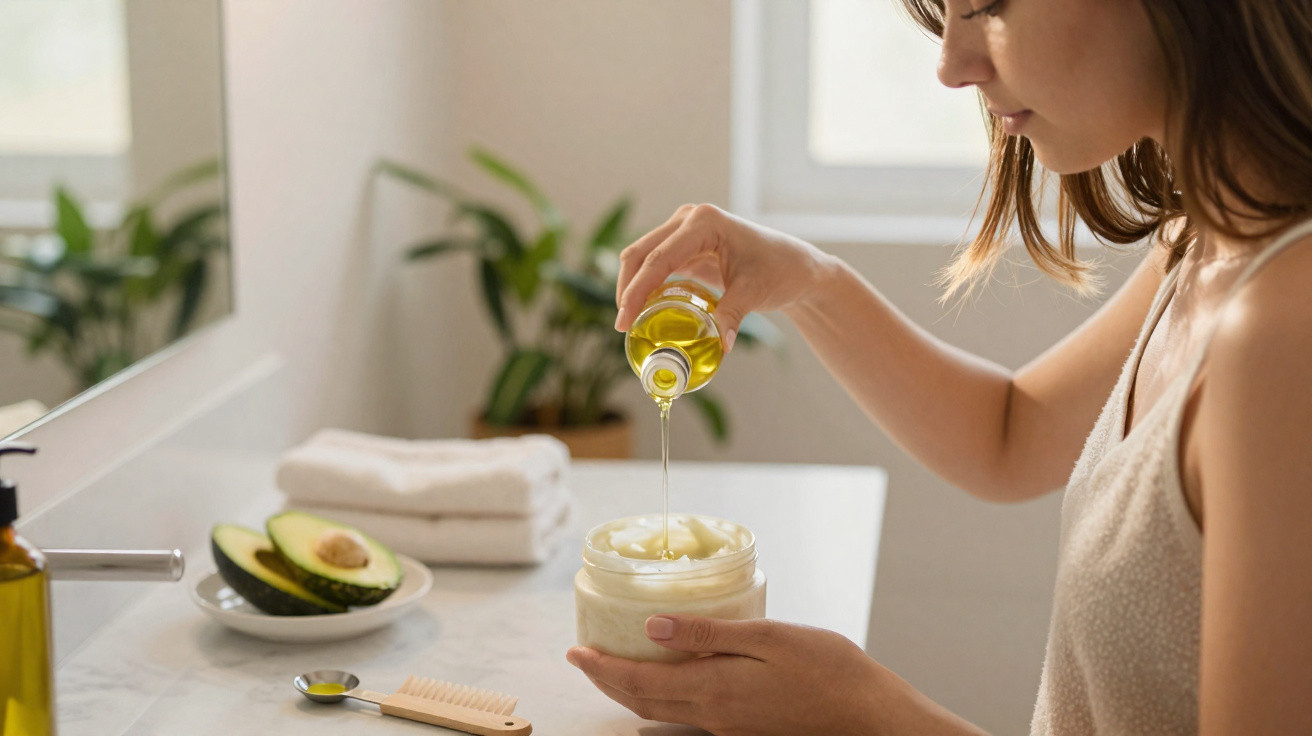
That basic hair mask sitting forgotten in the bathroom can become far more useful with just one extra ingredient. By blending a small amount of vegetable oil into it, you can make the treatment feel more nourishing and leave hair softer without having to spend money on an expensive mask.
Why add vegetable oil to a hair mask?
A hair mask already helps to condition and soften the lengths, while vegetable oil can enhance the feeling of nourishment and shine while helping to reduce dryness. This pairing can be particularly suitable for dry, frizzy hair or rough ends, which often respond well to slightly richer formulas.
The key is the amount used. Too much oil can make hair feel weighed down, greasy or hard to rinse. The aim, therefore, is not to turn the mask into an overly oily blend, but simply to enrich the amount you will use at that time.
What is the easiest proportion to start with?
Set aside the amount of mask you would usually use for one application, then add just a few drops of oil. If your hair is fine or easily becomes weighed down, begin with a smaller amount. Thick, very dry or high-volume hair may cope with slightly more.
These straightforward proportions can help you avoid overdoing it and can be adjusted according to how your hair responds:
- Use 1 to 2 drops of oil with a small portion of mask for fine hair.
- Use 2 to 4 drops for medium hair that is dry or frizzy.
- Use around 4 to 6 drops for thick, voluminous or very dry hair.
- Use less at the next application if your hair feels heavy after rinsing.
Which vegetable oils can be used for hair?
Coconut, argan, avocado, jojoba and grapeseed oils are well-known options for hair care. As they have different textures, it is worth seeing how each one performs on your own hair. Lighter oils often work better for hair that loses volume easily.
It is also important to choose a product suitable for cosmetic application and not to mix essential oil directly into the mask as though it were vegetable oil. They are different products. For this simple recipe, choose pure vegetable oils intended for use on skin or hair.
Watch the video shared by the YouTube channel Patricia Elias, which explains the benefits of argan and jojoba oil for hair.
How can you apply the mixture without weighing hair down?
Prepare only the amount you intend to use immediately, mix it thoroughly and apply it through the lengths and ends after washing your hair. Avoid concentrating the product at the roots, particularly if your scalp is already oily. Then leave it on for the time stated on the mask’s label.
Rinse thoroughly to remove excess product, then assess the result once your hair has dried. If it feels soft and light, the proportion worked. If it feels heavy or looks greasy, you do not need to give up on the method: simply reduce the amount of oil next time.
Do you need to buy an expensive hair mask to care for your hair better?
Not necessarily. A simple mask that already works well for your hair can be adapted easily, provided the mixture is made in moderation. The product’s price alone does not determine the outcome, and understanding what your hair needs may matter more than collecting multiple tubs in the bathroom.
Before buying another mask, look at what you already have and adjust how you use it carefully. Start with just a few drops, observe how your hair reacts and find the ideal amount. Sometimes a small change to your routine provides the softness that seemed to require a new product.






Comments
No comments yet. Be the first to comment!
Leave a Comment