
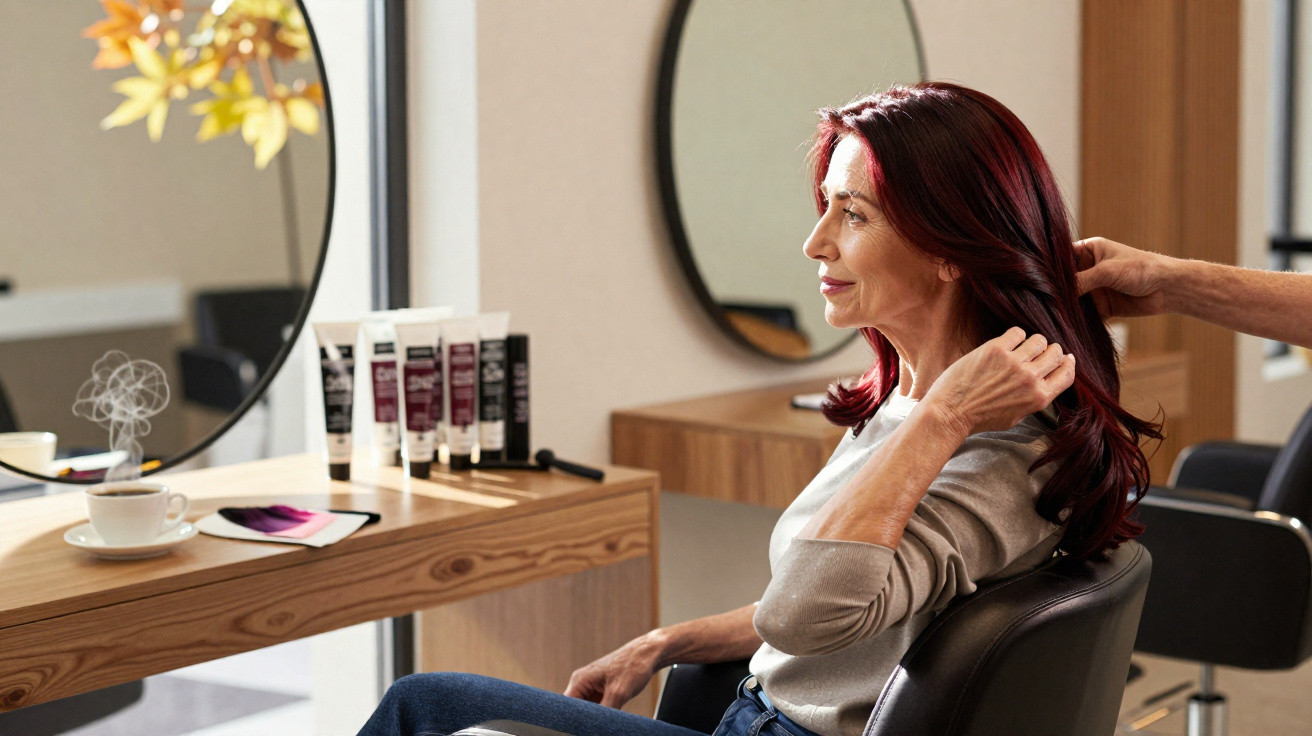
The salon carried a faint blend of coffee and hairspray, while winter coats were heaped on the chair beside the door. Seated before the mirror, a woman in her late fifties turned her silver-flecked bob from one side to the other, her brow faintly creased. “I don’t want to look like I’m trying to be 25,” she said, “but I’m tired of looking washed out in every photo.” Her hairdresser smiled, opened a high-shine colour chart and indicated a dark, almost enigmatic tone between brown and red. “This,” she said, “is Black Cherry. Sophisticated, very flattering, not shouting for attention.”
An hour later, the woman slipped her fingers through a dark mane tinged with cherry, which caught the light with a velvety sheen. She did not look younger. She looked…sharper, present, alive.
The hairdresser gave a wink. “This is the color I wish more women over 50 would dare to try.”
Why Black Cherry works so well after 50
This colour has a particular kind of magic on mature features. Black Cherry combines a deep, near-inky foundation with understated cherry-red highlights, bringing life to the complexion without loudly announcing “redhead”. It is a shade that appears polished in daylight yet smouldering beneath warm evening lighting.
For faces that have become softer, skin that is slightly drier and eyes that need a little help to stand out, this richness works as a subtle frame. Rather than competing with grey hair, it works alongside it. A handful of lighter strands underneath can also create that costly, naturally lived-in finish. The effect is less “trying to look young” and more “I know exactly what I’m doing with my style”.
Speak to any colourist who regularly sees women over 50 and the same concerns surface repeatedly: “I feel faded,” “Photos wash me out,” “My usual blonde looks brassy,” “My brown looks flat.” A Paris-based hairdresser recently told us that cooler, darker reds such as Black Cherry have become her preferred recommendation. On Instagram, hashtags combining “over50hair” with “dark red” and “cherry” are steadily gaining ground.
The change in the salon chair is often instant. A client in her early sixties arrived with a cautious caramel brown and left with a Black Cherry gloss. Later that day, her daughter messaged the salon: “She looks like she did when she got her first big job - but better.” That is the quiet revolution taking place.
There is straightforward reasoning behind the trend. As ageing skin becomes less even in tone, a strong yet sophisticated hair colour restores contrast. This contrast can make eyes seem brighter, cheekbones more defined and fine lines less of the focus. Very pale shades may soften those contours too much, while an intensely harsh black can make features appear severe. Black Cherry occupies the ideal middle ground.
Its cool cherry undertones counteract sallowness. Its darker base forms a natural shadow around the face, much like an integrated soft-focus filter. In photographs, it reflects precisely enough light to appear luxurious rather than obviously “dyed”. This is why so many stylists call it a “cashmere color”: rich, comfortable, and quietly expensive-looking.
How to adopt Black Cherry after 50 without regretting it
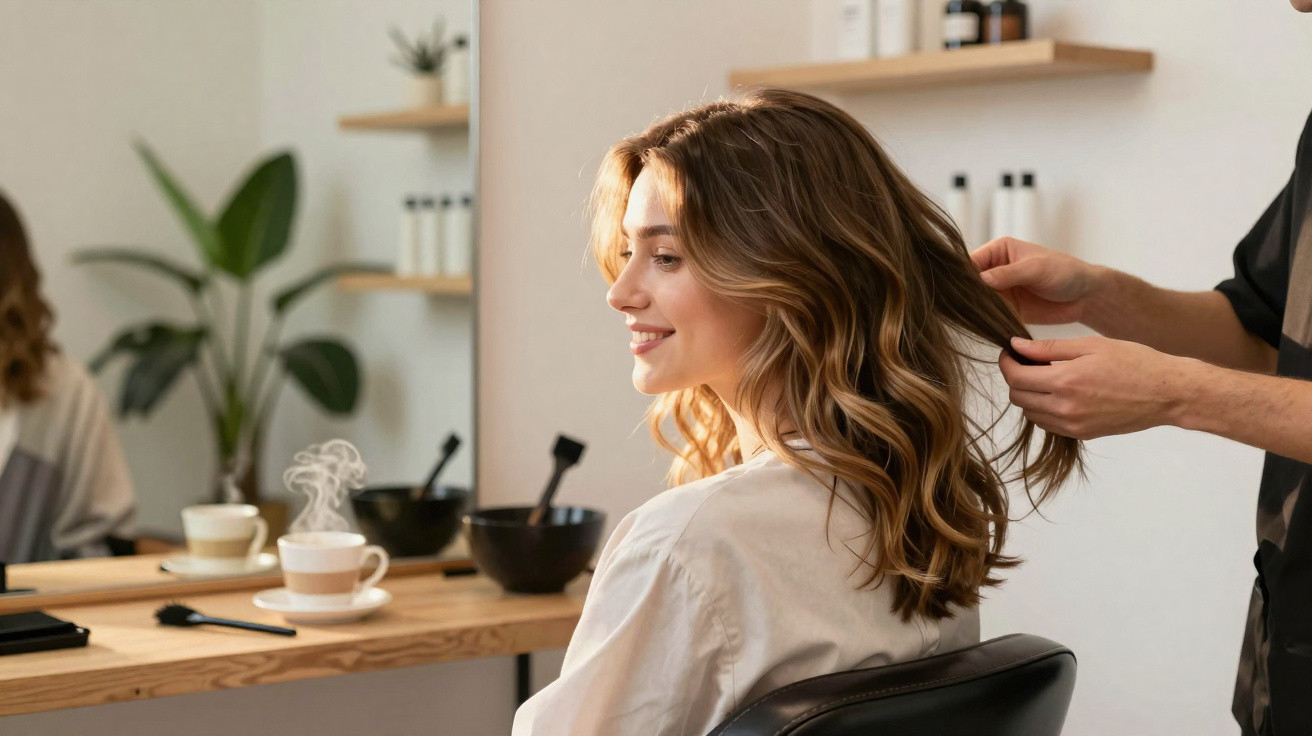
The most flattering version of Black Cherry for mature hair is rarely a single, flat and opaque shade. A technique widely used by colourists is to establish a deep cherry-brown base, then thread a few slightly lighter strands in warm plum or wine tones around the face. This lets the colour shift as you move. The hair appears fuller instead of resembling a heavy curtain.
For an initial experiment, many clients over 50 opt for a Black Cherry gloss or demi-permanent glaze. Applied over your current colour, it delivers tone and shine before fading gently within a few weeks. It is like trying the shade at lower volume. If you love both the reflections and their effect on your skin, your next appointment can take the look deeper or richer.
A frequent mistake is choosing a colour that is too dark, too quickly. On very fair or cool-toned skin, an almost-black cherry may look dramatic on Instagram but unforgiving at the supermarket at 8 am. A skilled colourist will carry out a small strand test or show you pictures of women with comparable skin tones and eye colours, not only celebrities photographed under studio lights.
It is equally important not to overlook your brows and make-up. When brows are very pale but hair abruptly becomes a deep Black Cherry, the overall balance can feel wrong. A softly cool brown tinted brow gel can bring back harmony in 20 seconds. The same applies to lipstick: the beige nude you adored at 40 may suddenly make you look drained. A gentle berry or rose tone is usually a better match and can look remarkably natural with cherry hair.
On a personal level, this colour often arrives at a distinct stage of life. The children have left home, or nearly have. Careers have either settled or shifted completely. You have experienced life, both its joys and difficulties, and that softness is visible in your face. Changing your colour can become a modest rebellion as well as a quiet way of claiming yourself.
“Black Cherry is not about pretending to be younger,” explains London-based colorist Hannah Reed. “It’s about giving mature women back that sense of presence. The hair walks into the room with you, not ahead of you.”
A little structure helps preserve this result:
- Request a cut that has movement, such as soft layers, a textured bob or a light curtain fringe.
- Schedule a gloss top-up every 6–8 weeks to maintain the cherry reflection.
- Choose a colour-safe, sulphate-free shampoo and use a hydrating mask each week.
- Keep one element of the look relaxed: when the colour is bold, make the styling effortless and undone.
Living with Black Cherry hair: care, attitude and little rituals
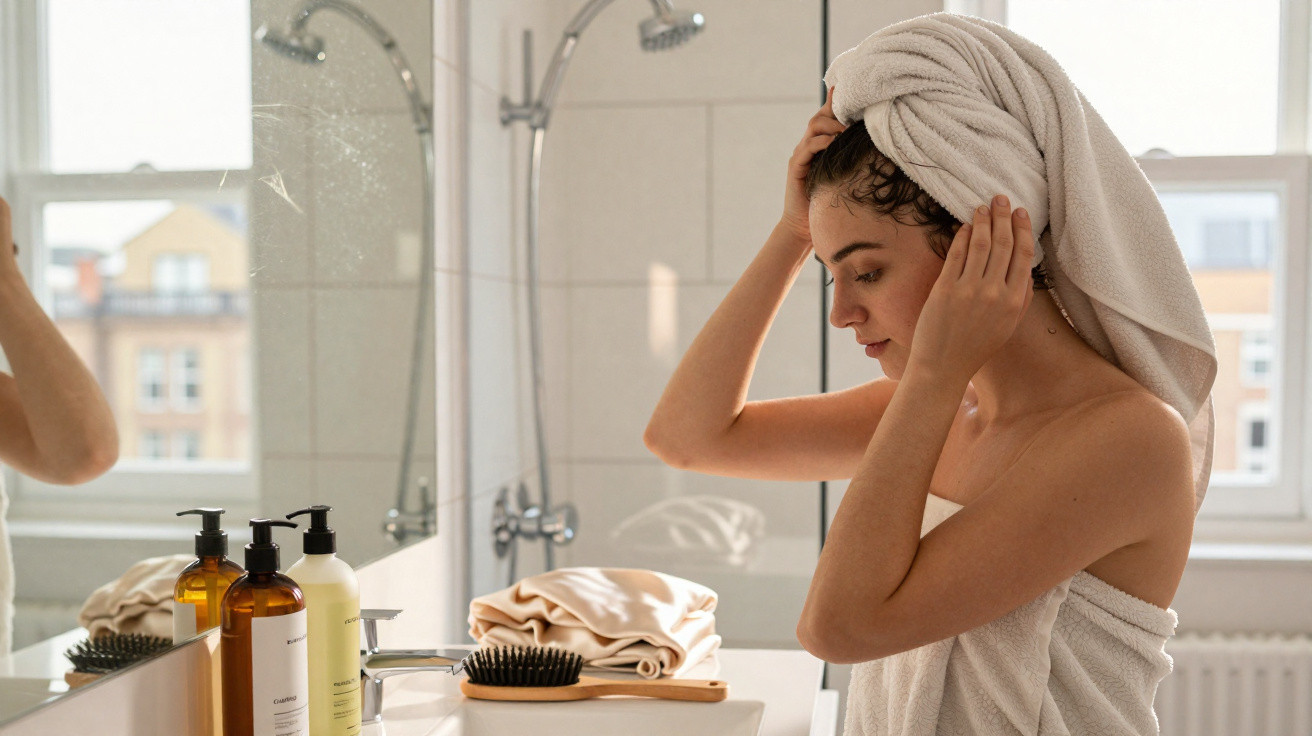
Once the thrill of the salon appointment has passed, the real test begins: your bathroom, your mirror and the light you live with every day. Black Cherry is unexpectedly easy to wear when it has been applied over a healthy base. During the first week, many women say the same thing: “I can’t stop touching it.” Hair can feel thicker, as if its fibres have had a secret upgrade.
Colour-safe products genuinely make a difference. Consider gentle shampoos, cool water and a nourishing conditioner left in place for several minutes. A weekly treatment containing ceramides or oils helps the colour bounce back light rather than becoming dull. Honestly, nobody applies a hair mask flawlessly every Sunday. The goal is improvement, not perfection - even an occasional additional care step can alter the way the colour develops over time.
There is a social dimension too. Friends may say, “Oh, you’ve changed your hair!” in that slightly surprised voice. Some might add, “I could never pull that off.” This is when a small internal shift can occur. You recognise that this was not done to satisfy anybody else. You chose it because it made the outside feel more like you.
On a grey winter morning, when the light is chilly and your mood almost mirrors the sky, spotting those cherry reflections can feel like a modest act of resistance. It is a reminder that style has no expiry date. The point is not to be daring merely for the sake of it; it is to refuse to fade into the background.
Many hairdressers observe that this colour affects more than what clients see in the mirror. They begin wearing earrings again, choose a bolder pair of glasses or reach for a lipstick that has sat untouched in a drawer. Some even alter the way they dress, replacing beige knitwear with deep green, cream or soft black pieces that complement the shade beautifully.
Black Cherry functions almost as a gentle declaration: “I’m still in the story.” Winter often steers people towards practical, cautious choices. This tone is practical enough to grow out gracefully, while still vivid enough to remind you that you are allowed to be noticed. At any age, that is quietly radical.
If you have considered a darker, richer shade but paused in front of the colour chart, Black Cherry could offer the middle route: striking without being loud, polished without becoming dull. It honours your age rather than battling it, and that respect is visible in the way it frames each line and every smile.
You could begin simply by saving a photograph or mentioning it “just to see” at your next salon appointment. Perhaps you will start with a gloss so subtle that only you notice it in the bathroom mirror. Or perhaps you will fully commit before winter, leaving the salon with hair that resembles red wine in a crystal glass.
What often remains after the first surprise has faded is the feeling that you selected something for yourself - not a compromise, not “the least worst”, but a genuine and intentional aesthetic choice. That change alone can extend well beyond your reflection. It may even prompt conversations with other women who are quietly ready for their own Black Cherry moment.
| Key point | Detail | Benefit for the reader |
|---|---|---|
| A strategic colour after 50 | Black Cherry creates contrast without making features look harsh | Helps explain why this shade flatters mature faces |
| A gradual approach | Begin with a gloss or demi-permanent colour, then intensify if needed | Makes it possible to test the shade without a drastic commitment |
| Targeted maintenance | Gentle products, regular glosses and a small make-up adjustment | Provides a practical guide to keeping the result chic and flattering |
FAQ:
Is Black Cherry hair color suitable for all skin tones over 50? Most skin tones can wear it, but the depth and undertone need to be adjusted. Very fair or cool skins often look best with a slightly softer cherry-brown, while medium and dark skins can carry richer, deeper versions.
Will Black Cherry make me look older? When correctly tailored, it tends to do the opposite, adding contrast and vibrancy. It’s the extremely flat black or too-bright red that can harden features, not this nuanced in-between shade.
Do I need to change my makeup if I go Black Cherry? A little, usually. Swapping very beige nudes for soft rose or berry lips, and slightly deepening brows, often restores balance and looks very natural.
How often should I refresh a Black Cherry color? A gloss or tone refresh every 6–8 weeks keeps the cherry reflection glossy, while roots can be done every 6–10 weeks depending on your natural color and grey regrowth.
Can I try Black Cherry if I already have grey or white hair? Yes, but it may require a pre-pigment step so the color holds evenly. On heavily grey hair, many colorists blend Black Cherry with a softer brown for a multidimensional, elegant result.


Comments
No comments yet. Be the first to comment!
Leave a Comment