
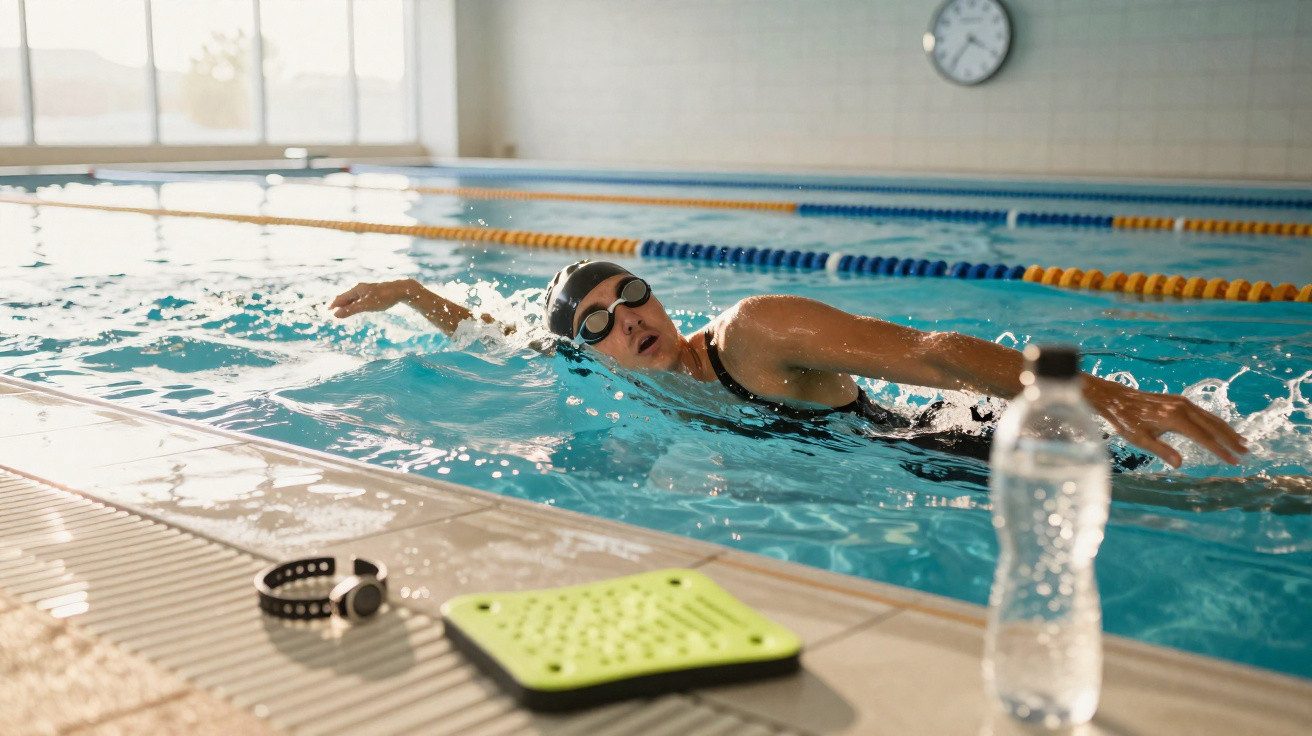
Swimming continuously for 40 minutes can be an excellent option for people who dislike the gym but want to improve their breathing capacity, endurance and energy expenditure. Swimming works the arms, legs, core and breathing simultaneously. Consistency is the key point: very short sessions are useful, but they usually provide less stimulus when the aim is cardiovascular fitness.
Why do 40 minutes matter in swimming?
A 40-minute session matters because it allows the body to move beyond the warm-up, settle the breathing pattern and sustain an aerobic pace for longer. In a 15- or 20-minute workout, much of the session may be taken up by the initial adjustment to the water, breathing and stroke technique.
That does not mean shorter workouts are pointless. They can help develop the habit, coordination and confidence in the pool. However, when the goal is to strengthen the cardiovascular system and keep the metabolism active for longer, a continuous session is generally more effective.
How can you keep steady strokes without exhausting yourself?
The key is not to swim quickly from the outset. Instead, find a pace that raises your breathing rate while keeping it manageable. If someone has to stop every few metres, the body leaves continuous exertion and goes through repeated restarts during the same session.
- Beginners can alternate easy swimming with short rest periods at the pool edge.
- Intermediate swimmers should aim for longer sets, using brief, planned breaks.
- Advanced swimmers can sustain continuous blocks while varying the intensity.
- Breathing should support continuity, without creating a feeling of breathlessness.
For those just starting out, a positive sign is finishing the session tired but not completely drained. Severe shoulder pain, dizziness, intense shortness of breath or frequent cramps suggest that the workload has become excessive.
Which swimming pace suits each level?
The right pace depends more on technique and fitness than on outright speed. A beginner can have a very effective workout while swimming slowly, provided they remain consistent. Someone who is already trained, on the other hand, needs more volume or intensity to achieve the same stimulus.
- Beginner: gentle strokes, with attention on breathing and short pauses after each block.
- Intermediate: blocks of 5 to 8 minutes, resting for up to 1 minute.
- Advanced: continuous swimming that alternates between a comfortable and moderate pace.
- All levels: clean technique is more valuable than forced speed.
A straightforward way to judge intensity is to notice how easily you can speak. Once out of the water, you should be able to talk in short sentences after a moderate block. If you can barely breathe when you stop, the session is probably too demanding for a long workout.
How do you structure a complete 40-minute swimming session?
A safe session should begin gently, build momentum in the middle and finish at a lower intensity. Entering the pool and attempting to swim hard for 40 minutes raises the risk of early fatigue, deteriorating technique and shoulder overload.
A simple beginner format is to split the workout into sections. Start with 5 minutes of very easy swimming, then spend 25 minutes alternating steady swimming blocks with short rests, followed by 5 minutes of gentle strokes and a final 5 minutes of easy movement or breathing exercises. Over time, the breaks become shorter and the continuous blocks become longer.
Swimming works best when it becomes a sustainable routine
Swimming can replace part of a gym routine because it combines water resistance, muscular work and aerobic effort in a low-impact activity. The pool is usually kinder to the knees, ankles and hips than running or jumping workouts, as long as the technique is appropriate.
The best results come when 40 minutes stops being a one-off challenge and becomes part of a weekly routine. Steady strokes, short rests, gradual progression and attention to the body's signals make training safer, more effective and easier to sustain for months.





Comments
No comments yet. Be the first to comment!
Leave a Comment