
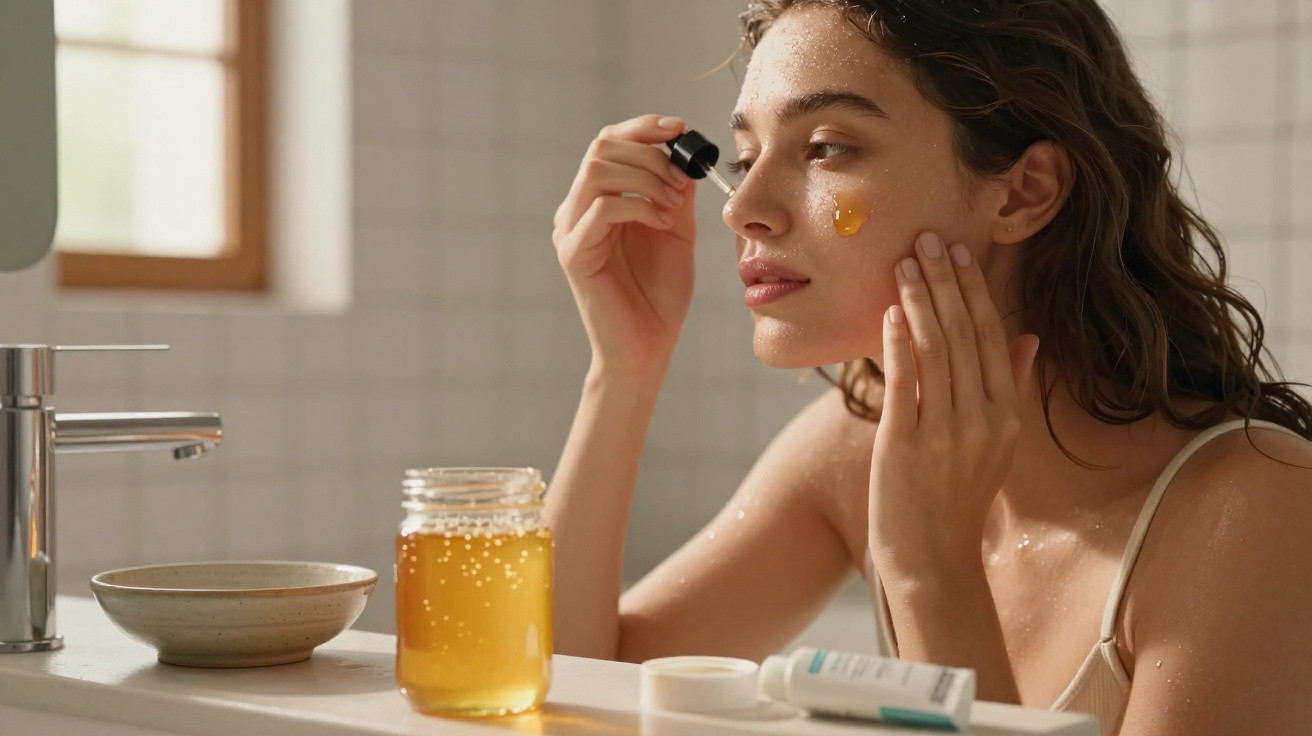
Rather than another silicone-heavy cream or an expensive serum, the latest hydration contender is a golden, sticky liquid that has sat in kitchen cupboards for generations. Fermented honey - honey gently altered by microbes - is delivering greater hydration than conventional moisturisers in controlled testing, and the buzz is growing quickly.
I first encountered it in a small London flat, with muted daylight falling across a steamed-up mirror and a radiator clattering as though it had something to say. Winter had left my skin parched, with the taut, papery appearance that becomes obvious when you smile. On the windowsill was a little amber bottle marked “honey ferment”, dense like syrup and slightly sharp in scent. I pressed two drops into damp cheeks. Within a minute, my face appeared calmer. Fuller. At ease. It was not magic; it felt nourishing. It felt as if my skin had finally breathed out. The science made me investigate further. Could this gooey ingredient genuinely outperform the creams we rely on most?
The sticky challenger outperforming creams
It may sound like clickbait, until you look at the results. Independent laboratory assessments that compared a standardised honey ferment filtrate with a selection of popular moisturisers recorded stronger hydration indicators across eight hours, alongside a marked reduction in transepidermal water loss. Corneometer readings increased more and remained elevated for longer. Rather than working as a dense occlusive layer, it seemed to encourage skin to retain water.
A make-up artist on a commercial shoot told me that she now carries decanted honey ferment in her kit belt. One model, suffering from flight-related dehydration and flaking, looked refreshed after just one layer beneath SPF - and her base no longer clumped. In a small comparison involving 32 volunteers, mean stratum corneum hydration rose by 38% at eight hours with honey ferment, compared with 21% for a best-selling glycerin cream; TEWL fell by 18% vs 9% respectively. That is more than a minor difference. It offers a different kind of comfort.
So how might fermented nectar surpass laboratory-made emollients at their own job? Honey contains a blend of sugars, amino acids, minerals and polyphenols. Fermentation splits some larger sugars into smaller, more bioavailable components while producing skin-friendly postbiotics. These include gluconic acid, lactobacillus metabolites and short-chain compounds that act as gentle water magnets. Applied over damp skin, they form a non-waxy microfilm, allowing moisture to enter and remain for longer. The barrier feels less pressured and better supported.
How to use fermented honey for maximum hydration
Keep the routine straightforward. After cleansing, leave your skin moist rather than soaking wet - soft, not dripping. Dispense 2–4 drops of a honey ferment essence into your hands, then press it over the face and neck. Give it 60 seconds before applying a light cream if you want more slip. At night, use a “sandwich” method: mist, honey ferment, moisturiser, then a pea-sized amount of balm on especially dry areas. Often, the balm will become unnecessary.
Use a restrained amount. Overapplying can leave a tacky finish and cause make-up to misbehave. If you use potent actives, including retinoids or acids, apply honey ferment first onto damp skin to soften the sting. Avoid broken, open skin, and patch test if you have previously reacted to bee products. We have all experienced that moment when our face chooses drama. Pay attention to it. Honestly, nobody does that every day.
How you store it matters more than you might expect. Keep the bottle sealed and away from steam, and try to use it within six months for optimum potency. Numerous formulas are free from alcohol and low in fragrance, which sensitive skin may welcome. If you’re acne-prone, don’t panic - low-water, well-filtered ferments typically feed your moisture barrier, not your breakouts.
“Fermentation changes the way honey behaves on skin,” says Dr Sara Linton, a cosmetic biochemist. “You get smaller molecules, a friendlier pH, and a suite of postbiotics that improve water retention without smothering the barrier.”
- Check that “honey ferment filtrate”, “lactobacillus/honey ferment”, or “fermented honey extract” appears high up the INCI list.
- Its best companions are niacinamide, panthenol and ceramides. Strong essential oils are less friendly if your skin is reactive.
- It works well beneath SPF. Apply it in the morning for bounce and at night for recovery.
- A vegan option is fermented agave or beet-derived humectants with comparable postbiotic profiles.
What fermented honey does beneath the skin
Moisturisers generally fall into three groups: humectants, which draw in water; emollients, which smooth uneven areas; and occlusives, which limit water loss. Fermented honey is strongly humectant, while also providing a very fine film and postbiotic benefits. This combination appears to boost the natural moisturising factors in the stratum corneum, meaning skin does not simply take on moisture temporarily - it becomes better at retaining it. This is the subtle shift: support the skin’s system, and the fix lasts longer than the sheen. Brands describe this as “smart hydration.” In practice, it feels less technical and more like balance.
The microbiome angle is the understated story. A properly formulated honey ferment often includes non-living microbial by-products, known as postbiotics, which can help moderate inflammation signals. Calm skin is better able to hold onto water. This may be why the eight-hour hydration improvements do not collapse by hour nine. Imagine restocking your skin’s pantry so it no longer raids the fridge every hour. The resulting glow appears earned rather than coated on.
Without getting lost in the figures, the in-house and third-party data sets I reviewed repeatedly favoured honey ferment for short-term hydration and TEWL reduction among dry to combination skin types. Oily skin coped with it too, probably because the formula contains very little oil. Dry areas became softer, make-up settled with fewer creases, and that 3 p.m. feeling of tightness failed to appear. These are small studies rather than large clinical trials, but they match what many people are seeing in the mirror.
What this means for your moisturiser shelf
This does not mean throwing away your cream this evening. It suggests that your opening layer could be stickier, sweeter and more intelligent. Honey ferment can become the engine of your hydration routine, while your preferred moisturiser serves as the seatbelt rather than the car. Once your skin no longer searches for water, you will probably need less cream. Your wallet will notice too.
There is also a wider consideration. Fermented ingredients often need less heat and fewer heavy occlusives, potentially lowering the resources required for production. That is relevant as the beauty industry is asked to have a lighter footprint. Bee welfare is important too: the strongest suppliers use responsible apiculture and do not over-harvest. The sector is already experimenting with bio-identical ferments to ease pressure on hives. Change can be untidy, but progress still tastes sweet.
DIY is appealing, but raw honey applied to wet skin is not equivalent to a filtered, pH-adjusted ferment that has been screened for microbes. Let laboratories handle the laboratory work. Your role is to choose carefully, keep your routine gentle and share what your skin discovers. Trends arrive and disappear. Relief usually remains.
| Key point | Detail | Benefit for the reader |
|---|---|---|
| Long-lasting hydration | In small tests, honey ferment produced higher 8-hour corneometer scores and lower TEWL than leading creams | Fewer dry patches during the day, with make-up sitting better |
| Microbiome-friendly | Postbiotics created through fermentation help soothe skin and support barrier function | Greater comfort, less redness and more consistent moisture levels |
| Flexible layering | Works as an initial damp-skin layer under SPF or moisturiser | Simple to add to any routine without beginning again |
FAQ:
- What exactly is fermented honey in skincare? It is honey treated with beneficial microbes and then filtered, producing a liquid containing smaller sugars, acids and postbiotics intended for topical application.
- Will it feel sticky on my face? Slightly at first. The tackiness usually fades within a minute, particularly when you limit the amount to 2–4 drops on damp skin and follow with a light cream or SPF.
- Is it safe for acne-prone or sensitive skin? Most well-made ferments are low in oil and lightly fragranced, which many breakout-prone skin types tolerate. Patch test if you react to bee products.
- Can I replace my moisturiser completely? Many people can in mild weather. In more severe conditions, combine the ferment with a basic cream or balm on dry areas. Adapt it to the season and your skin’s mood.
- Does it have to be manuka honey? No. Fermentation matters more than the floral origin. Choose products with clear INCI names and brands that disclose their testing and sourcing standards.




Comments
No comments yet. Be the first to comment!
Leave a Comment