
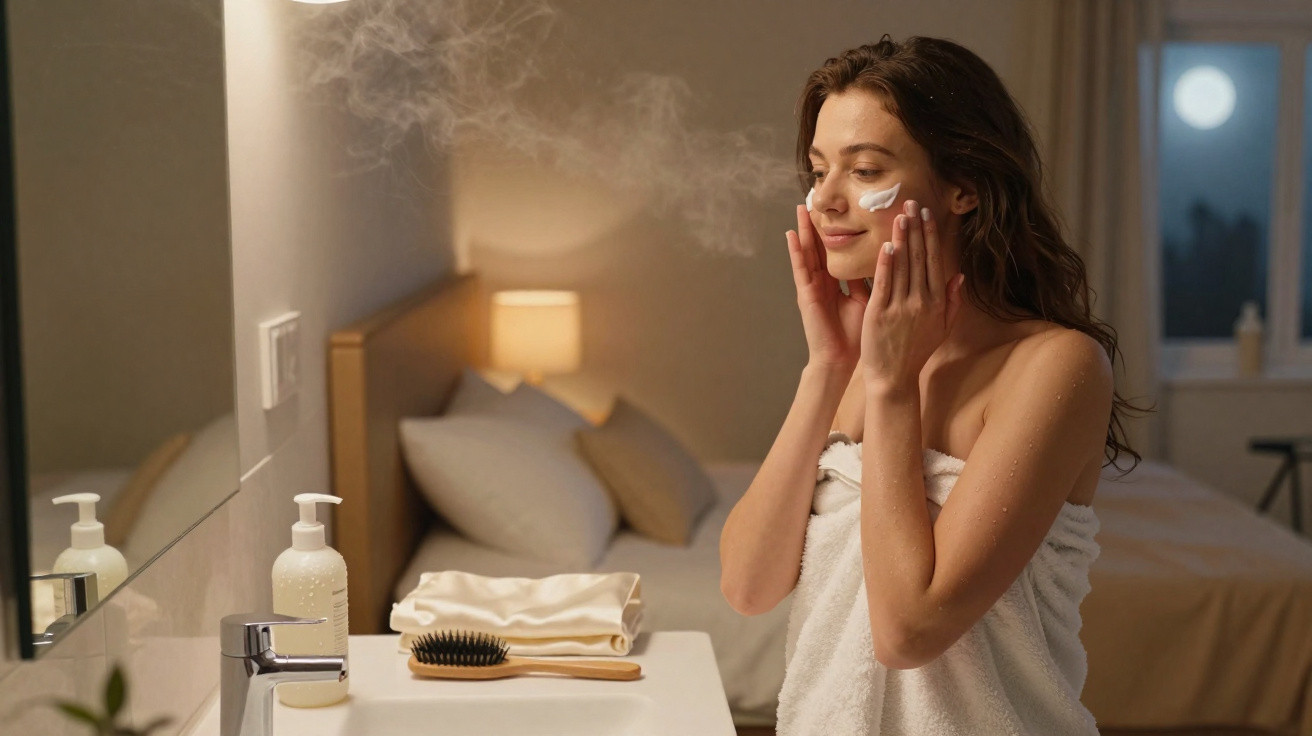
The bathroom light is unforgiving, the mirror tells no lies, and your face looks more worn-out than you actually feel.
You splash your skin with water, dab on a bit of cream, and swear you’ll get an earlier night tomorrow. A morning shower can feel like hitting reset, but the flaky patches, redness and breakouts still return-like a notification you can’t dismiss.
Later, you finally get into the shower, your phone left in another room, warm water fogging the tiles. Makeup, sunscreen, city dust and stress all rinse away. You step out with calmer-looking, slightly pink skin, your shoulders dropping as the day properly ends. And something shifts, almost without you noticing.
Here’s what’s going on: while you sleep, your skin is effectively on the night shift. And simply moving your main shower to the evening can help it do that job much more easily.
Why your skin secretly loves a night shower
Ask most people when they shower and the answer comes quickly: “In the morning, of course.” It’s wrapped up in the idea of starting the day fresh-waking up, feeling presentable for work or school. The catch is that your skin doesn’t run on a 9–5 timetable.
Your skin follows a circadian rhythm. In daylight hours it’s largely in protection mode-fending off UV, pollution and everyday friction. At night, it pivots towards repair: cell turnover speeds up, the skin barrier focuses on rebuilding, and the small damage collected during the day is quietly mended. When you shower in the evening, you’re working with that rhythm rather than against it.
A morning shower typically clears away only what’s built up overnight: a bit of sweat, some oil, remnants of skincare. An evening shower removes a whole day’s worth of build-up-traffic fumes, dirt, leftover makeup, layers of sunscreen, bacteria and general city grime. If you put that deep clean off until morning, your skin spends its prime repair hours under a thin layer of residue. It’s like trying to paint a wall that still has dust on it.
Dermatologists notice this pattern often, even when people don’t connect it to shower timing. Think of the office worker commuting on the Tube with foundation, mascara, SPF 50 and hair products sitting around the hairline. Or the nurse finishing a 12-hour shift under harsh hospital lighting. Or the student cycling through traffic, sweating under a helmet. They all get home wearing what you could call a microscopic “pollution cocktail” on their skin.
Now imagine two versions of the same person. Version A showers quickly at 7 am, rushes out, and then falls into bed at night after only a quick face wipe-or nothing at all. Version B showers at 10 pm, properly rinses away sweat, SPF and makeup, then applies a straightforward moisturiser. Give both versions four to six weeks. Version B commonly reports fewer clogged pores, smoother-feeling skin and less unpredictable irritation. No miracle product-just a change in timing.
The science of the skin barrier explains much of it. At night, your core temperature tends to rise slightly and your skin loses more water. That’s why some people feel tighter or itchier at bedtime. An evening shower followed by a decent moisturiser helps seal water into the outer layers precisely when they’re most likely to dry out. The payoff is a calmer, plumper and more resilient barrier.
It’s also worth considering your skin microbiome-the community of bacteria living on the surface. Leaving sweat, pollution and makeup on overnight can encourage less-helpful bacteria, especially where your face rubs against a pillowcase. A gentle night shower clears the slate just enough for your skin ecosystem to settle, without stripping it.
How to turn your night shower into a skin ritual
For your skin to genuinely benefit, an evening shower needs to be more than a scorching three-minute rinse. Temperature and timing make a difference. Keep the water warm rather than boiling-think “comforting mug of tea”, not “boiling saucepan”. Water that’s too hot removes surface oils too quickly, and your barrier is your best built-in moisturiser.
Keep it brief: for most people, 5 to 10 minutes is plenty. Do your thorough cleansing where it matters most-armpits, groin, feet, skin folds-places where sweat and bacteria build up. For the rest of your body, a gentle pass with a mild cleanser (or, on some days, just water) can be sufficient. Your skin doesn’t need to feel squeaky; it needs to feel at ease.
Then comes the key step: the three-minute window after you get out. While your skin is still slightly damp, apply moisturiser. That’s how you trap hydration rather than letting it disappear into the steamy bathroom air.
Many people undermine their skin without realising. They step into the shower wearing a full face of makeup, use a strong body wash on their face, scrub until they’re red, then wander to the bedroom in a towel, scroll on their phone for 20 minutes, and only remember moisturiser once their skin already feels tight and itchy.
A better order is refreshingly simple: remove most of your makeup before you get in, use a gentle cleanser in the shower to finish cleansing, pat (don’t rub) with a soft towel, then go straight to your moisturiser or serum. No long gap. No half-dressed pacing around replying to messages while your skin dries out.
And yes, you’ll hear the classic guidance: keep pillowcases clean, avoid overly hot water, and don’t use industrial-strength scrubs on your face every night. Let’s be honest: hardly anyone manages all of that every day. The aim isn’t perfection-it’s to stop your skin having to fight unnecessary battles while you sleep.
“What you do in the 30 minutes before bed has more impact on your skin than almost anything you do at 7 am,” says one London-based dermatologist. “Night is when skincare can work with biology instead of against it.”
In everyday terms, that’s less about a spa-like fantasy and more about small habits you can stick to. Dim the bathroom lights slightly so your brain gets the “it’s night” cue too. Leave your cleanser and moisturiser where you can see them, not tucked away in a drawer. Choose products you genuinely like the feel and scent of-otherwise the routine won’t last past a week.
- Shower at night at least 4–5 times a week, if your schedule allows
- Use lukewarm water rather than very hot water
- Go to bed without makeup-every single night
- Moisturise within 3 minutes of leaving the shower
- Swap harsh scrubs for gentler, low-fragrance products
The quiet power of changing just one habit
There’s something quietly symbolic about rinsing the day away before bed. The commute, the tense conversations, the emails you shouldn’t have read after 9 pm-everything can feel a little lighter once you’ve stood under running water and changed into clean clothes or an oversized T-shirt. That emotional reset can show up physically in your skin as well.
Stress hormones such as cortisol can disrupt your barrier, affect oil production and even slow healing. A soothing evening routine-low light, warm water, slower breathing in the shower-can settle that internal noise. Because your skin is closely linked to your nervous system, it often mirrors that calm by flaring less, itching less and reacting less. On a difficult day, that shower can feel like a thin boundary between you and burnout.
Most of us know the moment: you climb into bed still feeling slightly sticky, half your makeup still on, then wake to mascara on the pillow and a new spot making an unwelcome appearance. Shifting the anchor of your hygiene routine from morning to evening doesn’t require expensive products or a complicated multi-step programme. It simply asks you to match your habits to how your skin naturally works.
Some people will always swear by their morning shower, and that’s fine. You don’t have to commit to one option forever. But trying two weeks of “main shower at night, quick rinse in the morning if needed” is a low-risk experiment with a surprisingly high payoff. Your mirror-more than any algorithm-will show you whether your skin agrees.
| Key point | Detail | Why it matters to you |
|---|---|---|
| Cleansing timing | A thorough cleanse in the evening supports the skin’s overnight repair cycle | Understand why night showers can improve texture and radiance |
| Temperature and duration | Lukewarm, short showers focused on the key areas | Reduce dryness, irritation and tightness without overhauling your entire routine |
| Post-shower hydration | Apply skincare within 3 minutes, on slightly damp skin | Boost hydration and strengthen the skin barrier with minimal effort |
FAQ:
- Is a night shower enough to clean my skin if I don’t wash again in the morning? For most people, yes. A proper evening cleanse removes the day’s build-up. In the morning, a splash of water or a very gentle cleanser is often enough unless you sweat heavily overnight.
- Can night showers help with acne? They can. Washing off sweat, makeup and pollution before sleep reduces the risk of clogged pores. Pairing an evening shower with non-comedogenic products and clean pillowcases often leads to visible improvements.
- What if I have very dry or sensitive skin? Keep the water lukewarm, limit shower time, avoid harsh soaps, and apply a richer, low-fragrance moisturiser straight afterwards. Done gently, night showers can actually ease dryness.
- Is it bad to shower twice a day, morning and night? It depends on water temperature, shower length and your skin type. Short, warm showers with mild cleansers can be fine, but twice-daily hot showers with strong gels can strip your barrier and increase irritation.
- Do I need special “night” products for my skin? Not necessarily. The biggest gains usually come from cleansing at night and moisturising afterwards. If you want to add treatments such as retinol or repair creams, evening is a sensible time-but timing matters more than marketing.




Comments
No comments yet. Be the first to comment!
Leave a Comment