
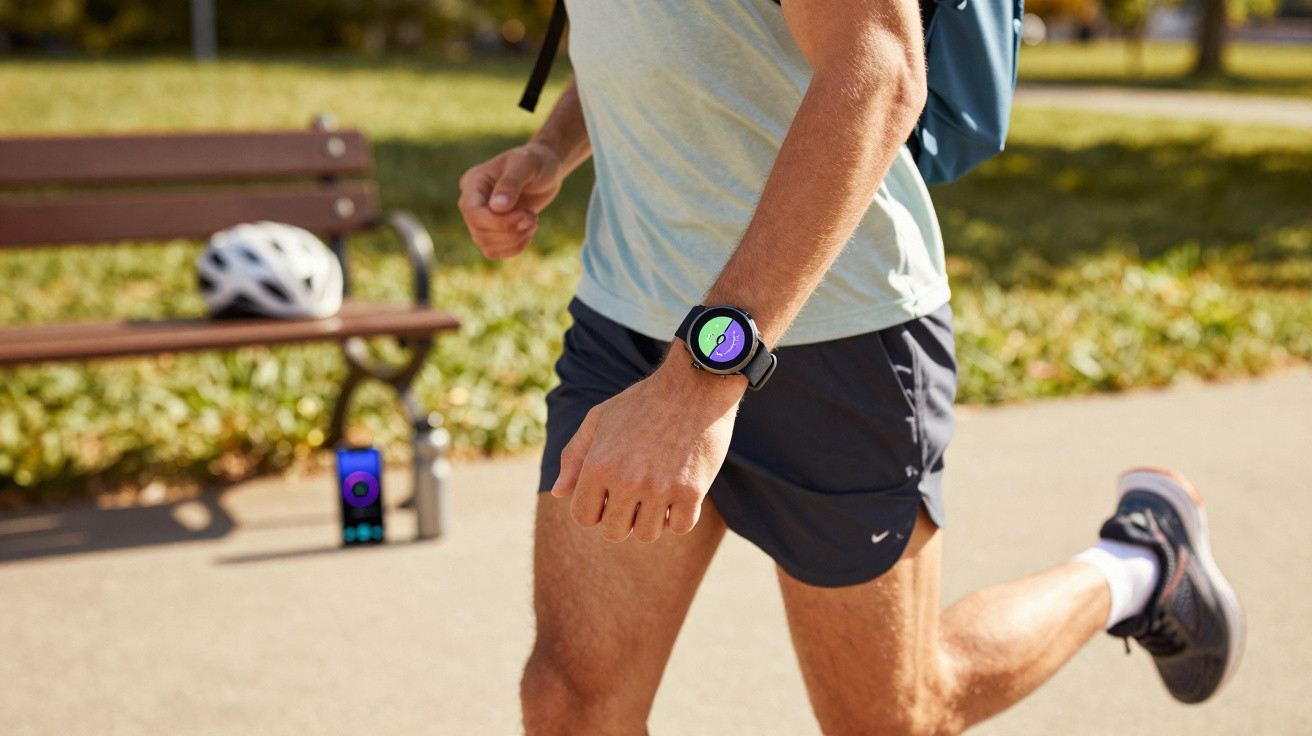
A budget sports watch with a vivid AMOLED display, built-in GPS and stress monitoring sounds almost too good to be true at this sort of price.
Decathlon reckons it has found the sweet spot: a near full‑fat fitness smartwatch for under €70, aimed at casual runners and everyday users who still want “proper” tracking. After wearing the new Fit 100 for several weeks, the real question isn’t only what it offers - it’s what compromises were needed to hit that figure.
What Decathlon is really selling with the Fit 100
The Fit 100 is Decathlon’s latest own‑brand smartwatch and costs €69.99 (around $75). It sits beneath the company’s more serious GPS watches co‑developed with Coros, and it’s clearly aimed at people who want health metrics, step tracking and phone alerts without paying Apple Watch prices.
"AMOLED screen, multi‑GNSS GPS, heart‑rate and SpO2 sensors, 5 ATM water resistance and a week‑long battery - all under €70."
On paper, the spec list looks unusually strong for the money:
| Model | Decathlon Fit 100 |
|---|---|
| Screen size | 1.97 inches |
| Screen type | AMOLED |
| Resolution | 390 × 450 pixels |
| Weight | 90 g (with strap) |
| Battery life | Up to 7 days standard use / ~8 hours with GPS |
| Sensors | Multi‑GNSS GPS, optical heart‑rate, SpO2, accelerometer, compass, sleep and stress tracking |
| Water resistance | 5 ATM |
| Sports modes | 14 on the watch, ~50 configurable via app |
| Compatibility | Android 8.0+ and iOS 12.0+ |
| Connectivity | Bluetooth |
| Sizes | S and M |
| Price | €69.99 |
A familiar design that doesn’t pretend otherwise
From a distance, the Fit 100 strongly resembles an Apple Watch: a rectangular body with rounded corners, a right‑hand digital crown, and a black‑only finish. The chassis is plastic with an aluminium‑look coating, so it lacks that cool metal feel, and if you inspect it closely you can spot the join between the sides and the underside.
The TPU strap is perfectly acceptable, if not especially premium. The upside is that it uses quick‑release pins, meaning you can swap in a third‑party strap in seconds rather than being locked into the stock band.
At 90 g including the strap, it’s heavier than many fitness watches, but it still sits comfortably on the wrist. Wearing it overnight is also fine if you’re keen to collect sleep data.
With a 5 ATM rating, it’s suitable for swimming, pool workouts and open‑water sessions. Decathlon does caution against hot showers or saunas, though, as heat and steam can put extra strain on the seals in more affordable casings.
An AMOLED screen that makes cheap watches feel dated
The standout hardware feature is the 1.97‑inch AMOLED screen. Colours are punchy, blacks look properly inky, and it stays readable even when you pack several data fields onto one page. The 390 × 450 pixel resolution is ample for crisp text and icons.
Outside, the brightness performs better than you might expect. It doesn’t hit the eye‑watering levels of the newest Apple Watch or Pixel Watch, but on runs in strong sunlight it remained readable without constant wrist‑flicking.
"The Fit 100’s display looks closer to a mid‑range smartwatch than a bargain‑bin tracker, and that changes how it feels on the wrist."
An always‑on mode is available, keeping a simplified watch face visible continuously. Turn it on and battery life drops to roughly half. At this price - and with a battery of this size - that compromise is hard to avoid.
Simple software that deliberately avoids complexity
Control is split between touch gestures and the rotating crown. A swipe down brings up notifications, a swipe up opens quick settings such as brightness and do‑not‑disturb, and left/right swipes move through widgets for daily steps, heart rate and weather. Pressing the crown opens the app grid or returns you to the watch face.
Rather than using Wear OS or an open ecosystem, Decathlon runs a proprietary operating system. That helps it feel responsive and keeps the experience consistent on both Android and iOS - but there’s a major limitation: third‑party apps aren’t supported.
"The Fit 100 is designed to stay basic on purpose, trimming features so new users aren’t buried under menus and settings."
As a result, there’s no Spotify downloading, no Google Maps on your wrist, and no meditation apps. The focus stays on sport tracking, health stats and notifications, which will likely suit the audience Decathlon is aiming at.
Decathlon Hub: the app that holds it together
For anything beyond the basics, you’ll spend time in Decathlon Hub, the companion app for Android and iOS. It’s where you adjust sport profiles, tailor data screens and dig through your workout history.
The app lays out daily activity, sleep charts, resting heart rate and stress patterns in a straightforward dashboard. It’s a little more functional than Garmin Connect or Apple Health, but it still covers the essentials.
- Automatic sync of workouts to Strava
- Configuration of up to ~50 sports profiles
- Custom data screens per sport
- Sleep and stress history with basic trends
Phone-to-watch syncing can occasionally take a little while, particularly after longer runs. Even so, starting an activity on the watch itself is fast - arguably the more important moment when you’re about to train.
Sports tracking: strong feature list, mixed accuracy
Straight out of the box, there are 14 sport modes on the watch, including running, cycling, walking, strength training, pool swim, open‑water swim, rowing, treadmill and hiking (plus others). In the app you can expand this to around 50 profiles, although many are essentially the same with minor label changes.
During workouts you can show time, distance, pace or speed, heart rate, calories and more. Because the fields are customisable, runners can prioritise pace and lap time, while gym sessions might put heart rate and duration front and centre.
Multi‑GNSS GPS is one of the big selling points. Satellite lock is typically quick - often just a few seconds - so you’re not pacing around a car park waiting for it to connect. For anyone squeezing training into a lunch break, that’s a genuine win.
Accuracy, however, is where the budget roots can show. In one widely noted example - an officially measured 20 km race in Paris - the Fit 100 recorded only 17.8 km, which is about an 11% shortfall. Later analysis suggested the GPS never actually started, and that distance was likely estimated using steps and arm movement instead. That’s a software fault rather than normal performance, but it highlights the limitations of firmware on a newer product.
"For casual tracking the GPS is acceptable; for pace‑sensitive training plans or race prep, that kind of glitch is a serious red flag."
On other runs, distance was within the typical 1–3% variation seen on entry‑level GPS watches. Even so, runners who rely on accurate pacing for intervals and race‑pace workouts will probably prefer a more established platform.
How Decathlon actually tests a €70 smartwatch
Within Decathlon, the Fit 100 is put through two core test stages. First come lab durability checks: waterproofing tests, repeated button‑press cycles, UV exposure, extreme‑temperature chamber work, and strap pull tests. The idea is to catch early hardware failures before the watch reaches shops.
Next are field tests, where devices go to internal staff and external testers via co‑creation programmes. These trials concentrate on GPS behaviour, heart‑rate performance and swim metrics in real conditions. It also explains how the major GPS issue mentioned earlier could slip past typical validation: even with structured pipelines, unusual edge cases can still make it through.
Heart rate, sleep and stress: good enough for most people
The optical heart‑rate sensor runs all day and overnight, recording your pulse continuously. At rest and during steady efforts - easy runs, long walks, gentle cycling - results are broadly in line with expectations and comparable reference devices.
During intervals and short, intense bursts, it struggles more. Peaks can lag by a few seconds, and some surges get rounded off. That’s common for wrist sensors at this level, but it reduces usefulness for athletes who analyse zones closely.
"Pairing a separate Bluetooth chest strap remains the better option for anyone training with strict heart‑rate targets."
SpO2 (blood oxygen) is included largely as a wellness metric. It may help you spot broad trends when you’re run‑down or at altitude, but wrist‑based measurements still aren’t reliable enough to treat as a medical benchmark.
Sleep tracking is automatic. It records total sleep time, estimates light/deep/REM stages, and flags awakenings. Bedtime and wake time generally match what you remember. The stage breakdown should be viewed as an estimate rather than a precise measurement - as is the case with most consumer sleep trackers.
Stress scoring is derived from heart‑rate variability (how much your heart rate changes from beat to beat). The Fit 100 translates this into a daily stress curve and can prompt guided breathing exercises when stress levels rise. It’s more a helpful nudge to pause than a clinical assessment, but it can be useful on hectic days.
Smart features: only the basics made the cut
On the smartwatch side, the Fit 100 sticks to fundamentals. It can show notifications for calls, texts, emails and apps, and you can take phone calls over Bluetooth if your phone is nearby. Sound quality is adequate for short conversations.
The missing features help explain the low cost. There’s no NFC, so you can’t pay from your wrist. There’s no offline music storage and no control of streaming services. There’s also no voice assistant, and because the platform is closed, you shouldn’t expect extra apps later.
"The Fit 100 behaves more like a robust fitness tracker with a big, bright screen than a full smartwatch replacement."
Battery life that competes with far pricier devices
Decathlon claims up to seven days per charge with “normal” use: always‑on tracking, notifications and a handful of workouts each week. In practice, six to seven days felt achievable so long as the always‑on display was switched off.
Enable always‑on and you’re looking at roughly three to four days - still respectable for the price. With continuous GPS running, battery life is about eight hours. That’s enough for most road races, city marathons and long weekend rides, though not for multi‑day hikes or ultra‑distance events.
Charging is via a proprietary magnetic cable and takes about two hours from empty to full. It isn’t fast charging, but if most users only need to top up weekly, it’s an acceptable routine.
Where the Fit 100 sits in Decathlon’s long‑term strategy
In Decathlon’s line‑up, the numbers broadly signal intent: “100” is entry‑level, “500” is mid‑range and “900” is advanced. The Fit 100 feels like the first step in a wider smartwatch family rather than a one‑off.
That points to a possible progression: a future Fit 500 with additions such as improved GPS or payments, and a Fit 900 positioned closer to the current Coros‑powered GPS900 for serious endurance athletes. For buyers, this structure matters because it suggests Decathlon isn’t trying to cram every feature into the first model - it’s building a ladder of devices for different needs.
How to know if the Fit 100 is enough for you
If your targets are straightforward - hit 10,000 steps, record a few runs a week, understand your sleep a bit better, and check notifications without constantly grabbing your phone - the Fit 100 covers most of the basics. The accuracy issues that appear in races or hard interval sessions won’t be a big deal if you mainly want general movement tracking and approximate distances.
If you’re training for a first 5K or 10K, it can still work well as motivation. Watching your weekly totals climb, seeing heart rate improve on similar routes, or simply building consistency offers useful feedback - even if every metre isn’t perfectly measured. The crucial point is to treat the data as indicative rather than laboratory‑grade.
If you’re following a structured plan with specific paces and zones, or chasing something like a Boston qualifier, it’s better viewed as a secondary device. In that case, you’ll likely want a dedicated GPS watch known for reliable distance tracking and robust workout exporting.
Some terms and trade‑offs worth understanding
Two phrases come up repeatedly with the Fit 100: “multi‑GNSS” and “single‑frequency GPS”. Multi‑GNSS means the watch can connect to multiple satellite networks - typically GPS (US), GLONASS (Russia) and others such as Galileo (EU). In practice, that can improve coverage in built‑up areas or under trees compared with GPS alone.
Single‑frequency means the watch listens on only one satellite band. More expensive models can use two (often labelled L1 and L5), which helps reduce errors caused by signal reflections from tall buildings and can cut down on drift. That’s one reason premium watches often draw cleaner tracks through city streets or on twisting woodland trails.
Optical heart‑rate sensors also come with known limitations. They shine light into your skin and measure small changes in reflection as blood flows. Movement, tattoos, skin tone and strap tightness can all influence results. If you depend heavily on heart‑rate zones - for instance, with polarised training - treat wrist readings as guidance and consider a chest strap for key sessions.



Comments
No comments yet. Be the first to comment!
Leave a Comment