
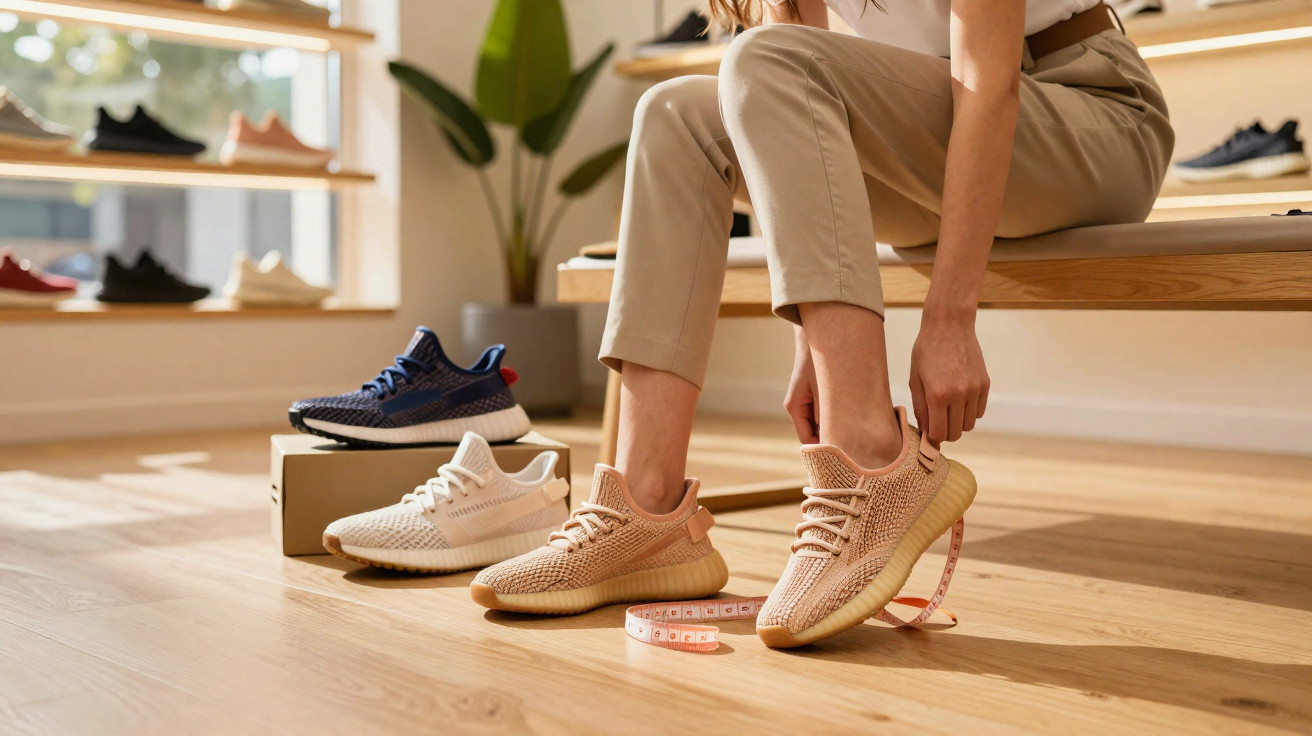
Videos are spreading across social media of sneakers that make the foot look visibly narrower - almost as if a filter has been applied. The designs appear futuristic, fit close to the skin and are being celebrated by fashion fans. At the same time, orthopaedic specialists are warning about potential long-term consequences if people follow the hype without thinking.
A slimmer foot at any cost: why these sneakers are suddenly everywhere
For years, bulky dad shoes and thick chunky sneakers dominated the streets: big, heavy, comfortable - and deliberately attention-grabbing. Now fashion has swung hard in the opposite direction, and the narrow, elegant-looking foot has become the new ideal.
On TikTok and Instagram, influencers post before-and-after clips: first a wider-looking foot in classic sneakers, then the same foot in the new trend style - clearly narrower, longer and “finer”. The result looks like digital touch-up, except it is happening in real life.
"The new obsession: the foot shouldn’t just feel well supported - it should look small and narrow above all else."
That shift puts appearance firmly ahead of comfort. Many shoppers focus on silhouette first, and only afterwards think about fit, stability and foot health. Brands are responding by producing styles that visually “slice down” the foot - often using modern knitting techniques.
High-tech mesh and knit: how the “second-skin effect” is created
At the centre of the trend is the upper material. Instead of traditional leather or thick canvas, many labels are leaning on:
- Mesh - a thin, airy net fabric
- Knit - a stretchy high-tech knit, usually made with minimal seams
These textiles form the entire collar of the shoe and sit very close to the foot, creating the famous “second-skin effect”. Thick tongues, bulky side reinforcements and multi-layer overlays are sometimes reduced significantly or removed altogether.
The payoff is a shoe that adds very little visual bulk, so the foot’s shape shows through much more directly. What began in running shoes as a way to keep weight down and improve ventilation is now being used in everyday wear as a deliberate styling trick.
Up to 1.5 centimetres less width: how strong the effect really is
The narrower-looking foot is not purely in people’s heads. A 2025 study by the University of Milan measured various models with knit uppers. The finding: perceived foot width shrinks visually by an average of 1 to 1.5 centimetres.
That illusion is driven by several elements working together:
- an almost seamless surface with no side lines
- monochrome colours that do not “break” the eye’s view
- gentle compression in the upper that holds the foot in
- a sharper, more streamlined overall silhouette
Where classic sneakers with panels, seams and logos can make the foot look broader, a single-colour knit shoe can resemble a slim tube around it. People with wider feet or a tendency towards hallux issues often notice the difference in the mirror especially clearly.
Styling trick: pair slim sneakers with an exposed ankle
Clothing can amplify the look - or tone it down. In spring, anyone wanting to emphasise the narrow line often reaches for shorter trouser lengths.
Trouser styles that boost the “slim-foot look”
- Trousers or jeans that finish just above the ankle (cropped/7/8 length)
- slightly shortened tailored trousers with a straight leg
- a narrow hem that ends above the shoe
With the ankle left visible, the leg appears longer while the foot tapers neatly at the front. If you like, fine socks in a coordinated colour can create a soft transition between trousers and sneakers.
By contrast, long wide trousers with a strong flare or oversized cargo pockets can undo the effect. They “swallow” the delicate shoe, making the foot look cut off and throwing the silhouette out of balance.
When fashion pinches: where the risks of this shoe shape sit
However appealing the look is, many orthopaedic specialists view strong compression critically. The elastic upper often behaves more like a supportive sock than a classic sneaker.
"Overly tight knit sneakers can constrict the foot, disrupt the natural rolling motion, and place long-term strain on the joints."
Typical concerns highlighted by professionals include:
- too little lateral support - the foot collapses inwards or outwards
- restricted toe freedom - toes cannot spread properly during push-off
- pressure points - especially at the ball of the foot and the big toe
- knee overload - if your gait is repeatedly pulled out of alignment
Toes need space to splay as you walk. If they are squeezed together day after day, the likelihood of misalignments such as hallux valgus or hammer toes increases - particularly for people with already sensitive feet.
The “boxer toe” as a solution: what to look for when buying
The good news is that not every knit model is automatically an orthopaedic nightmare. With a few simple checks in mind, you can avoid many common pitfalls.
Key criteria for healthier trend sneakers
| Feature | What to look for |
|---|---|
| Toe cap (“boxer toe”) | A stable, lightly reinforced area with enough room for all toes |
| Width across the forefoot | Toes can move freely; no numbness by the evening |
| Lateral support | The foot does not visibly collapse to the side when standing or walking |
| Sole | Enough cushioning, with gentle guidance at the heel |
| Wear time | Not for hours every day; rotate with other shoes |
The term “boxer toe” refers to a slightly squared, structured toe box that does not taper aggressively at the front. It provides a kind of frame so toes can spread, while the rest of the shoe remains flexible.
Why switching shoes can help as much as a good insole
Orthopaedic specialists have advised rotating footwear for years. That recommendation applies to high heels as much as barefoot-style shoes - and now to the new knit trend as well.
If you wear the same compressive sneakers every day, you keep forcing the foot into one repeated position. Over time, that can load muscles and ligaments unevenly. If you alternate between different sole heights, materials and shapes, the stress is spread more evenly.
A practical everyday approach:
- knit-upper trend sneakers for short trips and the office
- sturdier leather or canvas sneakers for longer walks
- occasional styles with a wider toe box so the foot can “fan out”
Warning signs you should not ignore
Your body usually flags up early when a shoe is not doing it any favours. Paying attention to these cues can prevent problems from building.
- tingling or numbness in the toes after only a few hours
- pressure marks on the inside of the big toe joint
- sharp forefoot pain during toe-off
- unusual tiredness in the ankle or knee without heavy exertion
If any of these symptoms occur regularly, the model should be worn less - or stopped altogether. When in doubt, a quick check with an orthopaedic specialist or a reputable running shop offering gait analysis can be worthwhile.
What terms like mesh, knit and compression really mean
A lot of marketing language sounds technical but does not help most people make a decision. A clear definition makes shopping easier:
- Mesh: an airy net structure, often slightly firmer with visible holes; good for ventilation.
- Knit: a more densely knitted upper, very elastic, and it moulds closely to the foot.
- Compression fit: a deliberately snug feel that “hugs” the foot - comfortable as long as nothing cuts in.
If you are prone to swelling or circulation issues, be cautious with strongly compressive styles. In that case, a soft fit that is close but not constricting is usually the better choice.
How to balance the trend with sensible foot health
With these sneakers, style and foot health do not have to be mutually exclusive. If, when trying them on, you do more than just look in the mirror - take a short walk, move your toes and pay attention to how your body responds - you can wear the look with confidence.
In the end, what matters is not the viral hype, but one question: does the shoe still feel good after an hour, or do your feet feel relief the moment it comes off in the hallway? If you are honest with yourself on that point, you can get through spring looking stylish - and staying pain-free.
Comments
No comments yet. Be the first to comment!
Leave a Comment