
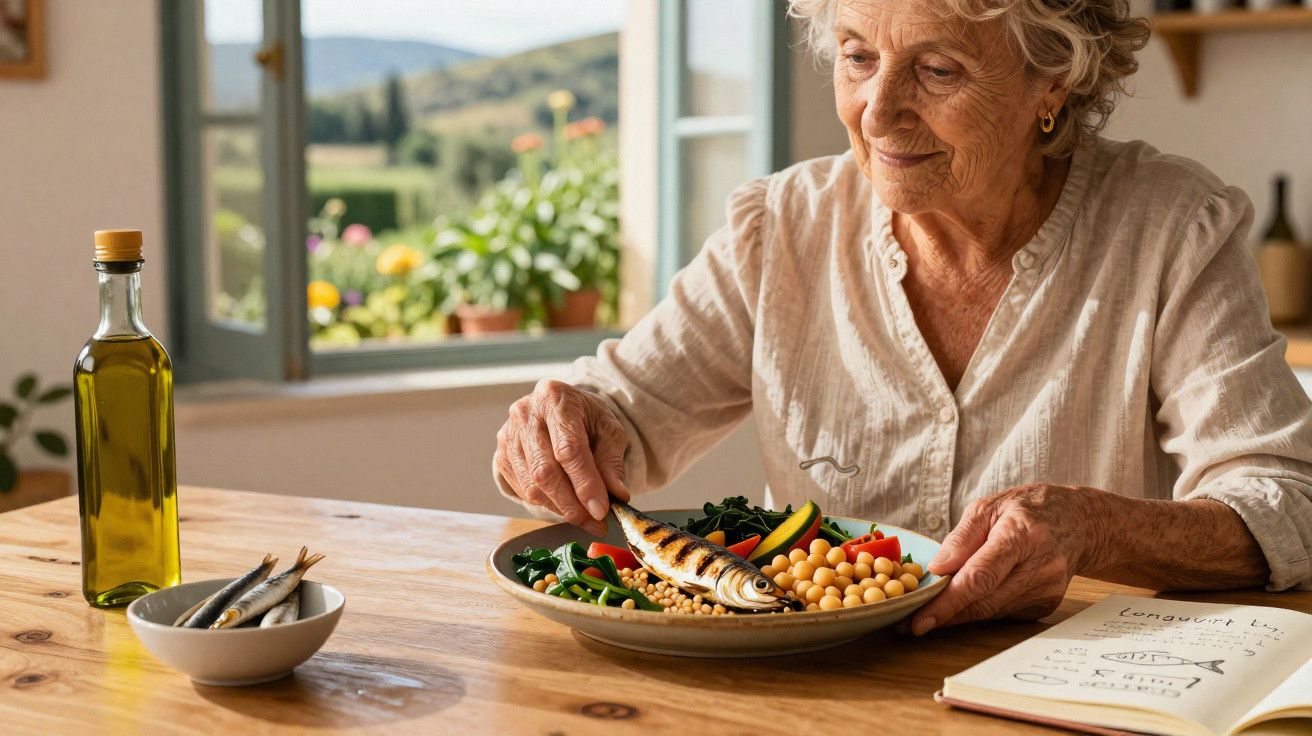
People who genuinely reach a great age rarely live by strict diet plans. Even so, in the so-called Blue Zones - places where an unusually high number of people live into their 90s or past 100 - certain habits show up again and again. One of them is fish, but in far smaller amounts than many health guides suggest. And crucially, it’s more about sardines than XXL-sized salmon steaks.
What Blue Zones actually do with fish
Blue Zones are regions where, statistically, many more people reach 90 or 100 than elsewhere. They include Okinawa in Japan, the Greek island of Ikaria, parts of Sardinia, Nicoya in Costa Rica, and Loma Linda in California.
Researchers observing everyday life in these places repeatedly find the same pattern on the plate:
- Most calories come from plant foods.
- Animal products such as meat, cheese, or eggs play only a minor role.
- Fish appears, but in surprisingly small portions and not every day.
Typical meals are straightforward: vegetables, pulses, wholegrains and olive oil. When fish is served, it’s often around twice a week, usually as a modest piece that’s shared at the table alongside plenty of sides.
In regions with particularly high numbers of centenarians, fish does feature regularly on the menu - but more as a side note than the star of the plate.
Why small fish come out on top
When people think of “healthy fish”, salmon is often the first thing that comes to mind. The Blue Zone eating patterns point in a different direction: smaller, oily sea fish are more common in the pan - such as sardines, sprats, herring, or smaller cod varieties.
There are several reasons for this:
- More omega-3 fatty acids: These fish provide plenty of long-chain omega‑3s, which can support the heart and blood vessels and may help to reduce inflammation.
- Fewer pollutants: Small fish sit lower in the food chain. They typically accumulate less mercury and other contaminants than large predatory fish such as swordfish or tuna.
- High nutrient density: Beyond omega‑3, they contain vitamin B12, iodine, selenium and high-quality protein - all key building blocks that can help keep the body functioning well for longer.
For example, a small tin of sardines can deliver a lot of protein and omega‑3 in just a few bites - without an XXL portion.
What longevity researchers recommend
Longevity researchers such as Valter Longo, who has studied diet and healthy ageing for years, describe a clearly plant-forward pattern: vegetables, fruit, pulses, nuts and wholegrains form the base - with a small number of carefully chosen fish meals added in.
The rule of thumb from longevity research is: eat mostly plant-based, plus two to three small portions of fish per week - chosen with care.
From this perspective, the priorities are:
- Don’t plan fish as a daily main meal.
- Favour oily, smaller species.
- Pay attention to quality and origin to keep contaminant exposure low.
How much fish per week makes sense
Health authorities such as the NHS arrive at guidelines similar to those from longevity research. Fish is seen as beneficial for the heart and brain, while very high intakes - particularly of more contaminated species - are viewed with caution.
| Recommendation | Guideline |
|---|---|
| Total fish intake | 2–3 portions per week |
| Of which oily fish | at least 1 portion (about 140 g cooked) |
| Typical portion size | roughly palm-sized, not filling the plate |
In practical terms, that means: smaller portions more often, rather than occasional fish feasts. If you treat fish as one element within an overall plant-heavy way of eating, you end up very close to the patterns seen in the Blue Zones.
Pollutant risk: how to keep exposure down
Sea fish always sits in a tension between nutrients and contaminants. With the right choices, that trade-off can be softened.
- Choose smaller species: Sardines, herring, mackerel and smaller cod varieties tend to take up fewer heavy metals than large predatory fish.
- Build in variety: Rotating between different fish and seafood spreads the risk.
- Take extra care with sensitive groups: Pregnant people, those who are breastfeeding, and young children should eat highly contaminated fish only rarely.
- Keep an eye on origin: Certified, sustainably caught or farmed fish are usually subject to tighter controls.
The combination of small quantities, smaller species and lots of variety makes it easier to benefit from nutrients while keeping pollutants in check.
Practical tips: what a Blue Zone-friendly fish day can look like
To bring this approach into everyday life, you don’t need anything exotic. A typical day might look like this:
- Breakfast: Porridge oats with fruit, nuts and a little yoghurt - with no fish at all.
- Lunch: A large mixed salad with beans or chickpeas, olive oil and a small piece of grilled fish, roughly the size of your palm.
- Dinner: A vegetable stew with lentils and wholegrain bread, plus perhaps two or three sardines on the side - not as the main component.
In this setup, fish becomes an add-on, while pulses, vegetables and wholegrains provide fullness and a steady supply of fibre.
Sardines or salmon - which fits longevity better?
The question “Sardines or salmon?” comes up frequently. Both can have a place, but they offer different profiles:
- Sardines and similar fish: Small, oily, high in omega‑3, often cheaper, and typically with comparatively low contaminant levels.
- Salmon: Also rich in omega‑3, but highly dependent on source and farming conditions; wild salmon can carry higher contaminant loads, while farmed salmon depends on feed and rearing practices.
The Blue Zone patterns clearly support a “sardine principle”: small species, small amounts, but eaten regularly. Salmon can be an occasional addition, but it shouldn’t appear every other day as a steak-sized centrepiece.
Why the rest of the plate matters even more than the fish
Fish never acts in isolation. In the places with many people living to very old ages, it sits alongside other factors that may make the difference:
- Plenty of vegetables, pulses and wholegrains as the default.
- Few highly processed convenience foods.
- A moderate approach to meat, sausages and sweets.
- Regular everyday movement instead of gym marathons.
- Strong social ties and shared mealtimes within the community.
If you only copy the fish intake while otherwise relying mainly on fast food, you won’t get the same result as someone on a Greek island sharing the day’s catch with family and neighbours.
What’s easy to apply in daily life
For everyday life, a few simple levers can help:
- Schedule one set fish meal each week, then gradually increase to two to three.
- Make at least every second fish meal a small, oily species.
- With each fish portion, ensure at least half the plate is vegetables.
- Make beans, lentils and chickpeas a standard side, not an occasional exception.
If you take these points on board, you’ll be very close to the pattern researchers observe in villages with many people over 90: fish as a targeted, small source of nutrients within a simple, plant-forward diet - not a miracle cure, but one building block for a long, ideally healthy life.






Comments
No comments yet. Be the first to comment!
Leave a Comment