
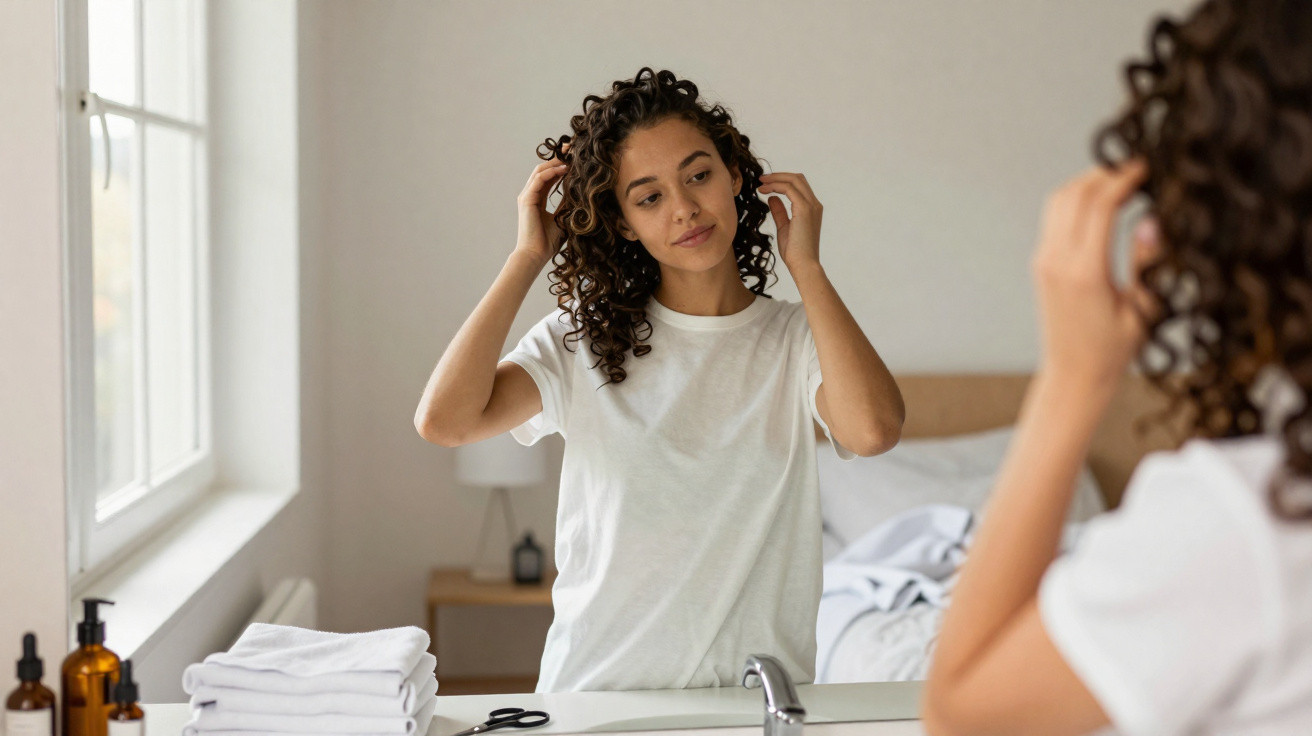
A cotton T-shirt that has lost its shape does not have to be thrown away as soon as it is no longer suitable for wearing out. Provided the fabric is clean, soft and free from rough areas, it can still serve useful purposes in your hair and skincare routine, particularly for jobs that require less friction.
What kind of T-shirt is worth reusing?
Choose a soft cotton T-shirt that has been thoroughly washed and has no zip, sequins, stiff print or thick seams where it will touch your skin or hair. Very worn T-shirts with a lingering smell, mould, chemical stains or coarse fabric are no longer suitable for this sort of reuse.
The principle is straightforward: repurposing only makes sense if the material remains hygienic and comfortable. Keep the item intended for beauty use separate from cloths used for heavy-duty cleaning, and wash it after use. If it comes into contact with oily cosmetics or hair masks, do not leave the damp fabric piled up in a corner.
How can a cotton T-shirt help dry your hair?
The American Academy of Dermatology advises removing moisture from hair gently and lists a towel or T-shirt as options for soaking up water. Rather than rubbing, press the fabric against your hair. This approach limits mechanical friction at a time when wet hair is more susceptible to handling.
A plain cotton T-shirt can be particularly useful for wavy and curly hair, as it lets you scrunch sections without rubbing them. The aim is simply to take away excess water, without twisting the hair or tightening a turban too firmly.
Can a T-shirt also protect your pillowcase during a treatment?
If you use a leave-in product, oil or treatment that the manufacturer states can remain in the hair for longer, an old T-shirt can be spread over the pillowcase to prevent staining. The fabric acts as a washable barrier between the cosmetic product and the bedding, and it can be changed after use.
That does not make every hair mask suitable as an overnight treatment. Products designed to be rinsed out should be left on for the time stated on the label and removed before bed. The T-shirt is there to protect the surface during a routine that is compatible with the product, not to extend applications on your own initiative.
- Use the whole soft garment to press wet hair gently, without rubbing.
- Spread the T-shirt over the pillowcase when a product designed to remain in the hair could stain the fabric.
- Cut a clean strip to keep hair back while applying make-up or carrying out skincare.
Watch the video shared by the YouTube channel Ficando Gata, which offers tips on caring for your hair overnight.
How do you make a simple hairband from a T-shirt?
A wide strip cut from the smoothest part of the T-shirt can become a hairband to keep a fringe and loose strands away from your face while applying make-up or doing skincare. Only cut clean fabric with no hard seams in the contact area, and fit it without making it tight around your head.
As it will sit close to your forehead, wash the hairband regularly, especially if it comes into contact with foundation, sun cream, moisturiser or sweat. Avoid repeatedly using damp fabric: its purpose is to make your routine easier, not to create a residue-covered surface next to your skin.
When should you stop reusing the T-shirt?
There is a limit to repurposing. If the cotton starts shedding excessive fluff, becomes rough, develops an odour that washing does not remove, or builds up stains from unidentified products, it is time to remove the T-shirt from your beauty routine. Very thin sections may also tear while being used.
Before disposing of an item, it is worth considering whether the fabric can still safely perform a simple task. A clean T-shirt can replace basic accessories without requiring any homemade mixtures, but hygiene, comfort and cosmetic instructions remain more important than the desire to use every last centimetre.



Comments
No comments yet. Be the first to comment!
Leave a Comment