
For anyone looking to become more active, the choice often seems to be between costly gym memberships and uninspiring home workouts. A compact Lidl training board suggests there is another option: effective exercise that takes up little room and costs far less than regular Pilates sessions or other classes.
What the Lidl fitness board offers
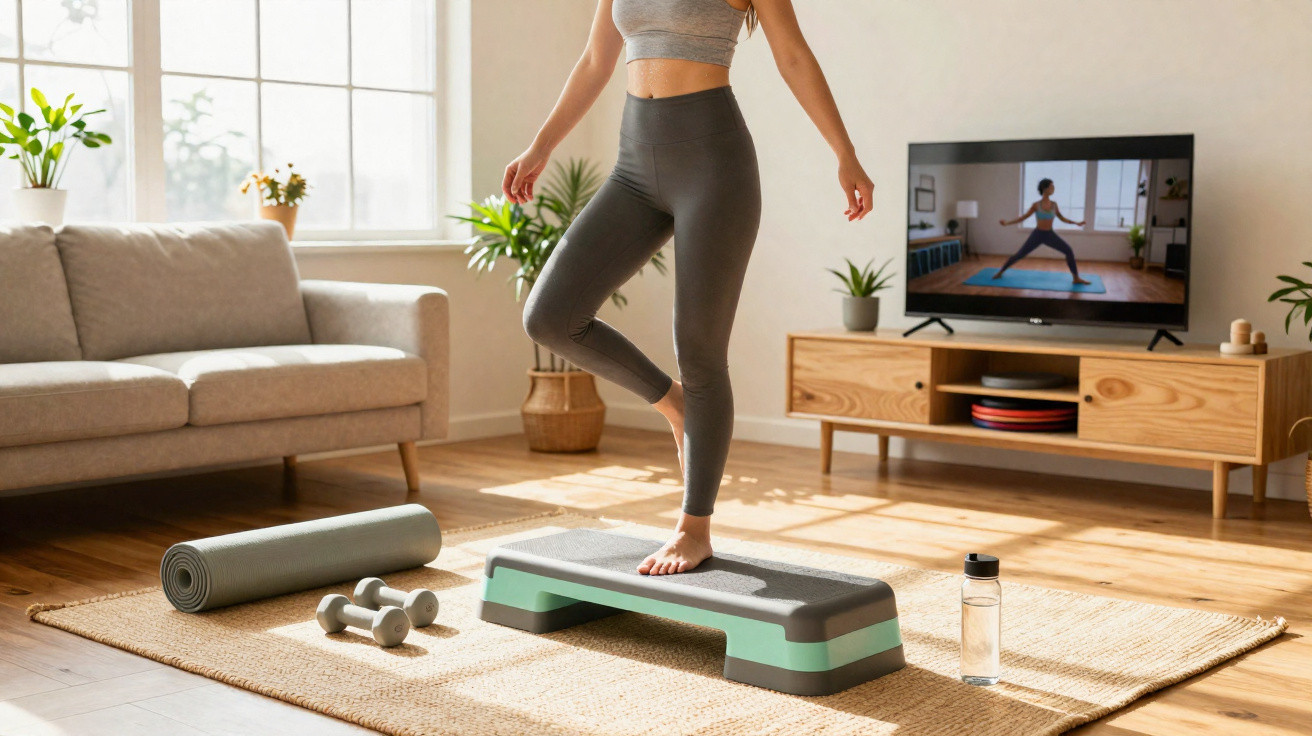
At the centre of this is a Crivit step platform, made for Lidl’s own brand range. It costs €22.99. Although it initially resembles a standard aerobic step, it is designed to do rather more.
As well as serving as a raised step for cardio sessions, the platform can be used as:
- a step board for endurance training
- a balance board for stability exercises
- a firm base for strength and supported exercises
- upper-body training equipment, thanks to its integrated resistance bands
Weighing 2.8 kilograms, the board is light enough to carry around easily. It can be stored upright against a wall or slipped beneath a bed. That makes it particularly suitable for small flats without space for a dedicated fitness area.
“One piece of equipment covers endurance, strength, balance and core training – with no membership and no need for much space.”
Adjustable height: tailoring the workout to your level
A major benefit is that the workout intensity can be changed with very little effort. The platform has two height settings, both of which can be adjusted within seconds:
- 10 centimetres: suited to beginners, moderate cardio and lower-impact exercise
- 15 centimetres: intended for more experienced users, tougher workouts and greater work for the legs and glutes
Using the higher setting increases the step height, requiring more effort from the thighs and glute muscles. It also increases calorie burn because the cardiovascular system has to work harder.
Exercises that are especially worthwhile
The step platform can be used to adapt many familiar exercises. A home session could include, for example:
- alternating step-ups and step-downs, varying the pace to raise the heart rate
- squats with one foot on the board to place more load on one leg
- lunges with either the front or rear foot positioned on the platform
- sideways step-ups to work the outer leg and glute muscles
- a supported position with hands on the board for a slightly elevated press-up variation
Balance work can be added too: for instance, place one foot on the board and lift the other slightly while keeping the core steady. This places greater demand on the deeper muscles.
Why many users rate the home fitness device highly
According to customer reviews, the Lidl board achieves an exceptionally high average rating of 4.9 out of 5 stars. Two qualities are repeatedly highlighted in the feedback: stability and durability.
The platform features a textured, non-slip surface intended to provide grip whether used barefoot or with trainers. Rubberised feet underneath help to limit sideways movement, even on tiled or parquet floors.
“High user ratings, a non-slip surface and a secure footing turn the living room into a mini gym in no time.”
Many buyers also value being able to address several goals with one piece of equipment: improving fitness, strengthening muscles and training posture. This saves space and, ultimately, money, as there is no need for several separate tools.
Not a replacement for a trainer, but a practical starting point
Naturally, a board like this cannot replace qualified instruction. Beginners in particular can benefit from classes, videos from reputable providers or a brief introduction from a professional. Poor technique can put strain on the knees or back over time.
Even so, the device provides an accessible way to add more movement to everyday life. Those who do not want to join a gym immediately, or feel uncomfortable in a class, can begin at home, improve their fitness and still move on to supervised options later.
How to use the board instead of a Pilates class
Pilates focuses primarily on core stability, body control and calm, precise breathing. The step board has different main strengths, but it can be used in a way that delivers many similar benefits.
One possible 30-minute routine could look like this:
- 5 minutes warming up: slow step-ups and step-downs, with the arms moving loosely
- 10 minutes cardio: faster stepping, small jumps and side steps
- 10 minutes strength: squats, lunges and press-up variations using the board
- 5 minutes core & balance: plank with hands or feet on the platform, plus single-leg standing
Using the integrated resistance bands also brings the upper body into the session: standing rowing movements, shoulder pulls and triceps extensions. This creates a fairly comprehensive full-body workout.
How often does training genuinely make a difference?
For noticeable improvements in fitness and physique, exercising three times a week is usually enough. Many trainers suggest the following simple guideline:
- train 3–4 times a week for 20–30 minutes each time
- raise your heart rate noticeably while still being able to talk
- include the legs and core in every session
Anyone who otherwise does very little exercise will usually notice within a few weeks that climbing stairs feels easier, their back feels more stable and their overall energy level rises.
Safety, technique and useful combinations
As with any home workout, a few basic rules matter. The platform needs to be placed fully on a firm, level surface. Loose rugs or uneven runners are unsuitable because they may wobble. This increases the risk of falling, especially during fast stepping movements.
During all step-up and step-down movements, the knees should remain as closely aligned with the feet as possible rather than collapsing markedly inwards. Anyone who experiences pain in their knees or lower back while exercising should reduce the height or pace and pay closer attention to their posture.
The board works well alongside simple equipment such as:
- an exercise mat for floor exercises and stretching
- light dumbbells or water bottles for additional strength training
- a small fascia or massage ball to ease muscle tension
Together, these create a mini training space in the living room that can replace many conventional gym machines without taking up half the room.
Who the Lidl board is particularly worthwhile for
A versatile piece of equipment is especially useful for people with a limited budget or little time. Anyone who spends just under €23 as a one-off purchase rather than paying a monthly gym fee will soon recoup the cost, particularly if the platform is used regularly.
The board is also appealing for those who spend much of the day sitting down. Even brief sessions at lunchtime or in the evening can get the circulation and muscles moving. People working from home can schedule the step board into their day, perhaps after every second video call.
Complete beginners can start at the lower height with controlled movements. More advanced users can add jumps, changes of pace and more complex combinations. As a result, the equipment develops with the user rather than becoming boring after only a few weeks.
Ultimately, its value depends less on its price than on consistency. Anyone wanting an easy-to-use, sturdy and space-saving tool to get moving at home will find the Lidl step platform a highly practical option – and a genuine chance to outsmart their inner couch potato a few times a week.


Comments
No comments yet. Be the first to comment!
Leave a Comment