
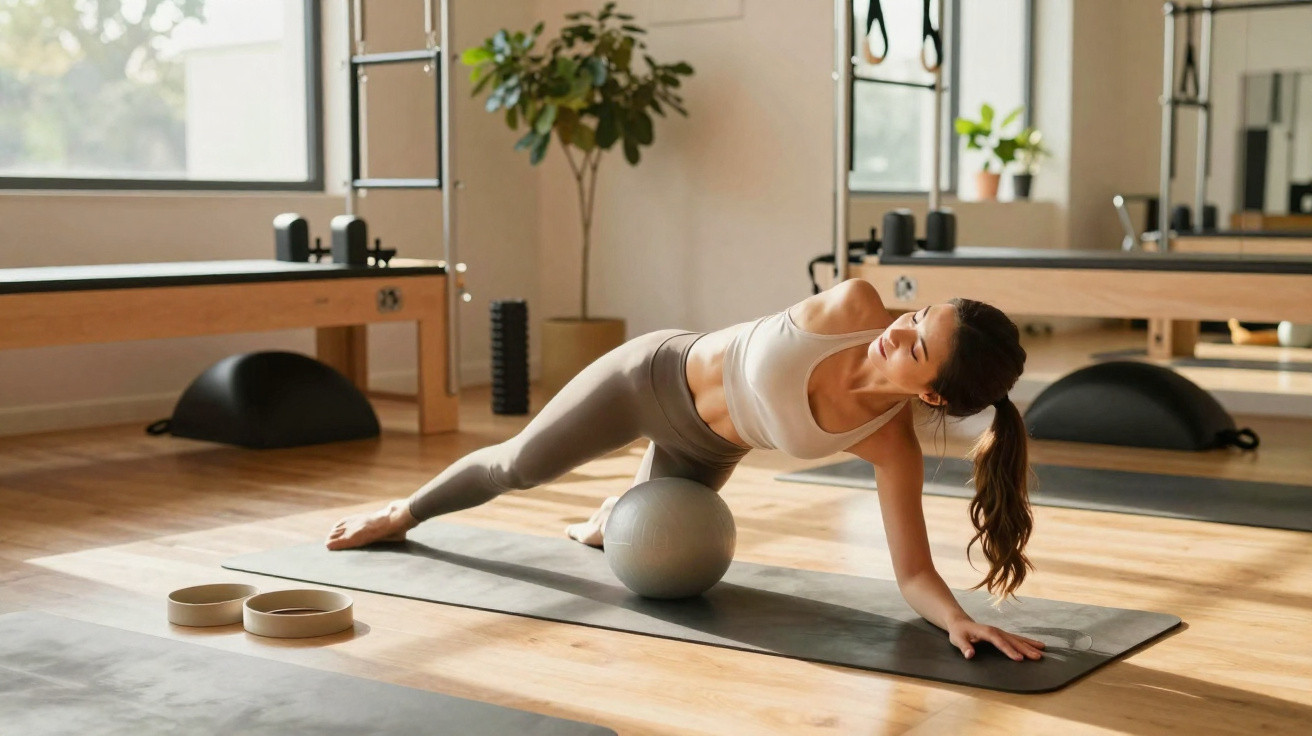
In stylish studios, and across YouTube and Instagram, one name keeps appearing: Pilates Fusion. This method blends traditional Pilates principles with elements of yoga and moderate strength training. It aims to sculpt the deeper muscles, improve posture and protect the joints at the same time. But what is behind the buzz, and who is it genuinely worthwhile for?
What Pilates Fusion is all about
At first glance, Pilates Fusion can look like “ordinary” Pilates. Breathing, precision and control remain central to every session. The key distinction is that the exercises are expanded with more dynamic sequences inspired by functional strength training and yoga.
Sessions commonly alternate between slow, almost meditative movements and livelier sections performed at a quicker pace. This keeps the heart rate at a moderate level while still making the muscles work hard.
The core principle of the method: strengthen muscles deep within the body, improve posture and protect the joints rather than stressing them with jumps and impact.
The focus is on accurate technique rather than maximum weights or explosive movements. Many exercises are done standing, on all fours or lying on the back. The spine stays under control, while joints move through their natural range of motion. This makes the sessions particularly appealing for people with sensitive knees, hips or shoulders.
A flatter stomach from within: focus on deep muscles
When people picture a flat stomach, they often think of crunches and sit-ups. Pilates Fusion takes a different approach, targeting the core: the deep trunk muscles surrounding the spine, pelvis and abdominal organs.
The areas trained include:
- deep abdominal muscles, which act like an internal corset
- muscles running alongside the spine
- the pelvic floor and gluteal muscles
- stabilising muscles around the hips and shoulders
The benefit is not limited to a visually slimmer waist. An actively engaged core lifts the upper body, eases pressure on the lower back and helps prevent the stomach from pushing forwards during everyday activities.
Anyone who stands and walks upright automatically looks slimmer – even without losing a gram of weight. This is exactly where the method comes in.
Many sequences incorporate rotations, gentle side bends and lengthening movements. These actions engage deep muscles far more effectively than performing only straight crunches on a mat. At the same time, pressure on the spinal discs remains limited.
Gentle on joints, demanding in practice
Pilates Fusion is designed as a deliberate alternative to extreme trends dominated by jumping and rapid changes of direction. In particular, it is gentler on:
- knee joints, which do not have to continually absorb impact
- hip joints, which are guided with control rather than forced to brake abruptly
- shoulders, which are stabilised instead of being placed under sudden strain
- the spine, which remains in a neutral position
That does not mean the sessions are easy. Anyone performing the exercises properly will soon feel an intense burn in the abdominals, back and glutes. Sweat tends to come from sustained effort and concentration rather than frantic jumping.
Who Pilates Fusion is particularly suited to
Many studios report that the format is especially popular with the following groups:
- people returning to exercise after a long break
- people with back or neck problems
- those who spend a great deal of time sitting and want to improve their posture
- active people looking for a balancing addition to running or strength training
Particularly after injuries or with chronic complaints, the controlled style of training can help people rebuild trust in their bodies. Qualified instruction and an honest assessment of personal limits are essential.
Breathing, mind and body: why the mental effect is so powerful
One defining feature of Pilates Fusion is that every movement is linked to conscious breathing. Inhale, prepare, exhale, work with strength: this rhythm runs throughout the whole session.
After only a few workouts, many people notice that:
- they can switch off mentally for 45 to 60 minutes
- focusing on the centre of the body calms their pulse and nervous system
- feelings of stress decrease noticeably after the session
Anyone who breathes with focus and commits to precise movements can hardly race through to-do lists in their mind at the same time – that is precisely part of the appeal.
Unlike workouts intended simply to leave you exhausted, this method is about mindful awareness: Where am I working right now? Where am I holding unnecessary tension? What feels good, and what feels less so? Many people then perceive their bodies much more clearly in daily life.
What a typical Pilates Fusion class looks like
Formats naturally vary between studios and online courses, but a class often follows a structure like this:
- A brief arrival: calm breathing exercises while seated or lying down, followed by core activation.
- Mobilisation: gentle movements for the spine, shoulders and hips, often borrowed from yoga.
- Main section: a sequence of Pilates-inspired standing and mat exercises, with or without light weights or resistance bands.
- Balance and posture: single-leg standing exercises, slow transitions and attention to alignment.
- Cool-down: stretching, extended exhalations and a short relaxation phase.
The challenge lies less in the difficulty of individual positions than in maintaining high-quality movement throughout the entire class.
What Pilates Fusion can do – and what it cannot
Many providers promote the method as a genuine all-rounder for body and mind. Experts, however, advise putting those claims into perspective. Results depend heavily on how consistently someone trains, the quality of instruction and their individual goals.
For greater body tension, a more stable feeling in everyday life and a more upright posture, Pilates Fusion offers very solid tools – but it does not replace targeted athletic training for elite sport.
Anyone hoping to build maximum marathon endurance quickly will still need to run. Those wanting to gain a large amount of muscle mass will continue to need conventional strength training using progressively heavier weights. Pilates Fusion can support these aims, but cannot achieve them on its own.
| Goal | Suitability of Pilates Fusion |
|---|---|
| Flatter stomach, better posture | very well suited |
| Joint-friendly training when returning to exercise | well suited, with instruction |
| Building maximum muscle mass | only useful as an addition |
| Competition preparation in elite sport | useful as an addition, not as the main training |
How often to train – and when the first effects can be felt
Many coaches recommend two sessions a week in order to notice clear changes. Initial effects can often be felt after just a few weeks:
- a more stable feeling in the lower back
- better control of the abdominal muscles during everyday tasks such as carrying and lifting
- less neck tension through more conscious posture
A visibly flat stomach, on the other hand, depends greatly on diet, stress levels and sleep. Pilates Fusion shapes the muscles, while the layer around them is determined by the overall combination of lifestyle and movement.
What beginners should keep in mind
Anyone interested should avoid starting immediately with the toughest online version. A sensible approach is to:
- take a trial studio class to learn essentials such as a neutral spine and core activation
- seek advice from a doctor or physiotherapist beforehand if experiencing any pain or complaints
- begin more gently and use lighter weights at first
Terms such as “neutral pelvic position” or “lengthening tension” may sound abstract initially. In practical terms, they mean avoiding forcing the spine into either an exaggerated inward curve or a rounded back, and instead maintaining its natural curves. Once this is understood, it can also benefit performance in every other sport.
Related formats include traditional mat Pilates, strength-focused yoga and functional training using bodyweight exercises. Many people combine these options to challenge their bodies in varied ways and stay consistent over the long term. This blend of effectiveness and mindfulness is exactly why Pilates Fusion has become, for many, more than a training method they follow for a brief trend cycle.


Comments
No comments yet. Be the first to comment!
Leave a Comment