
Salon owners are quietly bracing for a spring surge, because one ultra‑tidy haircut is suddenly cropping up on catwalks, social feeds and in group chats.
Built around shine, crisp lines and unapologetic neatness, this look is also pushing an awkward debate into the open: how we judge women over 40.
The gloss bob, explained
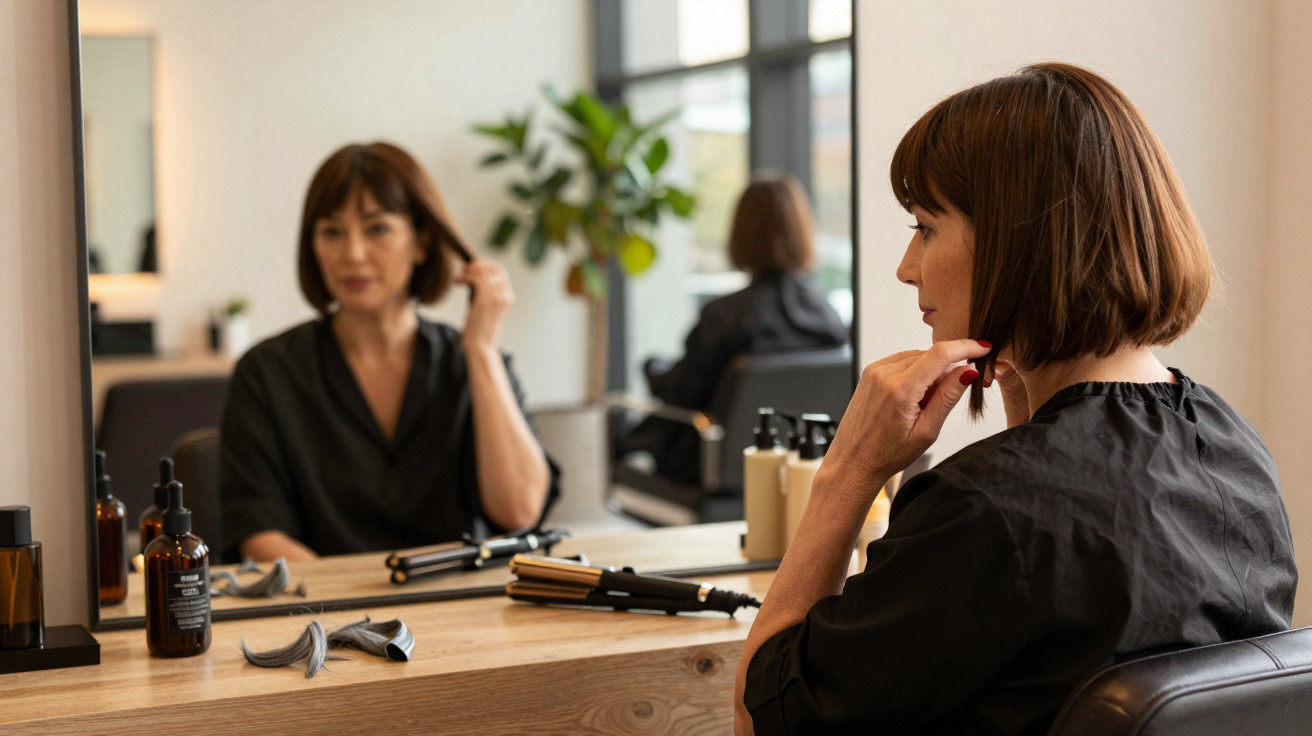
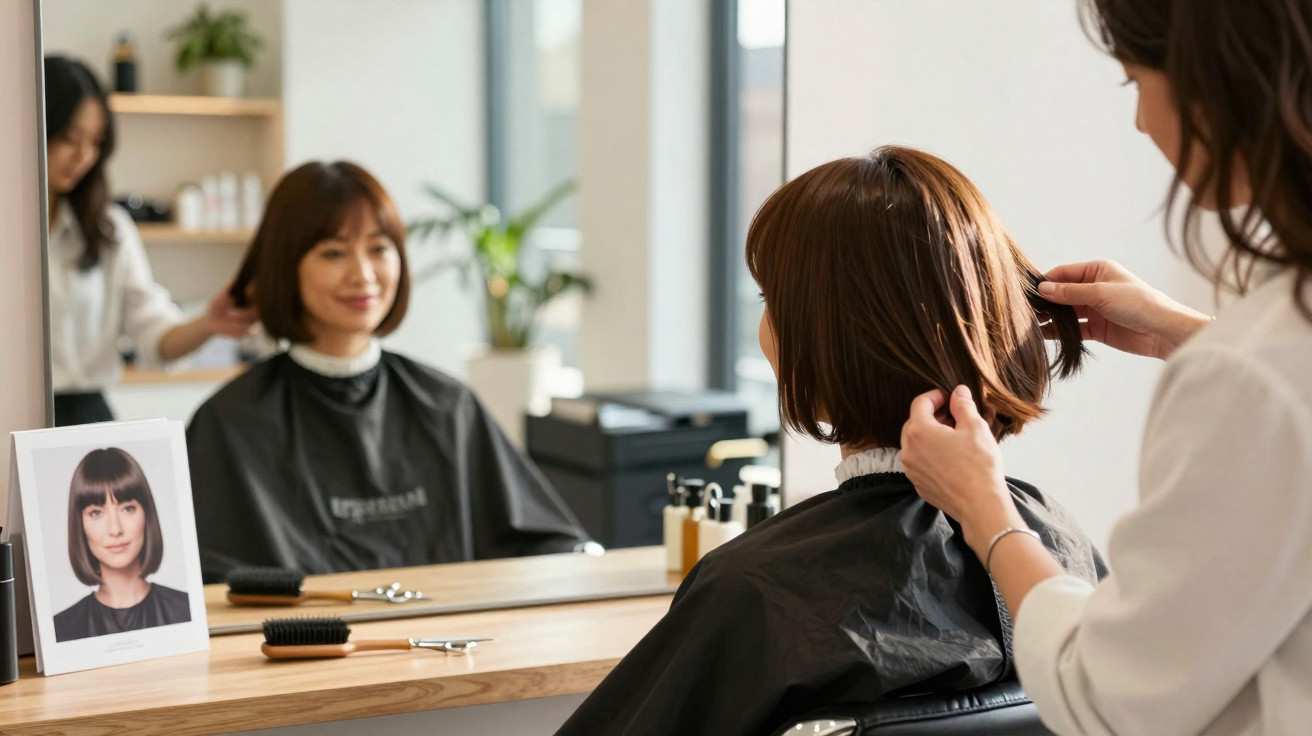
A gloss bob is a sharply structured bob, cut either blunt or with gentle graduation, then finished to a near mirror sheen. It typically lands anywhere from the jawline to just below the collarbone, with almost no frizz or flyaways. Picture a glassy surface, precise edges, and a finish that looks close to lacquered.
In salons it’s being framed as a “grown woman’s cut”, not another TikTok moment. There’s nothing shaggy, “undone” or intentionally messy about it. Instead, it’s sleek, weighty and often paired with a centre parting that shapes the face in a very considered way.
The gloss bob is less about length and more about message: control, care and being visibly high‑maintenance on your own terms.
Online, it’s fast becoming the unofficial uniform for celebrities in their late 30s, 40s and 50s who are publicly rejecting the notion that they must either pursue youth or “age gracefully” by fading into the background.
Why this haircut is everywhere for spring 2026
Across spring shows in New York, London and Paris, hair teams have already placed the gloss bob on models of different ages. They say it photographs brilliantly, picks up studio lighting, and makes outfits read instantly more “expensive”.
Data from salon chains in the US and UK also suggests a jump in bookings for “glass bob”, “liquid bob” and “gloss bob” services from late 2025 onwards. That rise is expected to accelerate as celebrity campaigns and red‑carpet moments stack up through early 2026.
The uptick is practical as well as aesthetic. After years of beachy waves, curtain fringes and shag‑style layers, plenty of women are drifting back towards cleaner lines. With hybrid working, ring‑light meetings and high‑resolution phone cameras, hair is judged on screen every day rather than saved for special occasions.
- It looks crisp on video calls and in photos.
- It signals “professional” in more conservative offices.
- It pairs easily with suits, dresses and even athleisure.
- It’s short enough to feel new, but long enough to tie back or clip away.
Most importantly, the gloss bob reads as money - or at least the impression of it. That high shine usually comes from a mix of healthy hair, salon glossing services and heat tools, all of which take both time and cash.
The harsh truth it exposes about aging women
The gloss bob’s popularity isn’t only about looks; it shines a light on a quieter pressure. Once women move into their 40s, every visible change tends to be interpreted. Hair becomes a shorthand for ambition, desirability, health and even perceived “relevance”.
The gloss bob subtly reinforces a message: to be seen as “put together” past a certain age, women must show visible effort.
On a blunt bob, greys can be more obvious, which can push some women towards regular colouring. Flyaways and thinning areas also show up more against a glossy finish, nudging clients towards scalp treatments and thickening products. A style marketed as empowering can, in practice, become a new standard that’s hard to keep up with week after week.
The double standard is hard to ignore. On men, grey hair and looser cuts are routinely praised as “distinguished”. On women, a sharp, shining bob is often celebrated as “age-defying” - wording that quietly insults the very age it pretends to honour. The compliment reinforces the idea that looking older is a flaw to be managed, rather than a neutral fact.
From “mum bob” to power symbol
For a long time, the bob was treated as a symbol of practicality and was mocked as the “mum cut”. The gloss iteration turns that on its head. It’s positioned as aspirational rather than domestic. The finish feels closer to a luxury car than a supermarket run.
On red carpets, actors in their 40s and 50s are wearing gloss bobs with tailored suits and pared‑back gowns. In advertising, beauty brands are photographing midlife ambassadors with razor‑neat bobs and almost glass‑like colour. The subtext is clear: this isn’t retreating; it’s regrouping.
The gloss bob allows aging women to signal power and control, but still within a narrow, youth‑leaning template.
In effect, the haircut says: I can afford root colour every four weeks, I can book trims on schedule, and I have the discipline to heat‑style. That visible performance of control is rewarded in a culture that still struggles with women aging in plain sight.
The maintenance calculus
Stylists don’t hide the upkeep. A blunt, glossy bob loses its impact quickly once the ends roughen or the shape drops. Most wearers are told to rebook every six to eight weeks.
| Aspect | Low‑effort bob | Gloss bob |
|---|---|---|
| Cut frequency | 12–16 weeks | 6–8 weeks |
| Styling tools | Air‑dry, occasional wave | Blow‑dry + straightener/brush |
| Products | Basic shampoo/conditioner | Heat protectant, serum, gloss spray |
| Colour upkeep | Optional, flexible | Root touch‑ups for many wearers |
For women balancing work, caring roles and the standard midlife admin, that rhythm can feel like a second job. A cut sold as simple can, in reality, tie someone to frequent and expensive appointments.
Beauty standards hidden in the shine
People often describe the gloss bob as “polished but low drama”. Underneath, though, sit the same familiar rules:
- Hair should be thick and dense enough to create a clean perimeter.
- Grey should be managed or blended unless it reads as intentionally styled.
- Frizz and natural texture should be smoothed into a more uniform finish.
- The face should look visually “lifted” through angles and shine.
Those expectations can quietly judge anyone whose hair doesn’t behave in that way. Women with textured or tightly coiled hair may need chemical straightening or repeated heat to recreate the same sheen, increasing the risk of breakage. Women with fine or thinning hair may feel their natural texture is somehow “not enough” to meet the trend.
What’s framed as a universal trend quietly assumes a certain type of hair, a certain budget and a certain amount of unpaid time.
It also reveals how youth remains the benchmark. Praise for celebrity gloss bobs regularly leans on how “fresh” and “girl‑like” they look, rather than recognising strength, personality or lived experience.
Can the gloss bob be genuinely empowering?
There’s a different reading too. Many women say they feel more confident after moving to a sharp bob. By emphasising jawlines, necks and cheekbones, it can draw attention away from fine lines or facial volume changes.
For those who have spent years using long hair as cover, a precise bob can feel like an intentional step forward. Some women in their 50s and 60s describe it less as anti‑aging and more as pro‑visibility: taking up space without relying on youth cues.
Motivation matters. When someone chooses the gloss bob as self‑expression, it can look defiant - a refusal to disappear or dress “quietly” because of age. When it’s adopted out of obligation, as if it’s the only acceptable haircut after a certain birthday, it simply becomes another pressure.
Adapting the trend on your own terms
Hairdressers often recommend treating the gloss bob as a framework rather than a strict set of instructions. The essentials are shape and shine, and both can be adjusted to suit different hair types and lifestyles.
- Texture: Introduce a soft wave or bend through the lengths so you’re not straightening constantly.
- Length: Leave it a touch longer around the face to soften lines or work with curls.
- Colour: Opt for glossing in your natural shade - including grey - rather than full‑coverage dye.
- Parting: Swap a severe centre parting for a gentler side part to add lift.
A common situation stylists describe: a 48‑year‑old with wavy, greying hair asks for a strict, glass‑straight bob they’ve seen on a 30‑year‑old influencer. Once the time and heat needed are made clear, many people choose a hybrid - still neat, but with waves and greys allowed to show. The trend remains, but it’s shaped around real life instead of fantasy.
Practical risks and benefits to weigh
From a hair‑health standpoint, the gloss bob comes with obvious trade‑offs. Regular heat styling can dehydrate and weaken strands, particularly if the hair is already delicate. Strong smoothing treatments can deliver weeks of shine, but may irritate the scalp or shift natural texture over the long term.
On the plus side, frequent trims remove split ends and can make hair look thicker. Prioritising shine often encourages better conditioning and less aggressive lightening. In some cases, switching from heavy bleaching to a darker, reflective bob can genuinely improve resilience.
The healthiest gloss bob tends to be one that accepts some natural texture and limits daily heat, rather than chasing a perfect glass finish every single morning.
If you’re considering it, a useful approach is to request two finishes from your stylist: the “Instagram” version and the “Tuesday morning” version. One shows the full blow‑dry result; the other relies on air‑drying or minimal styling. If the difference is dramatic, you’re signing up for a high‑maintenance relationship with your hair.
Beyond the trend itself, the gloss bob points to a bigger issue: who is allowed to age visibly, without apology? Each sharply cut, shining bob on a commuter train or in an office adds another data point to that argument - whether or not the wearer ever asked to represent it.


Comments
No comments yet. Be the first to comment!
Leave a Comment