
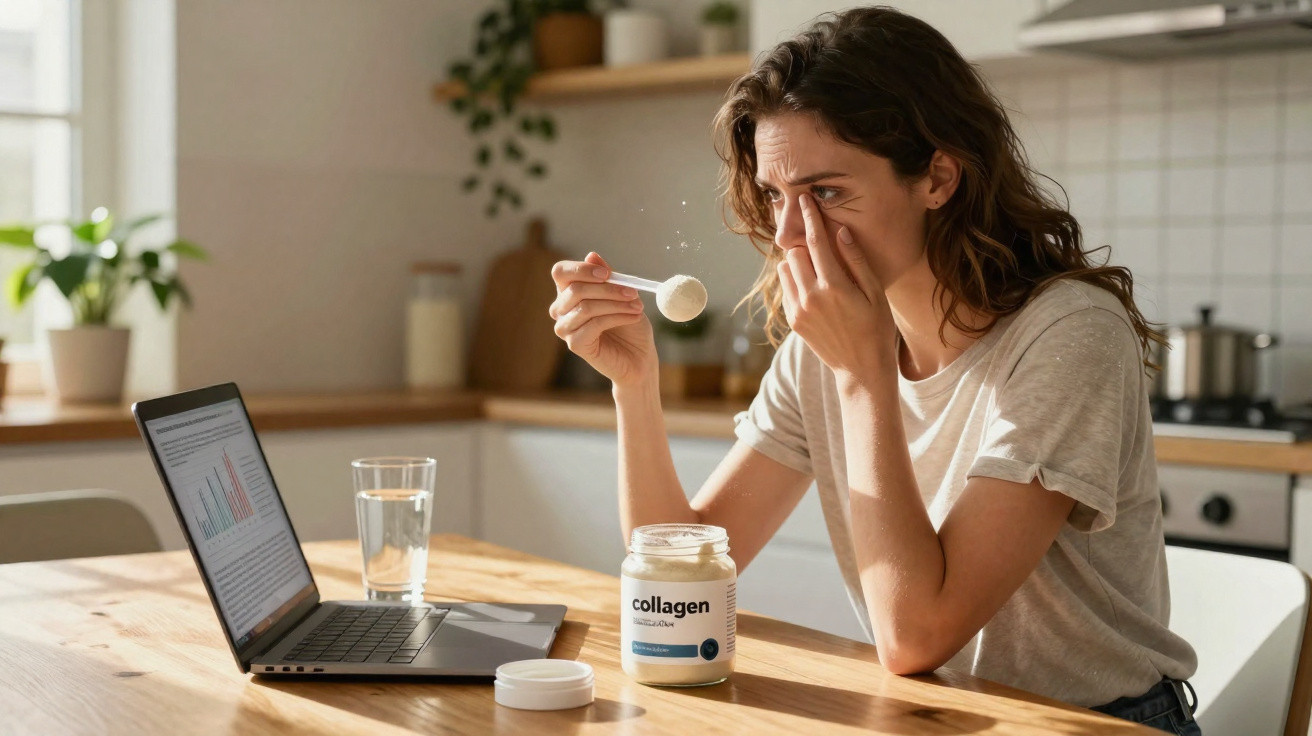
Collagen is often marketed as a mini fountain of youth: a morning drink, an evening cream, powder in your smoothie - and supposedly you are on your way to smooth, wrinkle-free “dream skin”. Look a little closer, though, and it becomes clear that the claims are far bigger than what research has convincingly shown so far. A look at the evidence, the biology and potential downsides explains why this trend protein is, for most people, more of an expensive habit than a real breakthrough.
What collagen actually does in the body
Collagen is not some niche beauty ingredient - it is one of the body’s key structural proteins. Around a third of all protein in the human body consists of collagen. Its fibre bundles run through many tissues, including:
- Skin - helping it stay elastic and resilient
- Bones - providing a stable basic framework
- Tendons and ligaments - supporting them under strain
- Cartilage - enabling joints to absorb impact
Your body makes collagen on its own. To do that, it breaks down dietary protein into amino acids and then builds new collagen from those building blocks. Amino acids such as glycine, lysine and proline are particularly important here. As long as there is enough protein, along with vitamins and trace elements, this production line works surprisingly well.
From the mid-20s: the natural collagen dip
From roughly the age of 25, collagen production gradually starts to slow. It happens quietly at first, but the effects become more noticeable over time:
- the first fine lines around the eyes and mouth
- reduced firmness, especially on the face and décolletage
- a surface that looks and feels drier
- small wounds that take longer to heal
This is exactly where beauty brands step in. The pitch is simple: if the body is producing less collagen, you can just top it up from the outside. It sounds appealing - but biochemically it tends to work far less neatly than advertising suggests.
"The problem with collagen products is not the substance itself, but the expectation that it ends up precisely where wrinkles form."
Collagen creams: stuck on the surface
Many companies rely on creams, serums or masks containing collagen. The promise is that these fibres “plump” wrinkles from the outside and leave skin looking smoother. In reality, the situation is usually this:
- Collagen molecules are too large to get through the skin barrier.
- Most of it sits on the surface rather than penetrating deeper layers.
- The result is comparable to a standard moisturiser: skin can look temporarily fuller because it holds on to water.
That may feel pleasant and can make skin appear fresher for a few hours. But it has little to do with genuinely stimulating collagen production in deeper layers of the skin.
Collagen to drink or swallow: plenty of optimism, limited proof
The other big trend is collagen in drinkable ampoules, powders or capsules. The idea is: if the skin barrier is the issue, send collagen in through the stomach instead. But the body follows its usual routine here too.
Protein - whether it comes from steak, lentils or collagen powder - is broken down in the digestive tract into smaller components. These then enter the bloodstream and can be used wherever the body currently needs protein. The body does not distribute nutrients according to marketing promises. It allocates the building blocks based on demand: skin, muscles, liver, bones - whichever tissue “calls” first gets supplied.
Some studies suggest that certain collagen supplements may have very small effects on skin hydration and elasticity. However, the overall evidence base is weak: trials are often short, involve small groups and may be closely linked to manufacturers. There is no clear, robust proof of visible anti-ageing results.
"Whether swallowed collagen is actually incorporated specifically into facial skin or joints remains largely speculative so far."
Does the body even need extra collagen?
For healthy people, there is no general evidence that an additional requirement exists. If you eat a balanced diet and take in enough protein, you are already providing the body with the raw materials it needs. For most people, the following are more useful than pricey powders:
- sufficient protein from fish, meat, eggs, pulses and dairy products
- vitamin C from fruit and vegetables, as it is involved in collagen formation
- avoiding nicotine, because smoking damages collagen structures
- consistent UV protection to slow light-related collagen breakdown
If you still choose to use collagen supplements, at least pay attention to the amount. The German Federal Institute for Risk Assessment cites five grams per day as a sensible upper limit.
Risks and side effects: not every product is harmless
Collagen is generally considered fairly well tolerated, but the trend is not entirely risk-free. Possible issues include:
- allergic reactions to animal-derived ingredients
- skin flushing and a sensation of warmth caused by nicotinic acid in some products
- contamination in low-quality supplements
If you have pre-existing conditions, take medication regularly, or are pregnant, you should not use supplements without speaking to a doctor. The source of the collagen also matters - beef, fish or pork: not everyone tolerates every type, and not every supply chain is monitored to the same standard.
Why collagen powder still sells so well
Despite the thin evidence, the market is booming. Practical comparisons show that tubs and sachets sell extremely well even though the advertised effects are only weakly supported by science. The reasons are fairly obvious:
- The promise of “beauty you can drink” sounds easy and convenient.
- Before-and-after photos on social media create strong expectations.
- Many people want a sense of control over the ageing process.
- Price is often equated with “quality” - higher cost can seem more credible.
Comparative testing also highlights major differences between products: some brands clearly disclose origin, collagen type, dosage and additives; others stay vague. Purity, transparent labelling and a realistic value-for-money check are missing more often than many would expect.
What really helps with wrinkles
Noticing the first lines in the mirror naturally makes people want to act. Rather than relying blindly on collagen, it is worth focusing on measures with stronger evidence behind them:
- daily sun protection with a high SPF
- retinoids in skincare (for example, retinol at an appropriate strength)
- consistent moisturising with hyaluronic acid or glycerin
- enough sleep and reducing stress
- little alcohol and no nicotine
Medical-aesthetic treatments such as laser therapy, microneedling or minimally invasive procedures can affect collagen structures more directly, but they come with their own costs and risks. Anyone considering them needs reputable medical advice and should not rely on social media trends.
How to assess advertising claims more realistically
Beauty products containing collagen are unlikely to disappear from the shelves any time soon. That makes a critical look at the small print even more important. A few guiding questions can help:
- Are there independent studies, or only manufacturer claims?
- Are specific percentage improvements promised - and what data are they based on?
- Is it clearly stated which ingredients are included and in what amounts?
- Does the language sound scientifically sound, or more like a slogan?
Keeping these questions in mind makes it less likely you will pay for an expensive placebo. Collagen remains a fascinating molecule inside the body - but as a supposed cure-all on the bathroom shelf, it has limited support from current research.





Comments
No comments yet. Be the first to comment!
Leave a Comment