
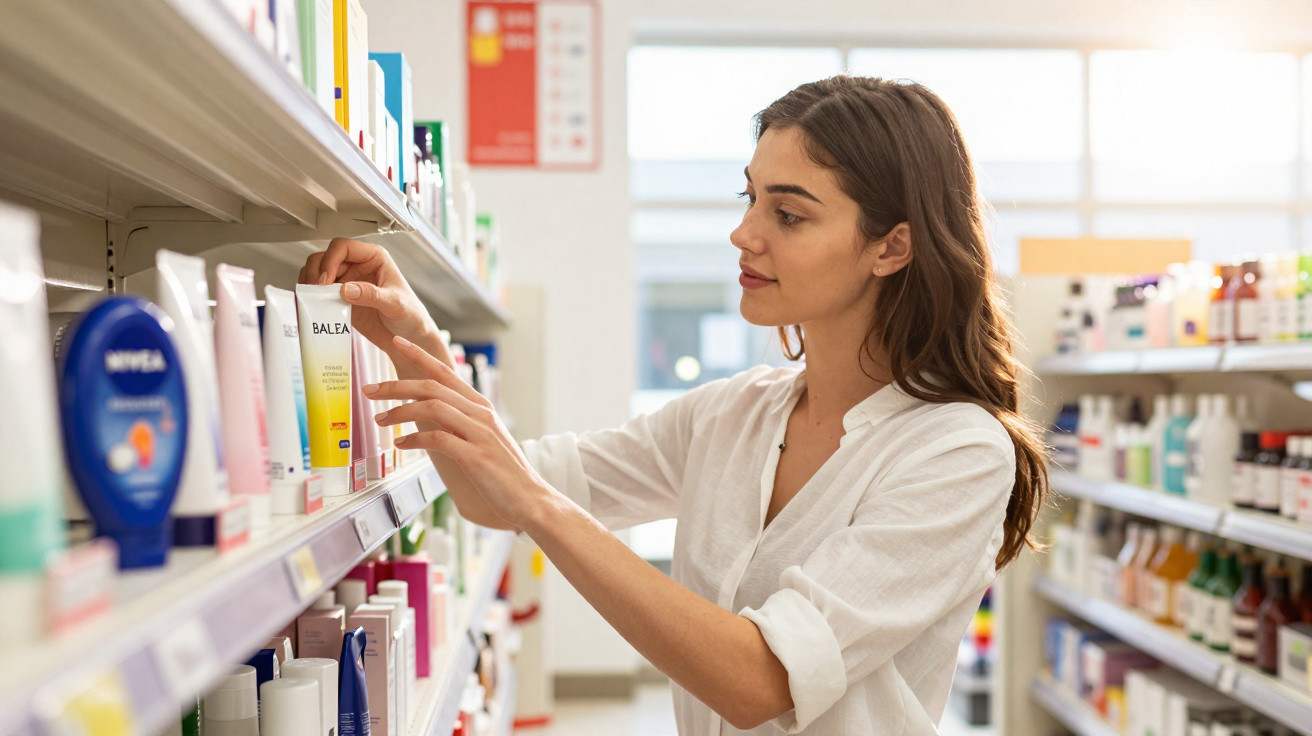
In the latest customer satisfaction rankings, Nivea has slipped from the top spot. The unexpected twist is that it has not been overtaken by a luxury label, but by Balea - the own-brand range of the dm drugstore chain. What might seem like a minor headline actually signals a deeper shift in shopping habits, and shows just how powerful retailer brands have become.
A heritage brand under pressure: what has changed in the rankings
The new customer-satisfaction frontrunner comes from a shelf that was long dismissed as the “cheap alternative”. In the YouGov BrandIndex, Balea now records a net score of 65.3 points, while Nivea stands at 61.8 points.
"Balea is clearly ahead of Nivea in customer satisfaction - a genuine turning point in the mass-market skincare sector."
The finding becomes even more striking when you look back: in 2021, the picture was reversed. At the time, Nivea held a 1.6-point lead over Balea. Within just a few years, the relationship has flipped completely. For a long-established brand that has stood for reliability, family appeal and the “white tin in the cupboard” for decades, this is far more than a simple statistical wobble.
Why the new number 1 sends such a strong signal
Nivea remains one of the best-known brands in the country, yet the momentum is moving elsewhere. In market research, satisfaction is considered a key driver of loyalty: people who are very satisfied tend to switch less often and are more likely to recommend a brand.
That is precisely where Balea is now gaining ground. It is increasingly seen not as “cheap but acceptable”, but as a genuine favourite. Many shoppers are choosing Balea deliberately - not because they have no money, but because they believe it is the better option.
- Brand image: contemporary, close to everyday life, eye-catching range
- Price perception: fairly priced, not “cheap at any cost”
- Accessibility: available nationwide in dm branches, clearly positioned on the shelf
- Range breadth: from basic cream to trend items such as serums or sheet masks
In doing so, a retailer brand is encroaching on territory that for a long time was dominated by traditional branded manufacturers: mass-market body care and facial skincare.
Value for money: the biggest lever in the Balea vs Nivea contest
A major driver of Balea’s rise is its value-for-money proposition. This is also where the BrandIndex curves separate most clearly. According to the data, Balea currently reaches 42.7 points, while Nivea comes in at 31.1 points.
"On perceived value for money, Balea is now well ahead of Nivea - and the gap continues to widen."
What matters here is that the metric does not simply mean “cheap”. Respondents rate whether what they feel they get is worth what they pay. Many therefore experience Balea not only as less expensive, but as a “sensible deal” - a cream that feels worth its price.
Especially at a time when food, rents and energy are becoming more expensive, many households are taking a harder look at where a brand premium is genuinely justified and where a drugstore label will do the job. With skin creams, the answer appears to be shifting increasingly in Balea’s favour.
Still strong: where Nivea remains ahead
Falling from the top does not mean Nivea has suddenly become a problem product. On the contrary: on the dimension of “perceived quality”, Nivea still sits clearly above Balea. For 2025, the BrandIndex lists Nivea at 55.0 points and Balea at 42.5 points.
Many people therefore continue to trust Nivea more on the technical and quality side. The brand benefits from decades of product development, dermatology research and a global footprint. At the same time, the figures show that a quality advantage alone does not automatically secure leadership in satisfaction and value for money.
There is also no doubt about the sheer scale of the heritage brand when it comes to awareness:
| Criterion | Nivea | Balea |
|---|---|---|
| Brand awareness | 92.1 % | 76.9 % |
| Purchase intention among those who know the brand | 21.0 % | 23.3 % |
The most intriguing number is the final row: among people who know both brands, Balea edges ahead of Nivea on planned purchase decisions. That underlines how effectively the drugstore label is mobilising its supporters - despite having lower overall awareness.
How the YouGov BrandIndex works - and what it measures
The BrandIndex is not a classic laboratory test such as Stiftung Warentest-style product assessments. Instead, YouGov continuously surveys thousands of people online about how they perceive different brands. The answers are then turned into ongoing time series.
Among the aspects measured are:
- general impression
- perceived quality
- customer satisfaction
- willingness to recommend
- value for money
- employer image
For a current value-for-money ranking, the institute says more than 900,000 interviews were included in the analysis. In other words, the results are not a snapshot driven by a viral backlash, but a longer-term picture of opinion.
Even so, one point remains crucial: these figures reflect subjective perception, not objective product performance. A cream can do excellently in lab testing and still lose out in perception if, for example, its price feels too high or the packaging design seems old-fashioned.
Where Nivea still scores - and where the issues sit
Nivea is not weakening across the board. In rankings of general popularity, Handelsblatt places the brand at around 89 points, only narrowly behind Florena. That means baseline likeability remains very high, and the brand stays present in everyday life - on advertising breaks as much as in bathroom cabinets.
The bigger challenge is the pace of change: while cheaper brands or newly positioned competitors are gaining quickly, Nivea is tending to hold steady rather than surge. Inflation, higher living costs and shifting price awareness hit brands that carry a premium particularly hard.
"Nivea’s real weakness is not rejection, but the fact that other brands are gaining sympathy faster."
On top of that is a trend retailers have been watching for years: own-label products are no longer just “no name”. They are building distinct identities - with social media campaigns, limited editions, and clear narratives around sustainability or skin compatibility.
What shoppers can take from the ranking in day-to-day life
For consumers standing in front of the shelf, the question is straightforward: is it still worth picking the more expensive heritage brand, or does the cheaper own-label option do the job? The answer is becoming more individual - depending on skin type, budget and personal preferences.
It can help to shop with a little more intent next time:
- Compare ingredients: many own-label products model their formulas on well-known branded items.
- Check the price per 100 ml: only a standardised comparison reveals how large the difference really is.
- Do a real-world trial: try one tub or tube of Balea and see how the feel on the skin and tolerance compare.
- Choose a brand mix: use Nivea or dermatology brands for sensitive facial skin, and switch to lower-cost alternatives for body lotion - a targeted approach many households use to save money.
Anyone who values long-term research, specific fragrances or a familiar brand image will still reach for the blue tin. Those who prioritise budget and approach cosmetics with a bit more willingness to experiment often end up with Balea & Co.
Retailer brands on the rise: what this means for the market
Balea’s success highlights a broader retail trend: the boundary between “branded goods” and “own-label” is blurring. Discounters and drugstore chains are investing heavily in design, development and marketing for their own brands. What used to be a “no name” product becomes a label with real recognition.
For manufacturers such as Beiersdorf, the group behind Nivea, this means classic strengths like decades of history and high awareness are no longer sufficient on their own. Pricing strategy, speed of innovation and clear differentiation are becoming more important. Otherwise, even iconic brands risk losing ground on core measures such as satisfaction and value for money.
For consumers, the shift is often positive: more competition typically leads to sharper prices and greater choice. Anyone willing to spend a little time comparing ingredients and prices can save noticeably - without necessarily having to compromise on care.




Comments
No comments yet. Be the first to comment!
Leave a Comment