
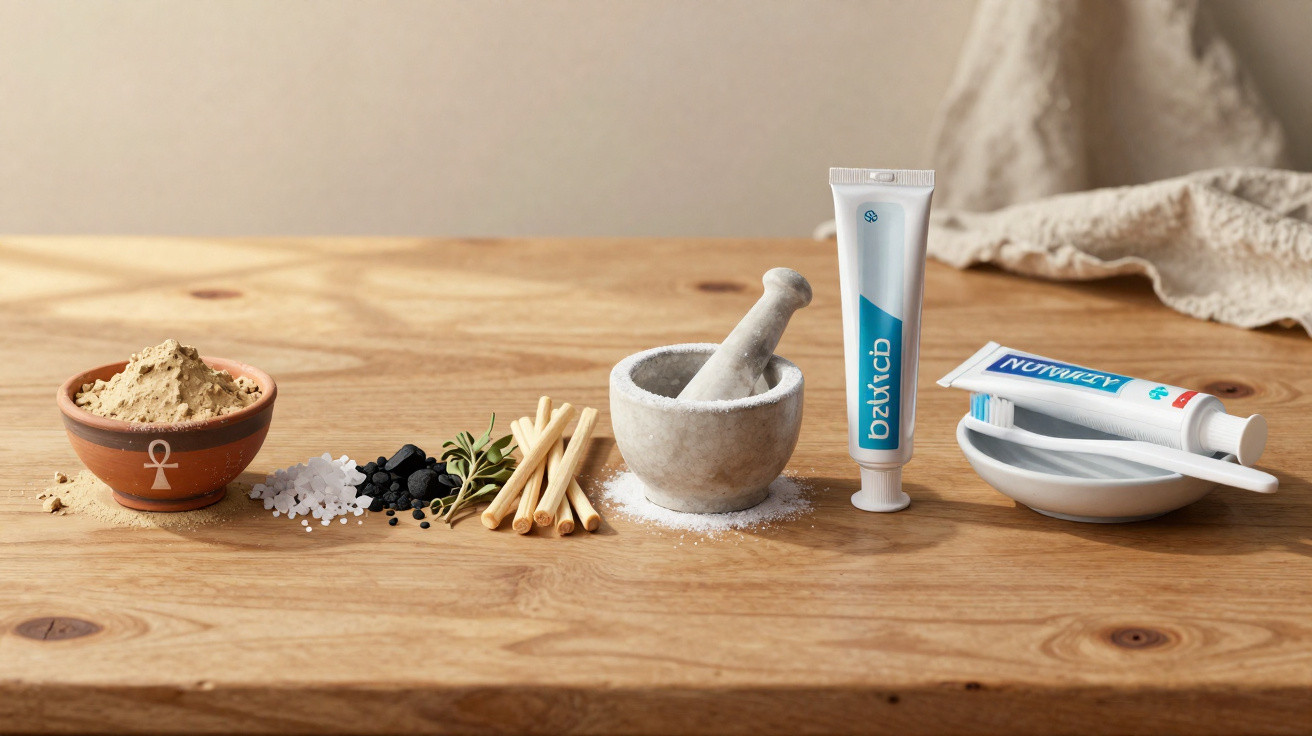
Before modern toothpaste, people were already looking for ways to clean their teeth, freshen their mouths and ward off bad breath. Ashes, salt, herbs, bark, abrasive powders and even chewable twigs all feature in the long story of oral hygiene.
Cleaning teeth started long before the tube
Oral hygiene has been part of human life for thousands of years. Even without modern brushes, many societies realised that food debris, unpleasant smells and build-up on teeth needed attention.
What people used depended on what was available locally. Everyday materials such as charcoal, salt, aromatic plants, ground bone and bits of bark were turned into makeshift options to scrub teeth or perfume the mouth.
- Twigs: chewed until the end frayed into fibres, forming a brush-like tip.
- Salt and ashes: used as abrasives to lift surface dirt.
- Herbs: helped the mouth feel fresher.
- Dental powders: dry blends used before creamy pastes became common.
In Ancient Egypt, dental powder already existed
When it comes to cleaning teeth, the Egyptians are among the best-known examples. They relied on powdered mixtures containing abrasive ingredients to rub across the tooth surface.
These blends could include ashes, ground pumice, bark and fragrant substances. The aim was to clean, polish and improve breath-although some of these materials were harsh on enamel.
Chewing sticks served as natural toothbrushes
Across many cultures, chewing sticks worked as a kind of early toothbrush. People would bite the end until it became fibrous, then use it to scrub both teeth and gums.
Nature became a cleaning tool
Friction did the real work
By chewing the tip of a small branch, the fibres would spread out and create a texture able to dislodge residue from the teeth.
Some aromatic plants also left a fresh taste behind, so they acted as cleaning and mouth-freshening at the same time.
This habit makes it clear that the modern toothbrush did not appear out of nowhere. It developed from simple routines based on rubbing, repetition and whatever materials could be found nearby.
Salt, charcoal and herbs had different roles
Salt was valued for its grainy feel and the sense of cleanliness it left behind. Charcoal and ashes could help scrub away surface staining, though they could be overly abrasive if used too often.
Herbs-such as mint and other fragrant plants-were more closely linked to breath. They did not replace mechanical cleaning, but they helped create a fresher feeling after meals.
From home mixtures to modern toothpaste
Modern toothpaste emerged as dental powders were reformulated to be gentler, turned into creamy textures, given pleasant flavours and made with ingredients designed to protect teeth more effectively.
Ultimately, the history of oral hygiene reflects a long-standing search for health, comfort and appearance. What once relied on ashes, salt and twigs gradually evolved into the toothpastes many of us use every day.
If this little curiosity has changed the way you look at your toothbrush and toothpaste, share it with someone else who enjoys uncovering unusual details from history.






Comments
No comments yet. Be the first to comment!
Leave a Comment