
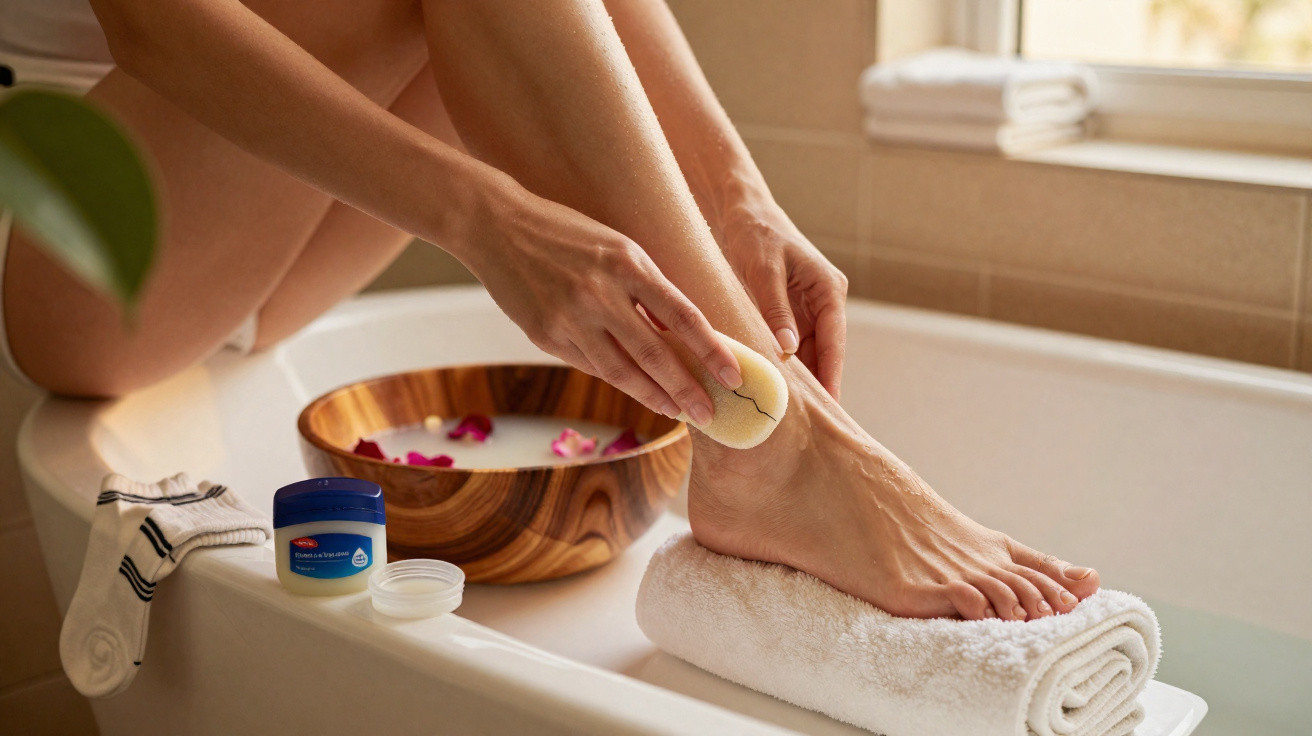
An almost imperceptible crack in the heel can become painful with every step once warmer days arrive. Flip-flops, walking barefoot and insufficient moisturising leave the skin more vulnerable to pressure and dryness. Before summer, a night-time routine using warm water, a pumice stone and petroleum jelly can gradually restore softness.
Why do heels crack so easily?
Heel skin bears the body's weight and naturally develops a thicker layer for protection. When this area loses moisture and elasticity, pressure causes its edges to spread, resulting in small fissures. Dry weather, long hot baths and spending extended periods standing can all make the issue worse.
Open footwear can also contribute to cracked heels because it does not support the sides of the heel. When walking in flip-flops or barefoot, dry skin spreads under body weight. Over time, the grooves may become deep, painful and even bleed, requiring more care than ordinary moisturising.
How should you prepare a foot soak?
Soak your feet in warm water, never very hot water, for around five to ten minutes. This is generally enough time to soften hardened skin without drying it out further. There is no need to add acidic home remedies, bicarbonate of soda or scented products, as these may cause irritation.
After soaking, dry your feet by gently pressing them with a towel, paying particular attention to the spaces between your toes. The heel should remain slightly damp before moisturiser is applied. Do not soak your feet for prolonged periods, as too much water can weaken the skin barrier and worsen dryness.
How can you use a pumice stone without causing injury?
Wet the pumice stone and gently rub it only over the thickened skin on the heel, using circular or side-to-side motions. The aim is to remove a small amount of dead skin, rather than make the area completely smooth in one session. Applying too much pressure can create wounds and raise the risk of infection.
- Use gentle movements for only a few minutes.
- Stop straight away if you feel pain, stinging or sensitivity.
- Never use blades, scissors or sharp objects.
- Wash the stone after use and allow it to dry fully.
- Avoid filing cracks that are open, inflamed or bleeding.
Exfoliation does not need to be done every day. Once or twice a week is usually enough to prevent excessive wear. On the remaining days, focus on moisturising. The more aggressively skin is removed, the greater the potential for irritation and the development of another hardened layer.
Watch the video shared by the YouTube channel Dermart By João Paulo Junqueira, which discusses the possible causes of cracked heels and the correct way to care for them.
Why use petroleum jelly and socks overnight?
While the heel is still slightly damp, apply a generous layer of petroleum jelly to the dry area. It creates a barrier that limits moisture loss overnight. Then put on a clean cotton sock to keep the product in place and prevent it from transferring onto the bedding.
Repeat this routine every night until you notice an improvement, then continue moisturising to help prevent further cracks. In the morning, wash your feet if they remain slippery before walking. Petroleum jelly should not be used between the toes, where excess moisture can encourage irritation and fungal growth.
When is home care not enough for cracked heels?
Deep cracks, bleeding, pus, an unpleasant smell, swelling, warmth or increasing redness require professional assessment. People with diabetes, poor circulation or reduced sensation in their feet should not use a pumice stone without advice, as minor injuries may go unnoticed and develop into complications.
Start the routine before pain restricts your steps or a subtle fissure becomes deeper. Ten minutes of care and a protective layer at night can make a difference when maintained consistently. Summer is approaching, but now is the time to restore the health of your heels.





Comments
No comments yet. Be the first to comment!
Leave a Comment