
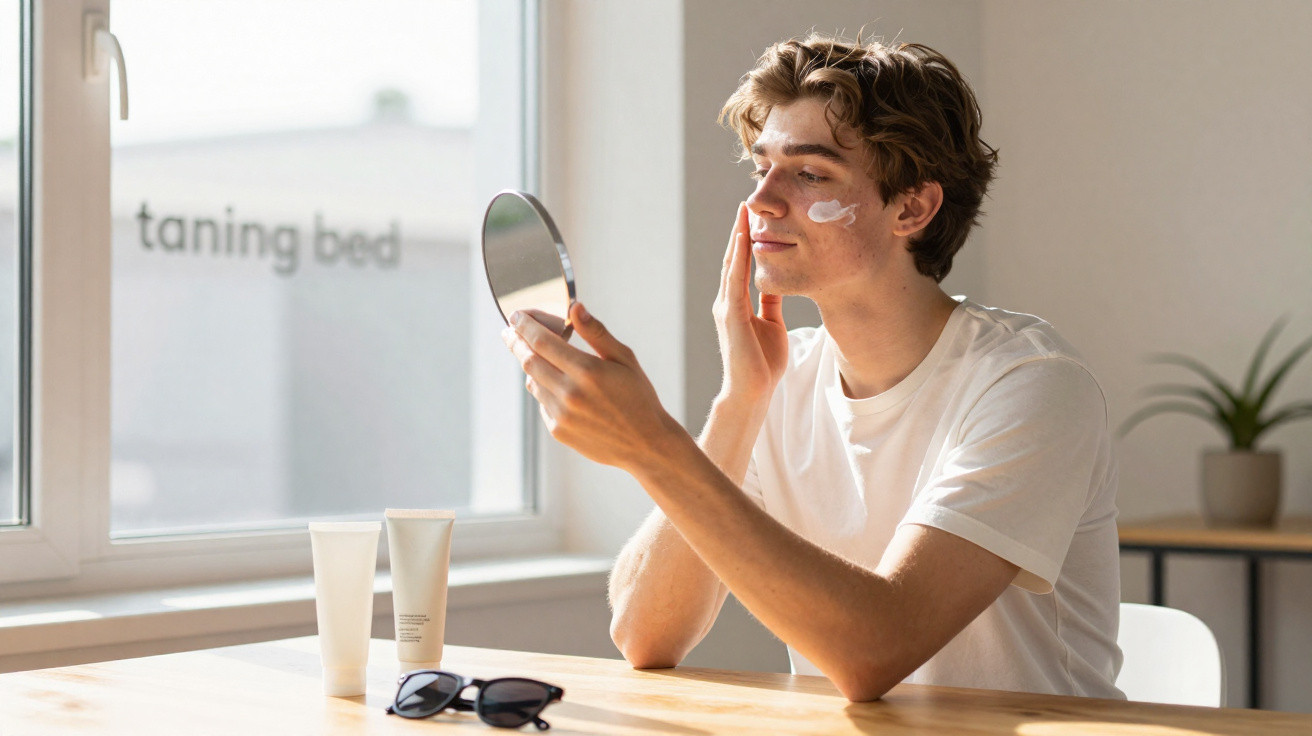
Social media is awash with dubious advice, but a recent skincare hack being promoted online is particularly concerning.
Some TikTok content creators claim that sunburning yourself or using a tanning bed can clear acne.
Although natural sunlight and UV radiation have historically been used for certain skin conditions, evidence indicates that neither is effective for acne. Any apparent improvement in skin appearance is also outweighed by the substantial risks associated with too much UV exposure.
UV exposure and acne treatment
Phototherapy is a medical procedure in which skin is exposed to sunlight or UV radiation under controlled conditions. It is commonly used for psoriasis and eczema when other treatments have failed or are unsuitable for a patient.
Research suggests phototherapy can lessen inflammation and dampen the skin's immune response, both of which are important in the development of these conditions.
However, it is crucial to recognise that phototherapy takes place in a clinical environment, where the radiation dose delivered to the skin is carefully controlled to limit UV-related harm. Tests are also carried out before treatment to lower the chance of burning.
For acne, however, there is little evidence that UV exposure offers a benefit.
A 2023 retrospective cohort study involving 19,939 participants examined their UV exposure over the six years before enrolment. It found that young adults with long-term daily exposure to relatively low levels of UVB - an invisible type of radiation emitted by the sun - for around one hour were associated with a lower risk of moderate to severe acne.
Yet the study had many limitations. The exact UV doses received by participants were not measured directly. They were instead estimated from location and weather information used to calculate participants' sunlight exposure. The research also did not account for the harmful consequences of exposure.
Research using human skin cells has likewise indicated that UVB rays may have potential benefits, including killing Propionibacterium acnes, the bacterium considered responsible for acne. But these effects have only been demonstrated in cells and have not been reproduced in studies involving people. Most such studies also concluded that any benefit was likely to be minor and insufficient for therapeutic use, particularly given the adverse effects of UV radiation.
A 2023 narrative review covering all studies of sun exposure and acne published between 1992 and 2022 concluded that UV radiation exposure is unlikely to improve acne symptoms.
In certain cases, it could even make acne worse. This may be because UVB exposure activates immune cells that aggravate acne-related inflammation and raises sebum production, a recognised acne risk factor.
Sunburn risks
There is not only no evidence that sunlight treats acne, but sun exposure also has many well-established disadvantages, including a markedly higher risk of skin cancer.
Evidence shows that a single blistering sunburn during childhood or adolescence can double the likelihood of developing skin cancer later in life. The risk rises with every additional sunburn, because UV exposure causes considerable DNA damage to skin cells.
UV radiation is also a major cause of premature skin ageing. It damages collagen and elastin, which can result in sagging skin and wrinkles.
When spending time in the sun, it is important to:
- Apply broad-spectrum sunscreen of at least SPF 30, reapplying it every two hours and after swimming or sweating.
- Stay in the shade, particularly during peak sunshine hours, usually from 10 am to 4 pm.
- Wear protective clothing, including a wide-brimmed hat and UV-blocking sunglasses.
Effective acne treatments and sun safety
Currently, the most effective acne treatments are available either from a pharmacy or on prescription from a doctor.
Severe acne may be treated with oral antibiotics that provide an anti-inflammatory effect. Isotretinoin can also be prescribed. This synthetic derivative of vitamin A decreases skin oil, or sebum, skin bumps and the amount of acne-causing bacteria on the skin. Isotretinoin is highly effective at clearing acne lesions, by 85 per cent in one study after four months of treatment. Only around one-quarter of people who take it need a second treatment course.
Despite their effectiveness, concerns about medicine side effects - particularly mood changes - may explain why some people with acne seek alternative treatments.
However, a recent study of more than 30,000 isotretinoin patients found no link between isotretinoin and mood changes, indicating that this side effect is extremely uncommon.
Anyone prescribed acne medicine should take particular care in the sun. Isotretinoin and tetracyclines, a group of antibiotics, can act as photosensitisers, meaning skin may sustain greater damage when exposed to sunlight. One study found that 20-40 per cent of acne patients taking a common tetracycline type experienced photosensitivity.
This is why sunscreen matters on sunny days. As well as protecting skin and reducing the risk of skin cancer, some evidence suggests that sunscreen may help people with acne by reducing inflammation in skin cells and lowering photosensitivity.
Several safe and effective acne treatments are already available. If you are thinking about using the sun or a tanning bed because your present treatment does not seem to be working, speak to your doctor rather than risk complications.
Karl Lawrence, Research fellow, King's College London and Wisam Alwan, Clinical Research Fellow in Dermatology at King's College London/Consultant Dermatologist Guy's and St. Thomas' NHS Foundation Trust, King's College London
This article is republished from The Conversation under a Creative Commons licence. Read the original article.



Comments
No comments yet. Be the first to comment!
Leave a Comment