
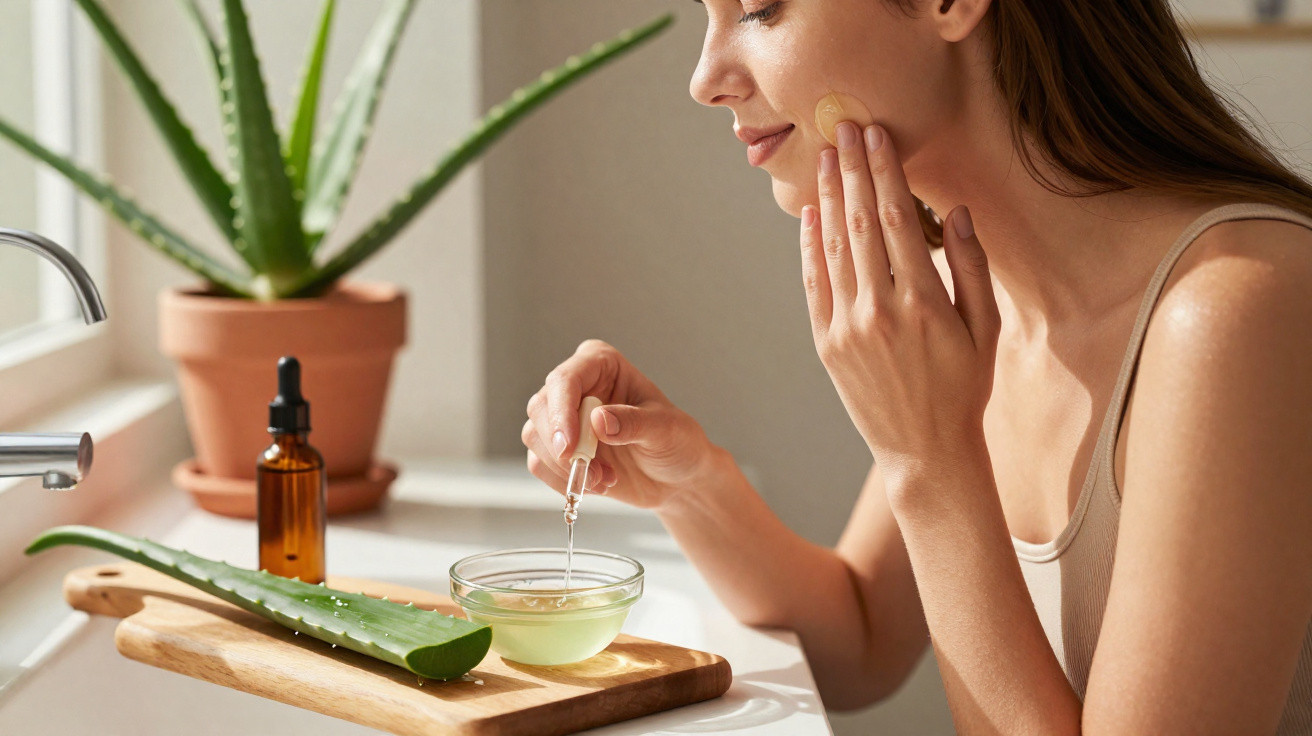
Looking after your skin at home after a day in the sun or under air conditioning calls for smart choices. Using cosmetics containing aloe vera is a practical way to replenish essential hydration, helping your complexion look rested and genuinely healthy within your skincare routine.
What are the dangers of using aloe vera straight from the plant?
Many people cut a leaf straight from the garden and apply it to the face in search of instant improvement. However, pulling the plant from the ground and using the raw gel on yourself can trigger serious contact dermatitis, severely disrupting your skin barrier.
To steer clear of harsh irritation, safer use should be through tested, manufactured products. Choosing appropriate formats such as creams, lotions, or dedicated serums helps ensure the right actives for treating sensitive skin, with backing from dermatology.
Below are some of the main formats commonly recommended for safer use of the ingredient:
- Facial creams: Excellent for delivering deep hydration to dry skin.
- Lightweight serums: Ideal for oily skin thanks to fast absorption.
- Targeted cleansers: Support everyday cleansing while maintaining the skin’s natural balance.
- Soothing lotions: Particularly useful for easing irritation right after sun exposure.
- Protective ointments: Help with localised areas that need intensive care.
How does aloe vera help with healing and treating burns?
This plant is widely recognised in skincare for its impressive healing qualities. By actively supporting the biological process involved in collagen production, this plant-based active can contribute to quicker, more efficient tissue repair.
In addition, the botanical extract can be a helpful option for different types of burns, including heat-related accidents or severe sunburn. Its strong anti-inflammatory effect calms sensitised tissue, reduces sun-related damage, and supports full recovery of the dermis.
Below, a video from the YouTube channel Dra Caroline Hespanhol – Dermatologia & Saúde explores the points covered in this topic in more depth:
Does aloe vera gel work against dark spots and melasma?
When treating dark marks on the face, specialists generally view the depigmenting effect of this active as fairly weak. If your goal is to tackle severe melasma, clinicians typically choose to prescribe significantly more potent substances in the consulting room.
Warning about pigmentation
Mild depigmenting action
Aloe vera extract has brightening properties that are considered very gentle when compared with other traditional acids.
For that reason, it may only be suggested for addressing white patches or very subtle tone evening.
Even so, depending on the type of hyperpigmentation you have, it can be a reasonable option for complementary care in a day-to-day routine. It may help with the subtle softening of specific marks, gradually restoring a more natural look and a more even facial surface.
These are the situations where the ingredient’s brightening action tends to be most suitable:
- Subtle, complementary tone evening across the face.
- Very slight reduction of small post-inflammatory marks.
- An optional first-step approach to softening white patches.
What are the benefits for oily, acne-prone skin?
For anyone dealing with persistent shine, the plant can offer useful regulating effects in the dermis. Through sebum regulation, it helps control excessive oil production from the glands, noticeably easing the discomfort associated with facial oiliness.
Beyond balancing oil secretion, the plant’s inherent properties help fight harmful micro-organisms that worsen inflammatory lesions. Its strong antibacterial action, combined with a soothing effect, can significantly reduce skin redness, making it a valuable ally against active acne.
Here’s how these combined properties can support acne-prone skin:
- Immediate reduction in local inflammation and discomfort.
- Effective control of the bacteria that contribute to lesions.
- Less visible shine caused by sebum build-up.
How does aloe vera support rejuvenation and everyday hydration?
This ingredient works as a powerful moisturiser and is widely used by the industry in cleansers, body lotions, and sunscreens. This broad supply of natural hydration helps reinforce tissue elasticity, which is important for keeping young skin looking fresh day to day.
Lastly, its notable antioxidant power helps counter the free radicals linked to premature facial ageing. It can improve fine lines and provide a gentle natural exfoliation, continually encouraging cell renewal to create a more rested appearance.
Read also: Mature skin looks better when the routine starts with this basic step


Comments
No comments yet. Be the first to comment!
Leave a Comment