
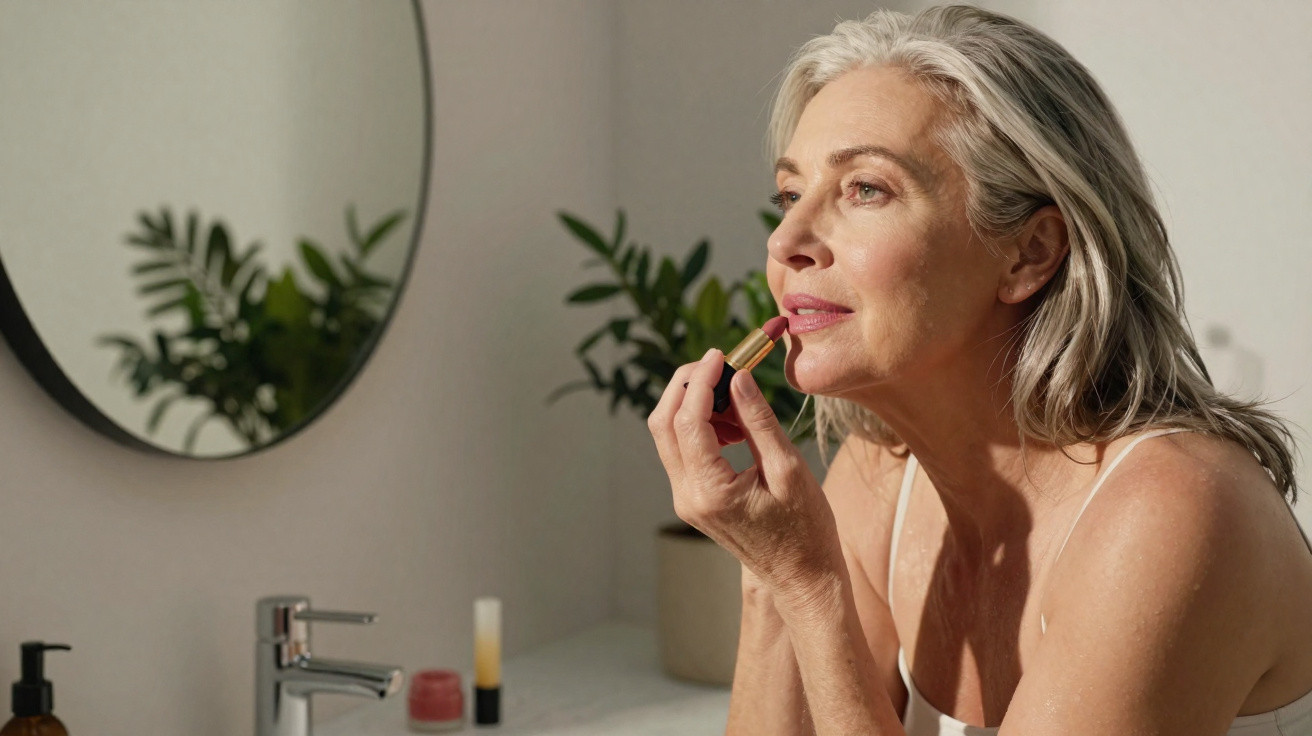
Using lipstick after 50 calls for a bit more care with hydration, lip definition and the product’s texture. As the years go by, lips can lose some volume and crispness, and fine lines may appear around the mouth. A gentle prep routine helps stop colour settling into creases and keeps the finish looking smoother and more even.
How do you prepare your lips before lipstick?
Start by lightly exfoliating to lift any small, loose flakes. Keep the pressure soft, using a lip-specific exfoliator or a very soft brush, and avoid rubbing hard enough to leave the skin red.
After exfoliating, smooth on a moisturising balm and give it a few minutes before removing any excess. Emollient ingredients such as shea butter and jojoba oil help soften the surface without leaving a slippery film that can interfere with wear time.
- Only exfoliate when you notice flaking;
- Apply a small amount of moisturising balm;
- Blot away any excess with a tissue before makeup;
- Don’t apply lipstick to lips that are cracked or irritated.
Which lipstick texture works best on mature skin?
Creamy or satin-finish formulas often suit mature lips better because they catch the light gently and are less likely to emphasise lines. Very dry, ultra-matte lipsticks can cling to texture, especially if you apply them in thick layers.
How do you use lip liner without creating a harsh line?
Choose a liner close to your natural lip tone or the lipstick shade you’re wearing. It helps restore definition that can fade over time and forms a barrier to reduce colour bleeding into the lines around the mouth.
For a softer, more natural result, sketch the outline with short strokes, then lightly blend the line inwards. Key points to keep in mind are:
- Avoid a liner that is much darker than the lipstick;
- Don’t draw far outside your natural lip shape;
- Fill the corners too, so you don’t end up with gaps;
- Soften the edge with a brush or your fingertip.
Which colours and techniques make lips look more defined?
Pink tones, peach, nude, soft red and berry shades can brighten the face, as long as they suit your skin’s undertone. Rather than spreading on a thick coat, apply lipstick in thin layers, press your lips to a tissue, and add more pigment only where it’s needed.
A tiny touch of shine or a slightly lighter shade in the centre of the lower lip can create a fuller-looking effect. Keep product minimal at the corners of the mouth, as too much there can smudge and draw attention to side lines.
What really makes the difference in lip makeup?
The best outcome isn’t about completely disguising wrinkles, but about preventing the product’s texture from making them stand out. Balanced hydration, subtle definition and controlled application help maintain shape without a heavy-looking layer.
After 50, creamy or satin lipstick can enhance your features and bring colour back to the face with just a few steps. When you pick the right shade and apply it over well-prepped lips, you can keep them comfortable, defined and evenly finished throughout the day.


Comments
No comments yet. Be the first to comment!
Leave a Comment